




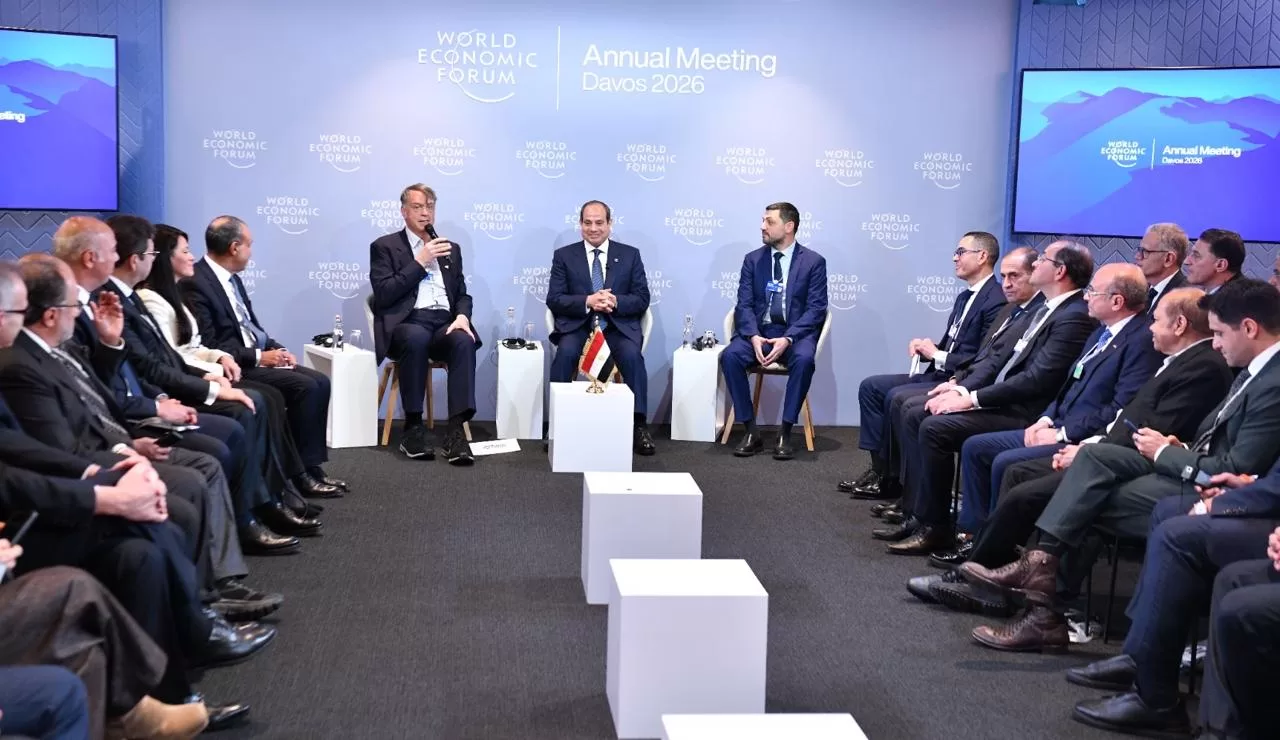
Egypt’s President Abdel Fattah El Sisi emphasised Egypt’s commitment to strengthening private sector engagement as a cornerstone of national development.
He also highlighted the state’s dedication to creating an enabling environment for entrepreneurship, expanding investment opportunities, upgrading infrastructure, and implementing economic and structural reforms that safeguard macroeconomic stability.
In a meeting with approximately 70 chief executives of leading global corporations on the sidelines of the World Economic Forum (WEF) in Davos, President Sisi outlined the government’s measures to enhance private sector participation, including the establishment of a cap on public investments, the
implementation of the State Ownership
Policy Document, and the advancement of the offerings programme, which have collectively contributed to a significant increase in the private sector’s share of total investments.
He also reviewed efforts to create a favourable investment climate, citing comprehensive incentives in strategic sectors such as electric vehicle manufacturing, information technology, pharmaceuticals, and renewable energy, particularly green hydrogen. These initiatives are supported by the Green Hydrogen Incentives Law, the launch of the Golden Licence programme, legislative and tax reforms, and streamlined procedures via a unified digital platform, said the Presidency Spokesman Ambassador Mohamed el-Shennawy.
He added that the president also highlighted Egypt’s achievements in infrastructure development, including upgrades to road, transport, and railway networks, enhanced port efficiency, and the development of the Suez Canal Economic Zone.
He underscored ongoing projects to modernise the Suez Canal itself, reinforcing its role as a critical global trade corridor, with increased shipping traffic following the Sharm el-Sheikh Peace Summit.
Emphasising Egypt’s commitment to digital transformation and industrial localisation, President Sisi pointed to advancements in digital infrastructure and the launch of the Egyptian Industry Strategy 2030, aimed at raising the industrial sector’s contribution to GDP.
He noted the positive outcomes of Egypt’s economic reform programme, implemented in co-operation with international financial institutions, particularly the IMF, which have strengthened macroeconomic indicators, improved the country’s credit rating, enhanced growth, fortified the balance of payments, increased foreign reserves, and reduced the debt-to-GDP ratio.
Concluding his remarks, President Sisi extended a warm invitation to global investors to seize the opportunities presented by Egypt’s market, benefit from the incentives and logistical advantages, and assured that the government stands ready to facilitate investment activities and address any challenges they may arise.
- Latest
- Trending

