








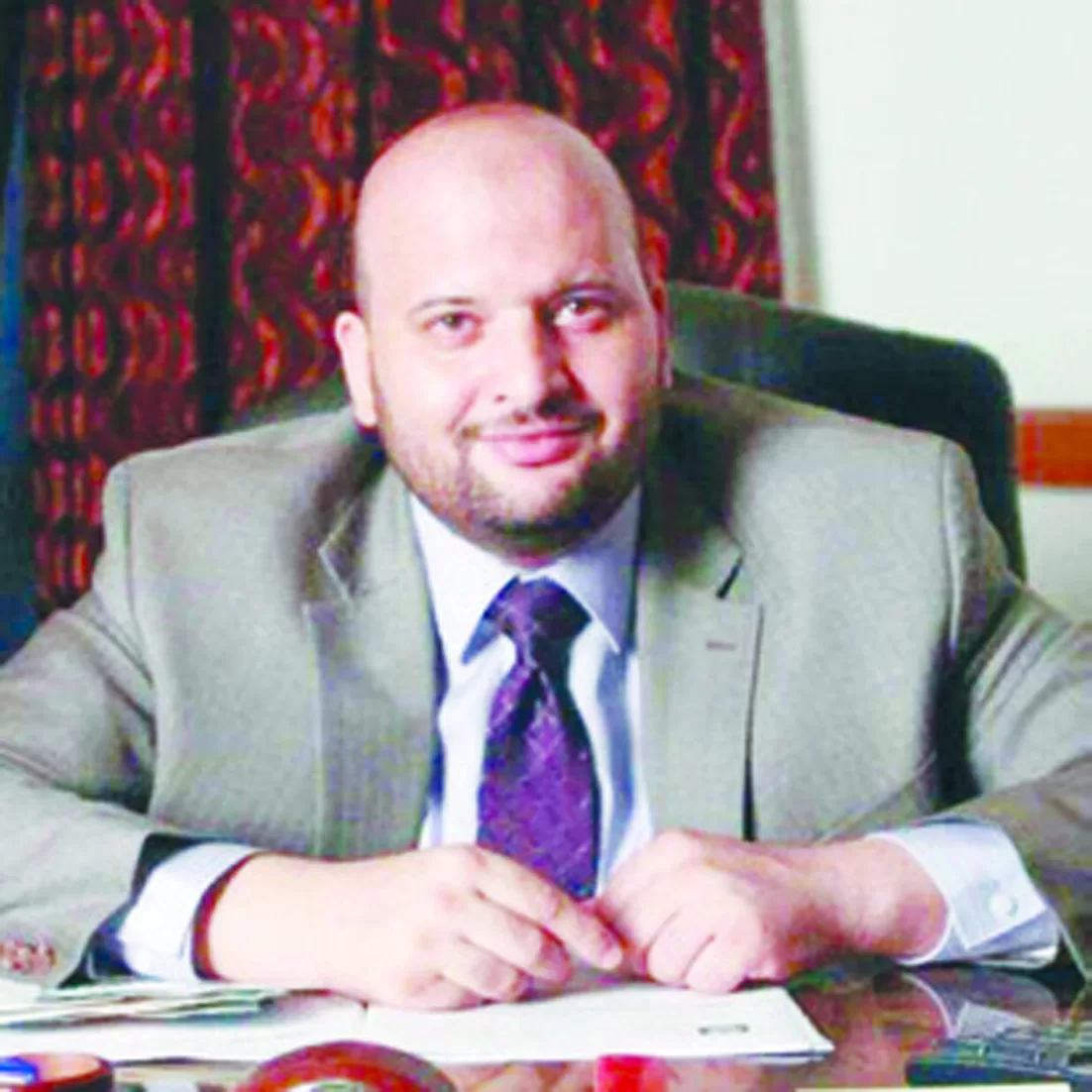
Ibrahim Negm
Senior advisor to the Grand Mufti of Egypt
Against the bleak state of affairs surrounding it regionally and internationally, Egypt has been quietly advancing a unique model: that values in foreign policy are not a luxury, but a strategic resource. Egyptian diplomacy has sought to reconcile interests with principles—support for state institutions, respect for sovereignty, commitment to international law, and an aversion to reckless adventurism.
This was evident in Cairo’s handling of the Gaza crisis. Egypt refused to treat the conflict as a narrow border-security issue, even though its own national security was directly threatened. It rejected any forced displacement of Palestinians into Sinai, pushed for an immediate ceasefire, insisted on sustained humanitarian access, and championed the establishment of an independent Palestinian state as the only sustainable route to peace. These positions did not emerge ad hoc; they are anchored in a long-term strategy that links regional stability, legal norms, and Egypt’s own security in a single ethical framework.
The same pattern can be seen in Libya, Syria, and Sudan, where Egypt has favoured de‑escalation, mediation, and support for national institutions over zero-sum alignments or proxy warfare. In a region saturated with militarised rivalry, Cairo’s posture of “positive neutrality” and bridge‑building has made it a credible interlocutor for rival camps that trust few others.
What makes the Egyptian model distinctive is that it does not confine ethics to secular legalism. Religious and cultural capital are consciously mobilised as instruments of soft power. Institutions such as Al‑Azhar Al‑Sharif and Dar al‑Ifta are not merely domestic religious authorities; they are global platforms shaping how Islam is understood and lived across continents.
Al‑Azhar’s long-standing commitment to moderation, dialogue, and civilisational coexistence has allowed it to function as a kind of “global human conscience,” particularly in moments when populism and hate speech threaten to pit societies against one another. Dar al‑Ifta, through the General Secretariat for Fatwa Authorities Worldwide, has gone further by conceptualising “fatwa diplomacy”: using religious guidance to combat extremism, correct misconceptions, and address humanitarian and social crises in a coordinated, transnational way.
This is religious diplomacy without triumphalism. It does not seek dominance but credibility: training young scholars, investing in research, building observatories such as the Salam Centre, and partnering with foreign ministries to confront Islamophobia and extremism through ideas rather than intimidation. When foreign ministers praise these efforts as a pillar of Egypt’s soft power, they are acknowledging that moral authority can be as consequential as material might.
Another underappreciated dimension of Egypt’s approach is what its leadership calls strategic patience. In a region of hair-trigger reactions and quick escalations, Egypt has often chosen to absorb pressure, use time as a tool, and pursue negotiated outcomes while clearly signaling that its red lines are real.
This has been visible in how Egypt has handled crises from Libya to the Grand Ethiopian Renaissance Dam. Restraint here is not weakness; it is calculation. Strategic patience allows Egypt to avoid destructive confrontation without surrendering core interests or principles. It is the opposite of the performative toughness that wins headlines but loses wars.
No foreign policy is pure. Egypt’s choices are constrained by economic pressures, regional rivalries, and the realities of a shifting global order. But what sets the Egyptian model apart is the insistence that ethics and interests are not mutually exclusive categories. Honoring treaties, upholding one’s word, mediating conflicts, and investing in religious and cultural diplomacy are presented not as moral ornaments, but as strategic investments that generate trust, legitimacy, and long-term influence.
In a world where many major powers have normalised the selective use of values, this is a quietly radical stance. It suggests that the real divide today is not between idealists and realists, but between those who treat values as a toolkit to be opened and closed at will, and those who accept the harder task of binding themselves to consistent principles even when it is inconvenient.
If the international system is to escape its current spiral of cynicism, it will need more than new institutions or clever legal formulas. It will need states prepared to practice what they preach—not perfectly, but consistently enough to restore meaning to words like justice, dignity, and law. Egypt’s experience does not offer a utopia, but it does offer proof of concept: that a middle path between the law of power and the power of law is not only thinkable, but already being carefully, and patiently, walked.

