




•Gen. Rashad joins Gaza oversight board
•US seeks solution for Nile water sharing problem
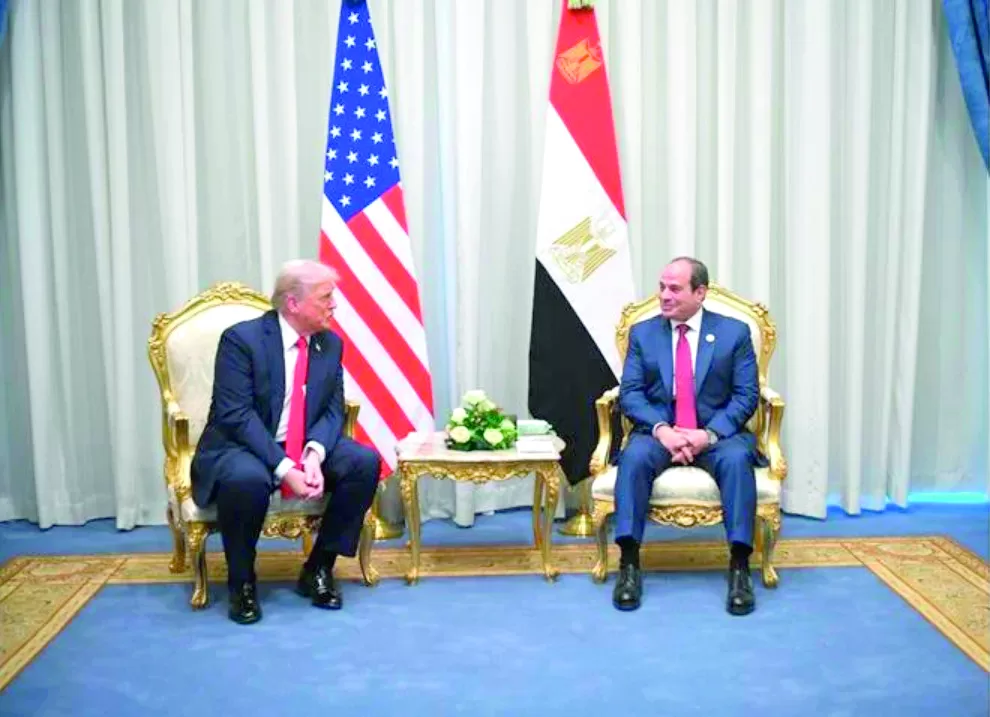
President Donald Trump’s message of thanks to President Abdel Fattah El Sisi was not a routine diplomatic courtesy.
Read carefully, it represents a multi-layered political signal that links three sensitive files at once: the ceasefire in Gaza, the future of post-war governance in the Strip, and the long-stalled dispute over Nile water sharing between Egypt, Sudan and Ethiopia.
Taken together, the message reflects a renewed American recognition of Egypt’s central role as a pillar of regional stability and a key interlocutor in some of the Middle East and Africa’s most complex crises.
At its surface, Trump’s letter praises President Sisi’s “successful leadership in brokering a ceasefire between Israel and Hamas”, acknowledging Egypt’s pivotal mediation role at a moment when the war had pushed the region towards wider confrontation.
But the language used goes further, stressing that the war has imposed “a heavy burden on the Egyptian people”, not only on Gaza and Israel.
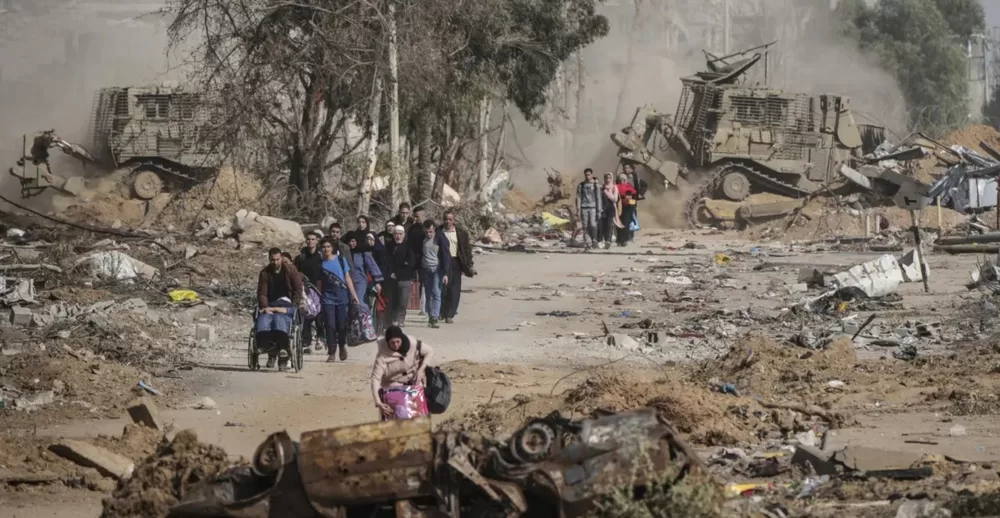
This framing is significant: it places Egypt not merely as a mediator, but as a frontline state absorbing the humanitarian, security and political consequences of the conflict since October 7, 2023.
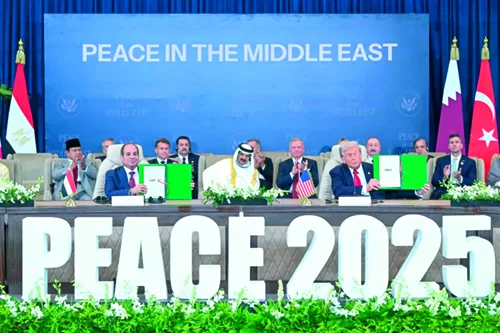
For an Egyptian audience, this acknowledgment reinforces what Cairo has long argued internationally, that its engagement in Gaza is driven not only by diplomacy, but by direct national security considerations.
Trump’s emphasis on personal trust and “friendship” with President Sisi also signals continuity in Washington’s reliance on Egypt as a dependable partner at a time of deep uncertainty in the region.
More consequential, however, is what followed the praise. Trump explicitly offered to re-launch US mediation between Egypt and Ethiopia to reach what he described as a “responsible and lasting solution” to the dispute over Nile water sharing.
By doing so in the same message that addressed Gaza, Trump effectively linked Egypt’s role in regional peace with American engagement on one of Cairo’s most sensitive existential issues.
His language on the Nile was unusually direct. Stressing the river’s “profound importance” to Egypt and its people, Trump affirmed that “no country in this region should unilaterally control the precious resources of the Nile River and harm its neighbours in the process”.
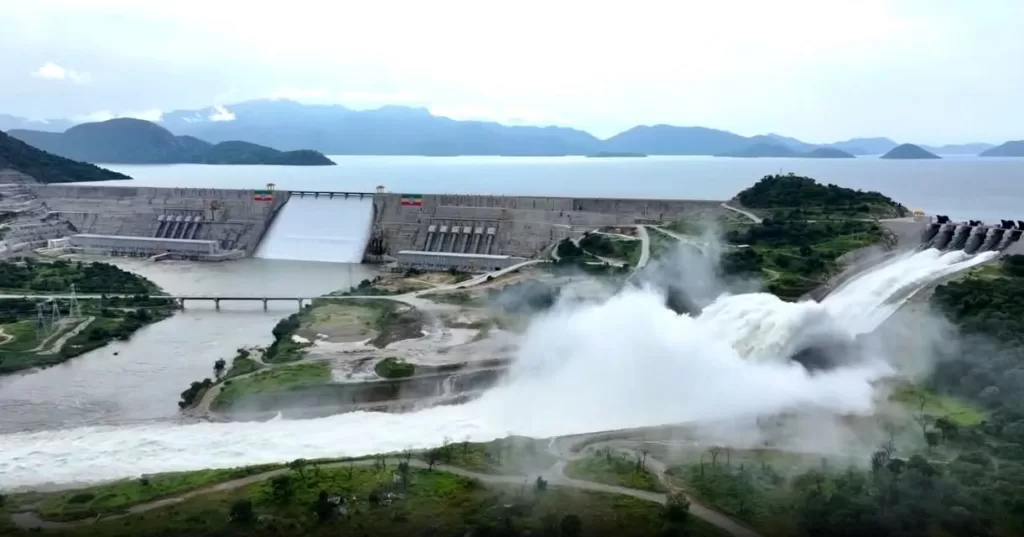
For Egypt, this statement carries political weight, as it echoes Cairo’s long-standing rejection of unilateral Ethiopian actions regarding the Grand Ethiopian Renaissance Dam (GERD).
Equally notable was Trump’s articulation of a possible framework for compromise: fair and transparent negotiations, strong US monitoring, predictable water releases during droughts for Egypt and Sudan, and recognition of Ethiopia’s right to generate electricity, potentially benefiting downstream countries.
This balance reflects an attempt to position Washington not as a partisan actor, but as a guarantor of technical credibility and political fairness.
The warning embedded in Trump’s message should not be overlooked. His expressed hope that the GERD dispute “does not lead to a major military conflict between Egypt and Ethiopia” suggests an American awareness of how close the issue lies to Egypt’s core national security red lines.
By elevating the file to a presidential priority, Trump signals that Washington views stability in the Nile Basin as inseparable from broader Middle Eastern and African security.
The Gaza dimension of Trump’s message goes even further with the announcement of concrete institutional steps.
Trump congratulated the formation of the National Committee for the Administration of Gaza (NCAG), describing it as a cornerstone of Phase Two of his Comprehensive Plan to End the Gaza Conflict, a 20-point roadmap endorsed by UN Security Council Resolution 2803 (2025).
The (NCAG), led by technocrat Dr Ali Sha’ath, is tasked with restoring public services, rebuilding civil institutions and stabilising daily life in Gaza.
Its technocratic nature reflects a deliberate effort to move away from factional politics towards administrative functionality, a concept long supported by Egypt as essential for preventing Gaza from sliding back into chaos.
More revealing for Egyptian observers is the composition of the broader governance and oversight architecture.
Trump has formed a Board of Peace, chaired by himself, supported by an Executive Board that includes senior US officials and international figures.
Within this framework, the Gaza Executive Board brings together regional and international actors, including Maj. Gen. Hassan Rashad, head of Egypt’s General Intelligence Service.
The inclusion of Gen. Rashad is not symbolic. It represents institutional recognition of Egypt’s security expertise and its indispensable role in managing Gaza’s complex security, intelligence and border dynamics.
Egypt’s intelligence services have long been the backbone of ceasefire negotiations, prisoner exchanges and humanitarian coordination in Gaza.
By integrating Egypt directly into the executive oversight structure, Washington is acknowledging that no post-war arrangement can function without Cairo’s active participation.
This move also reflects Egypt’s preference for structured, multilateral frameworks over ad hoc crisis management.
Participation in a formal executive board allows Cairo to influence decision-making on governance, security and reconstruction from within, rather than reacting from the margins.
It aligns with Egypt’s long-standing position that Gaza’s stability must be anchored in coordinated regional and international mechanisms not unilateral experiments.
From an international public opinion perspective, Trump’s message reframes Egypt’s role at a time when narratives around Gaza have often been polarized.
It positions Cairo as a stabilising force rather than a passive observer, a country that pays real costs to prevent regional escalation while simultaneously advocating political solutions.
At the same time, the message underscores a broader strategic reality: Egypt’s files are interconnected. Gaza, the Nile, Red Sea security and African stability cannot be treated in isolation.
Trump’s approach whether fully realised or not, implicitly recognises this interdependence and seeks to leverage Egypt’s regional weight to advance wider objectives.
Ultimately, Trump’s message is less about gratitude and more about recalibration. It reflects a US acknowledgment that Egypt remains a cornerstone of any credible regional order from Palestinian ceasefires to African water security.
For Cairo, the challenge will be to translate this recognition into binding commitments, sustainable mediation mechanisms and tangible outcomes that protect Egypt’s national interests without entangling it in open-ended responsibilities.
In that sense, the message is both an endorsement and a test of Egypt’s diplomatic leverage, its strategic patience, and its ability to navigate an increasingly complex regional landscape where peace in Gaza, stability on the Nile and security across borders are now part of the same equation.
Mohamed Fahmy is the editor-in-chief of The Egyptian Gazette and Egyptian Mail newspapers

