







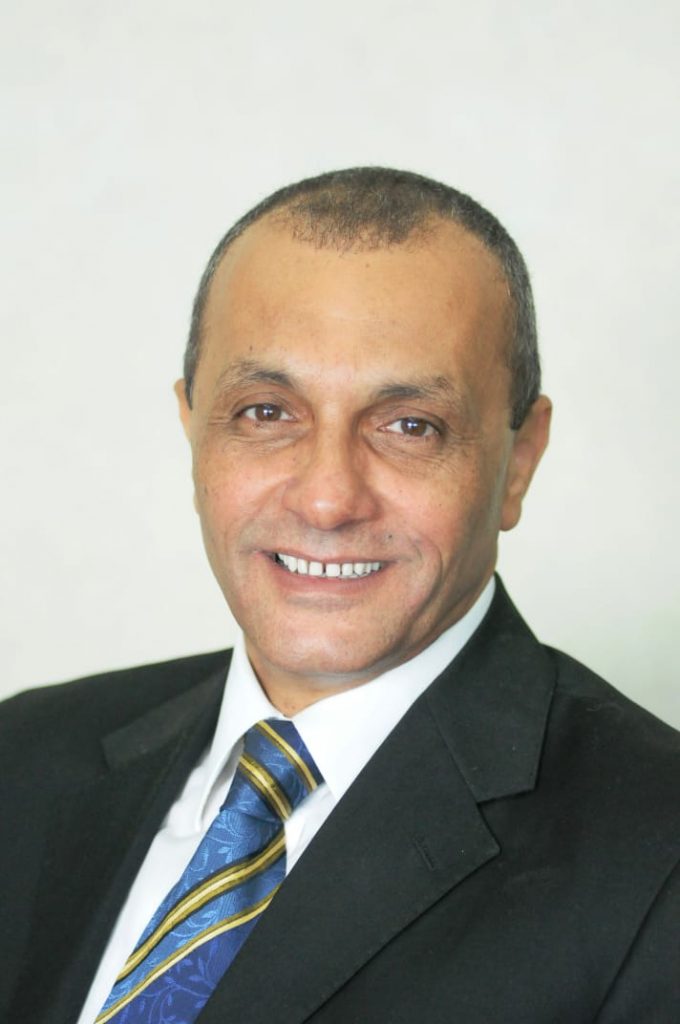
By Mohamed Attia
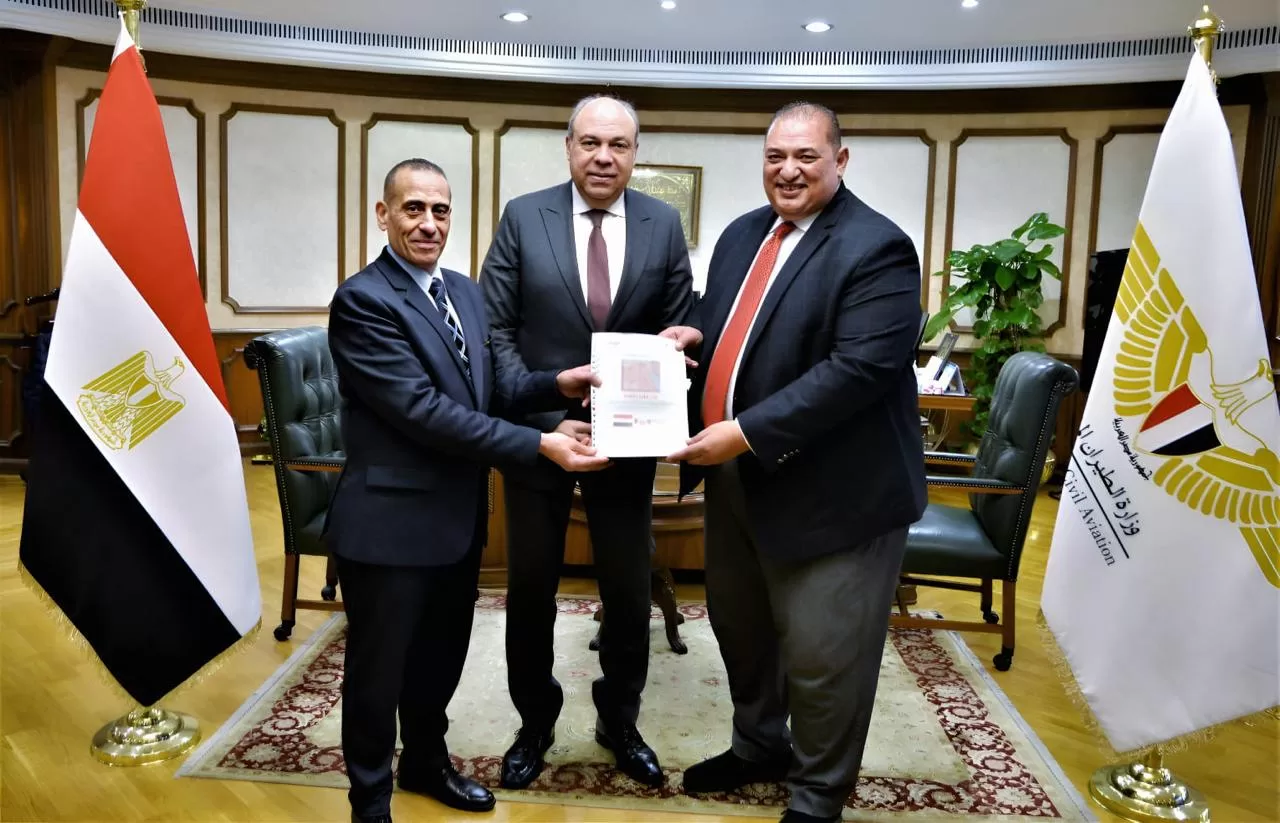
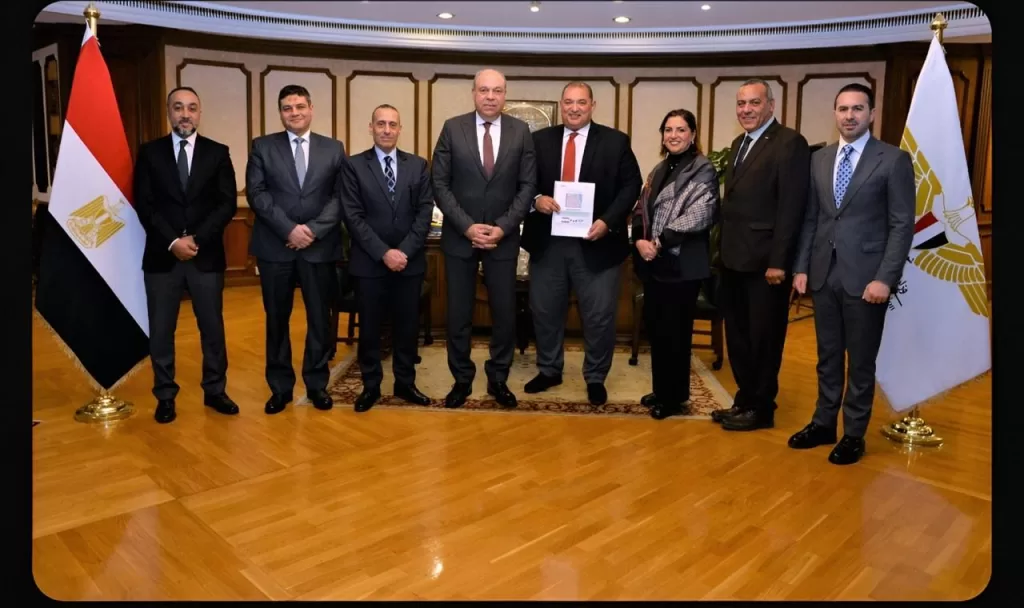
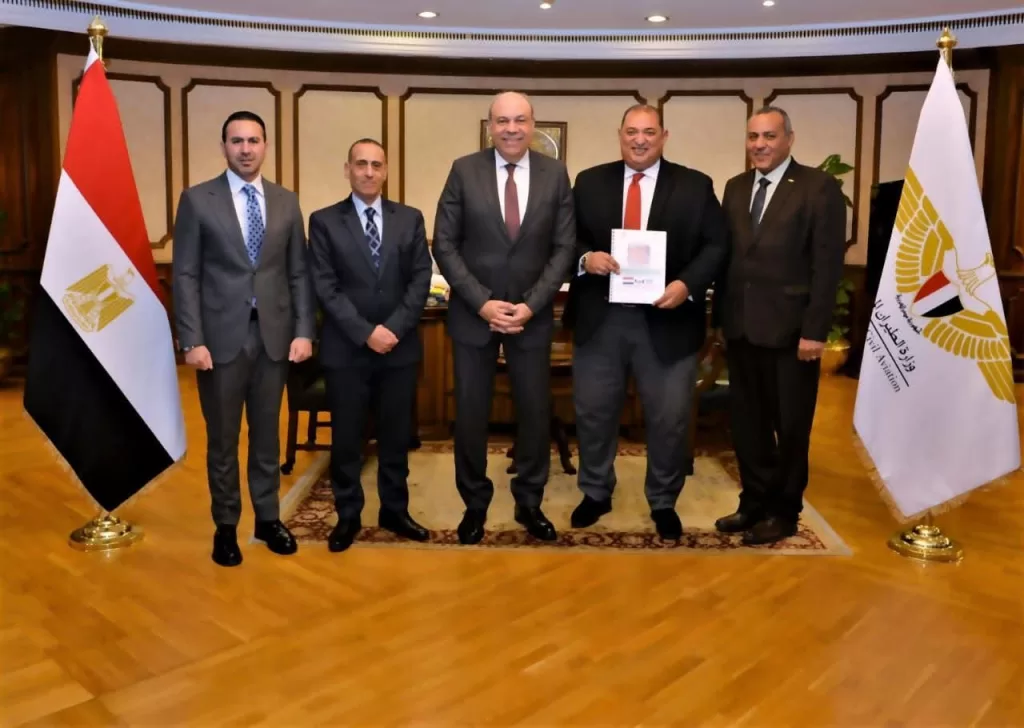
Dr. Sameh Al-Hafny, Minister of Civil Aviation, witnessed the formal submission ceremony of Egypt’s National Aviation Action Plan through 2028 to the International Civil Aviation Organization (ICAO).
The strategic document was delivered by Navigator Sameh Fawzy, President of the Egyptian Civil Aviation Authority (ECAA), to Mohamed Rahma, Director of the Air Transport Bureau at ICAO. The ceremony was attended by Reem Orabi, Egypt’s Deputy Representative to the ICAO Council; Navigator Ahmed Sukkar, ECAA Vice President for Airports and Navigation; and Pilot Mohamed Salah, ECAA Vice President for Aviation Safety.
A collaborative strategic framework
The National Action Plan was developed through a partnership between the ECAA and the European Union Aviation Safety Agency (EASA), with active participation from Egyptian airlines, Cairo Airport Company, the Egyptian Airports Company (EAC), and the National Air Navigation Services Company (NANSC).
Execution of the plan is overseen by the Permanent National Committee for the State Aviation Plan, chaired by Navigator Sameh Fawzy. The committee includes Pilot Karim Jamil, Advisor to the ECAA President and Committee Rapporteur, and Engineer Abdel Ghaffar El-Sayed, General Manager of Stationary Equipment and Airworthiness Inspector, ensuring continuous monitoring in accordance with the latest international ICAO standards.
Strategic goals and industry leadership
Minister Al-Hafny commended the efforts of the National Committee and expressed gratitude to the participating carriers, including EgyptAir, Air Cairo, Nile Air, Air Arabia, Nesma Airlines, and AlMasria Universal Airlines, alongside key infrastructure stakeholders. He emphasized that the plan represents a “promising economic and industrial opportunity,” positioning Egypt as a regional leader in sustainable aviation and clean energy.
Key projections and pillars of the plan include:
- Traffic Growth: International air traffic is projected to grow by 6% annually through 2027 and 7% annually through 2050, necessitating immediate operational measures for sustainable growth.
- Operational Efficiency: Enhancing navigation efficiency and optimizing flight paths within Egyptian airspace.
- Green Technology: Implementing modern aircraft standards and developing “Green Airports.”
- Sustainable Fuels: Integrating Sustainable Aviation Fuel (SAF) into the sector.
Environmental commitment
The plan adopts 25 specific operational measures aimed at reducing fuel consumption and emissions across Egyptian airlines. These include optimizing Continuous Descent Operations (CDO) and minimizing the use of Ground Power Units (GPU), which are expected to significantly boost fuel efficiency over the next three years.
Mohamed Rahma, ICAO’s Director of Air Transport, praised the Egyptian initiative as an “advanced model for sustainable strategic planning.” He noted that the plan aligns perfectly with ICAO principles, providing a practical framework that balances economic expansion with environmental preservation.
The National Aviation Action Plan is framed not merely as a formal commitment, but as a permanent institutional roadmap involving government entities, the industrial sector, and private airlines to ensure the long-term competitiveness and sustainability of Egypt’s aviation industry.

