




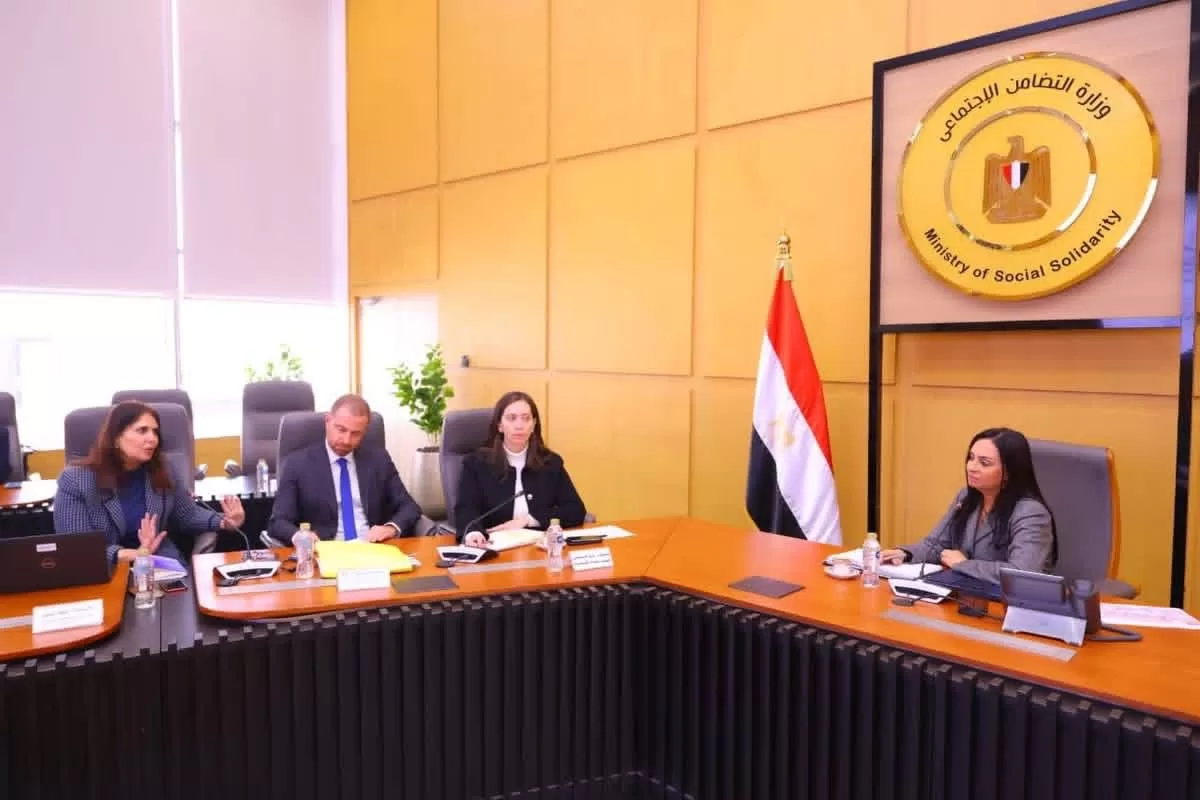
Egyptian Minister of Social Solidarity Maya Morsi met with a World Bank delegation on Sunday to review progress in the government’s flagship Takaful and Karama (Takaful and Dignity) cash transfer programme, the ministry said in a press release.
The meeting, held at the ministry’s headquarters in the New Administrative Capital, concluded a mid-year follow-up visit by the World Bank mission, which also conducted workshops with several ministry departments to monitor programme implementation.
Discussions focused on planned research to document the programme’s achievements after a decade of operation and to assess its impact on beneficiaries, officials said.
Morsi said the programme is prioritising measures to help families move from welfare dependency to work and productivity, including expanding early childhood care services to enable more women to join the workforce. The ministry plans to open additional nurseries in schools and issue temporary licences for existing childcare facilities, she added.
Raafat Shafiq, Assistant Minister and Executive Director of Takaful and Karama, said one million new beneficiaries have joined the programme since Morsi took office. The number of recipient families has risen to 4.7 million in 2025 from 1.7 million in 2015, with women accounting for 75 per cent of beneficiaries.
Up to 3.36 million families have exited the programme, bringing the total number of households supported since its launch to 8.1 million.
The programme’s budget has reached 54 billion Egyptian pounds in the current fiscal year, with average monthly support of about 900 pounds per family, ranging from 700 pounds to as much as 4,000 pounds for eligible cases.
Shafiq said Social Security Law No. 12, enacted in April 2025, expanded protection for vulnerable groups and transformed social assistance into a legal right, linking cash support to economic empowerment to encourage a shift from dependency to productivity.
Ingy El-Yamani, Executive Director of the Rural and Environmental Industries Support Fund, said the fund has become a key tool in helping beneficiaries transition to income-generating activities by supporting local industries, green technologies, and skills development in rural communities.
The meeting was attended by senior ministry officials and staff from the social protection and Takaful and Karamaprogrammes.

