




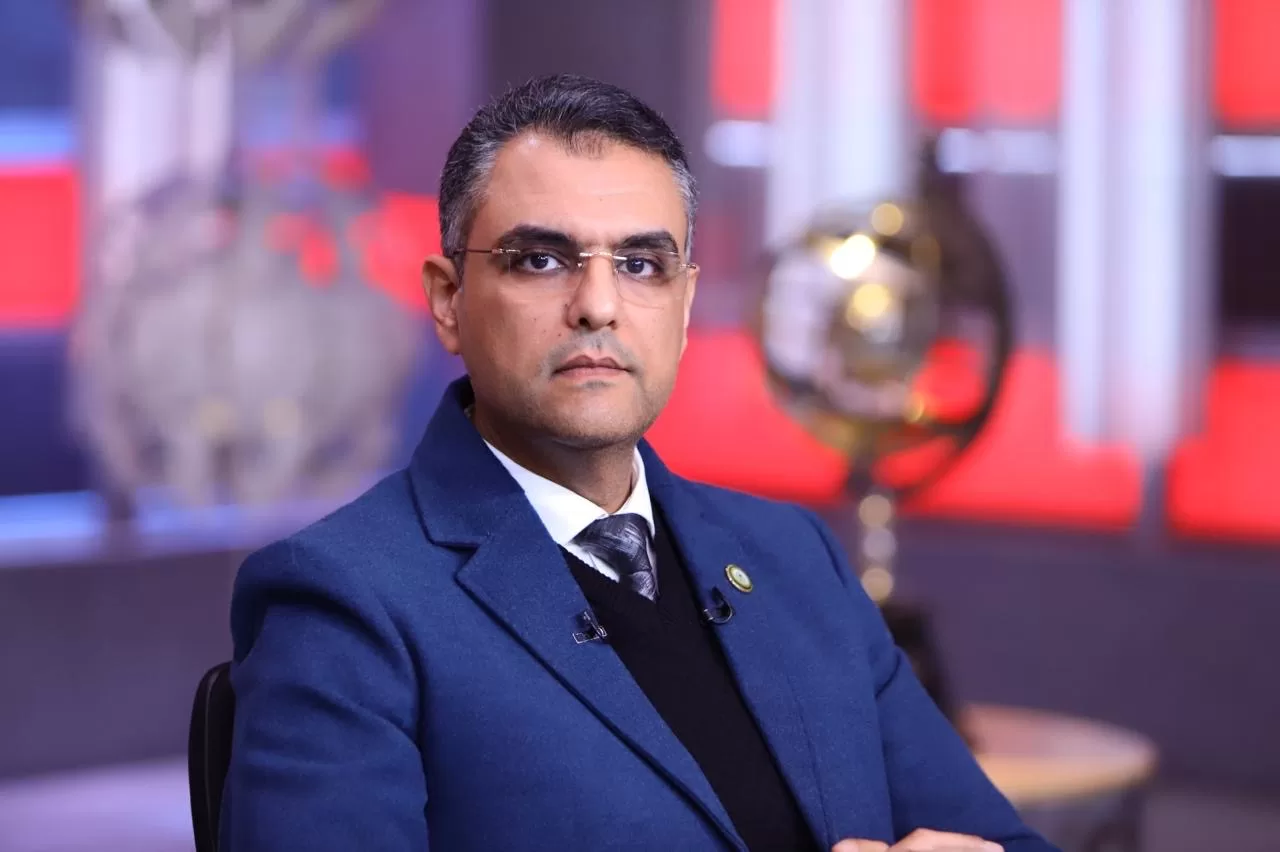
By Dr Osama Raslan,
Spokesman of the Ministry of Religious Endowments
Since Egypt was opened to Islam in the year 20 AH (641 CE) at the hands of the venerable Companion Amr ibn al-Aas, it has remained deeply bound to the Qur’an. Generations of Egyptian reciters studied under the Companions of the Prophet (PBUH) – among them Abd Allah ibn Umar and Uqbah ibn Amir – then under leading figures of the Tabiin such as Ikrimah, the freedman of Ibn Abbas, and Mujahid. In time, several Egyptian reciters journeyed to Madinah to learn the Qur’anic recitation of the eminent Imam Nafi al-Madani. Among these were Abu Saeed Saqlab ibn Shunaynah al-Misri, Uthman ibn Saeed – better known as Warsh – and Abu Dahyah al-Misri. Thus, the Warsh recitation rose to prominence in Egypt, becoming the dominant mode of recitation until the fifth Islamic century.
Across generations and through the sweep of centuries, the world gradually converged upon a familiar adage: “The Qur’an was revealed in Makkah, but it was recited in Egypt.” A saying so widespread has not taken root in hearts and minds without cause. Its resonance rests on deep foundations – proof of a legacy that earned both acclaim and permanence. Egypt, after all, produced the greatest Qur’anic reciters of the modern age. It launched the world’s first Qur’an Radio in 1934, effectively creating the earliest audio archive of Qur’anic recitation. A year later, in 1935, it established the first Institute for Qur’anic Readings.
Then came a historic milestone: in the era of President Gamal Abdel Nasser (1956–1970), Egypt broadcast the first complete audio recording of the Qur’an. The inaugural transmission aired on 18 September 1961, in the voice of the renowned Sheikh Mahmoud Khalil al-Husary. From that moment, the Egyptian style of recitation – one of Egypt’s most enduring pillars of soft power – began its global journey.
Egypt continued to build this legacy with the founding of the world’s first Faculty of the Qur’an and Qur’anic Recitations, whose graduates now span the globe teaching proper recitation and performance. It had earlier established the Union of the Egyptian Porticoes in 1860, followed by the Reciters’ Syndicate in 1983, and it has long championed memorisers of the Qur’an through international competitions that attract participants from every corner of the world.
The International Qur’an Competition (IQC), organised by Egypt’s Ministry of Charitable Endowments (MoCE) since 1993, has long stood as a focal point for memorisers of the Qur’an and scholars of tajwid (the science and art of proper Qur’anic pronunciation and recitation, governed by precise phonetic rules) and qira’at (various Qur’anic recitations) from across the globe. Its prestige rests on rigorous scholarly standards: contestants are assessed on memorisation, precision of recitation, excellence of performance, mastery of the variant readings and their interpretive underpinnings, knowledge of the occasions of revelation, fluency in understanding meanings, objectives, and the overarching messages of the Qur’anic text, as well as competence in tafsir (exegesis of Qur’an).
The 2025 IQC welcomes elite participants from 72 countries, alongside arbitrators from eight nations, under the gracious patronage of President Abdel Fattah El Sisi. In doing so, the competition stands as one of the most vivid manifestations of Egypt’s soft-power capabilities in nurturing Qur’an memorisers worldwide. The total value of prizes this year has reached 13 million Egyptian pounds – the highest prize pool in the history of Qur’anic competitions. Equally remarkable is the participation of 158 contestants from 72 countries, setting unprecedented records in the competition’s history and surpassing similar contests across the world.
Amid the decline and trivialisation that have afflicted the industry of online/entertainment content, and the relentless chase after media buzz – or “trends” – by any means, the Dawlat Attelawah (Recitation Kingdom) program emerges as a corrective for the nation’s media taste. Launched by MoCE in collaboration with the United Media Services Company, this initiative represents a cultural, spiritual, and educational project that restores Egypt’s historical leadership in Qur’anic recitation. It does so through the largest televised Qur’an competition in Egypt’s history, captivating the Egyptian family across all age groups and social strata.
Dawlat Attelawah is far more than a competition. Intented, unlike IQC, for uncovering Egyptian talents only, it is a visionary project designed to cultivate a new generation grounded in the authentic Egyptian tradition of recitation, invocation, chanting, and the call to prayer. Egyptians – and indeed the wider world – have long been enchanted by the voices of master reciters: Muhammad Rif’at, Al-Minshawi, Al-Husary, Abdul Basit, Sheikh Shubib, Sheikh Hossan, Al-Sha’sha’i, Raghib Mustafa Ghalwash, and countless other luminous figures whose artistry has instilled beauty, taste, and joy in the hearts of listeners through the divine light of the Qur’an.
Two rounds of selection were conducted for the competition, drawing over 14,000 applicants from across the country. The judging panels included a distinguished roster of senior reciters to ensure the highest standards of evaluation in terms of performance quality, mastery of rules, and vocal beauty.
The competition features two main categories: Tajwid and Tartil. The total prize fund amounts to 3.5 million Egyptian pounds, with the first-place winners in each category receiving one million pounds apiece. In addition, their complete recordings of the Qur’an will be broadcast on Misr Qur’an Kareem TV, and they will have the honour of leading the Taraweeh prayers at Al-Imam Al-Hussein Mosque during the upcoming Ramadan.
A question that has echoed through the generations, repeated on countless tongues, is: Why this Egyptian mastery of the Qur’an? The answer is clear: it is a divine gift bestowed upon this nation, nurtured by God through the unfolding of civilisations since the dawn of history on Egypt’s soil. The beauty of performance emerged first in the chants of temples, then in the hymns of churches, and later in the measured recitation of the Qur’an in the kuttabs and mosques. I often say: “I am Egyptian; in every art I hold an authentic stance… in my brilliant legacy there is chant, hymn, and recitation.”
Every excellence in this beloved land is rooted in love and the essence of Egyptian identity, so much so that these two qualities – artistry and devotion – have become the enduring hallmarks of our national heritage.
In conclusion, the Revelation descended in Makkah, yet the pinnacle of performance, the beauty of tartil, and the mastery of recitation reached their zenith in Egypt – the Recitation Kingdom – the cherished heart of aspiring reciters. These are the reins of Qur’anic recitation, and they belong to Egypt alone, a precious gift from the Most Merciful. Truly, Egypt remains the eternal Custodian of the sacred secrets of Qur’anic recitation.
It is our duty to nurture this divine gift: to discover talent, refine it, and present it to the world with all the grace, beauty, excellence, and love it embodies. From the International Qur’an Competition to the Recitation Kingdom, Egypt continues to be a birthplace of reciters and a beacon of Qur’anic artistry for the world.

