



Chairman of the Egyptian Quality Assurance and Accreditation Authority (ETQAAN), Mohamed Moussa Emara, has affirmed that the authority bears a key national responsibility aimed at measuring the quality of Egypt’s technical and vocational education system.
He also stressed that the quality of this sector’s outputs is a fundamental pillar of sustainable economic development and the building of a knowledge-based economy.
ETQAAN is Egypt’s specialised body, established under Law 160 of 2022, responsible for ensuring quality in Technical and Vocational Education and Training (TVET) by setting standards, accrediting programs, and aligning training with labor market needs, working alongside the general
Emara made the remarks in his address to a workshop held in co-operation with the European Training Foundation (ETF), which focused on the importance of establishing national quality indicators and reviewing the European Quality Assurance Reference Framework for Vocational Education and Training (EQAVET).
Emara emphasised that, pursuant to Law No. 160 of 2022, ETQAAN is mandated to develop and update national indicators for measuring the quality of the technical, technological, and vocational education and training system, and to review them periodically to ensure alignment with international best practices and standards.
The purpose of examining the European EQAVET framework is not to “replicate it,” but rather to study accumulated international experiences and discuss their suitability for Egypt’s unique context, as well as their alignment with ETQAAN’s efforts to develop national indicators that serve national priorities and Egypt’s Vision 2030, he explained.
For his part, Monir Baati, senior expert in human capital development and quality assurance of vocational education and training at the ETF, offered the workshop a detailed presentation on the EQAVET framework, which has been a leading model for quality assurance in the European Union since 2009.
The framework’s indicators help assess vocational education and training systems, enhance quality assurance, support the internationalisation of practices, and improve comparability among EU member states, he said.
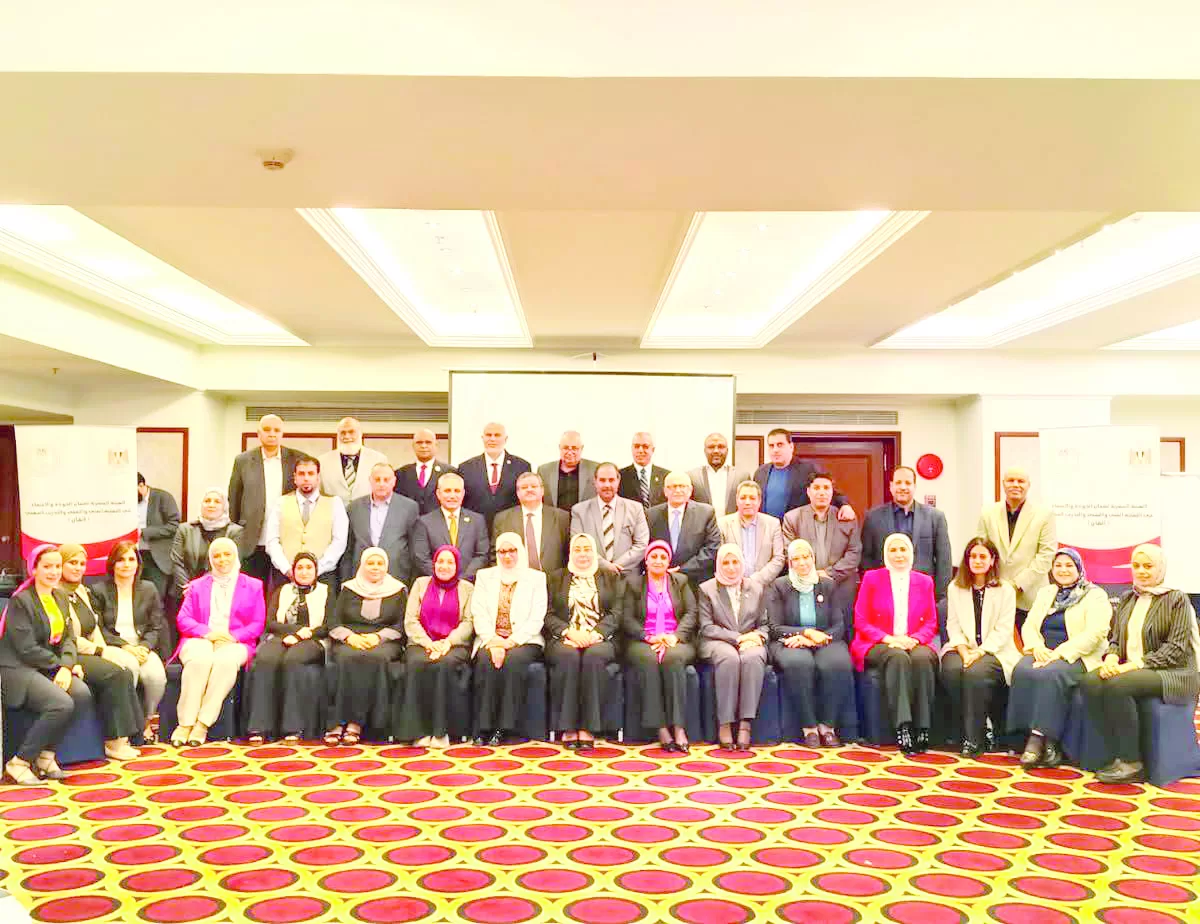
The workshop featured broad participation from all relevant stakeholders in Egypt, including representatives from the Ministries of Higher Education, Finance, Planning, Education, and Industry, as well as the defense, military production, health, electricity, and housing sectors.
It also included presidents of technological universities, representatives of the labor market and the Federation of Egyptian Industries, and experts—reflecting the national importance of advancing the quality of technical and vocational education.

