




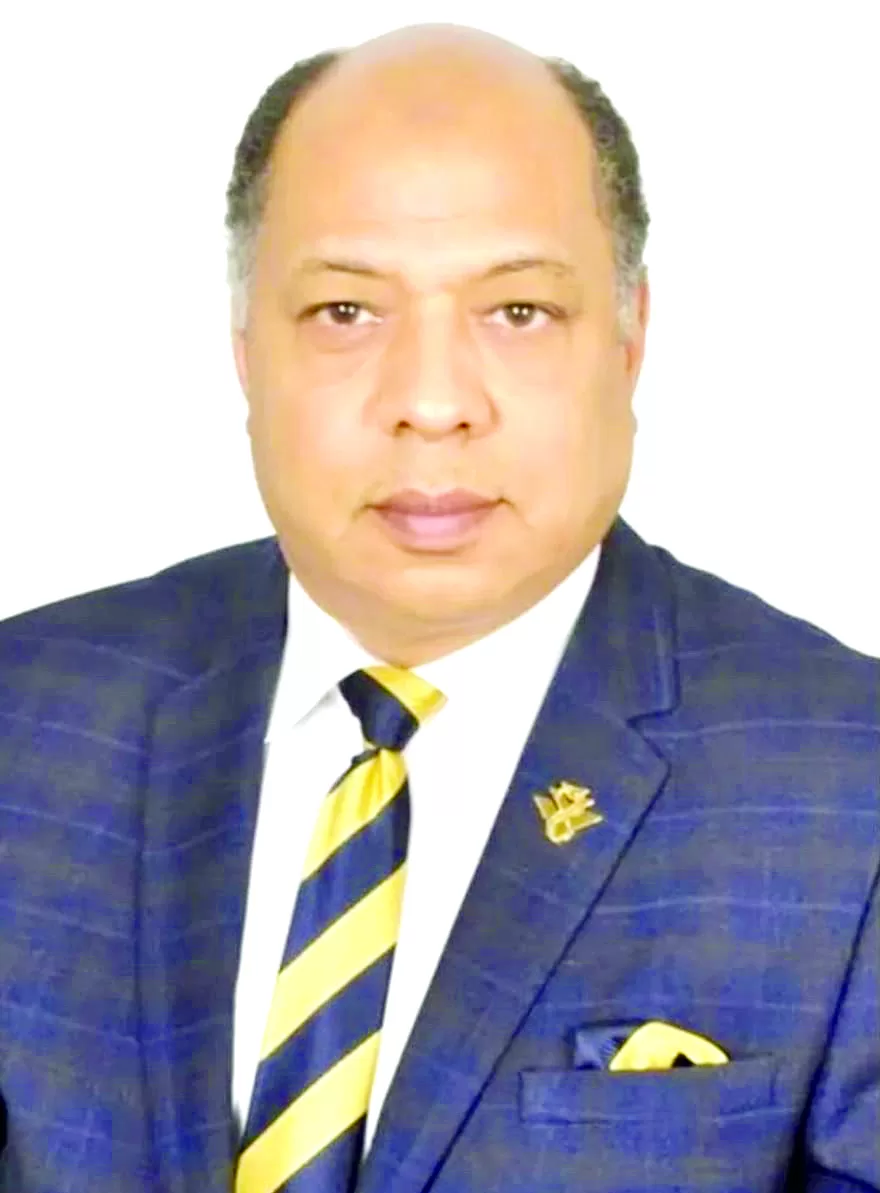
Ahmed Sallamah
The section concerning Palestine in the joint Sino-French statement represents a significant milestone within the renewed international momentum aimed at reviving the political process and ensuring the protection of civilians in the Gaza Strip. The statement did not rely merely on general formulations; instead, it reflected a genuine convergence of visions between Beijing and Paris, uniting in support of the two-state solution, bolstering the capabilities of the Palestinian National Authority (PNA), and affirming the central role of the United Nations in delivering humanitarian aid.
Undoubtedly, this escalating international alignment intersects with the pivotal Egyptian role—politically, humanitarianly, and practically—led by President Abdel Fattah El-Sisi, which is founded on clear constants: supporting the Palestinian state, protecting civilians, preventing the expansion of the conflict, and working to restore security and stability in the region through a comprehensive political solution.
Both China and France affirmed that creating the conditions for implementing the two-state solution is the only path to achieving a just and lasting peace. This stance clearly aligns with the Egyptian constants, which stress the establishment of an independent Palestinian state on the borders of June 4, 1967, with East Jerusalem as its capital. This orientation intersects with the efforts led by President El Sisi to solidify this path through continuous Egyptian political and diplomatic movements.
These positions gain compounded importance given China’s early recognition of the State of Palestine in 1988, and in light of the qualitative shift in the French position, which announced its recognition of the State of Palestine on September 22, 2025—a step clearly welcomed by Beijing. The two countries also welcomed the “New York Declaration,” issued on September 12, 2025, considering it an important push to reinvigorate the political track.
In parallel, China and France placed special emphasis on the ceasefire reached between Israel and the Hamas movement last October 9, stressing the necessity of solidifying it and respecting the truce commitments to ensure the cessation of bloodshed and the end of civilian suffering. This position reinforces Egypt’s consistent call, since the first day of the war, for prioritizing a ceasefire and providing comprehensive protection for civilians.
The statement also condemned all violations of international humanitarian law, including targeting civilians, terrorist acts, and indiscriminate attacks. This position reflects a growing international realization of the importance of protecting civilians as an indispensable prerequisite for creating a politically viable environment.
On the humanitarian level, Chinese President Xi Jinping and his French counterpart Emmanuel Macron stressed the necessity of delivering humanitarian aid to the entire Gaza Strip quickly, safely, sustainably, and without obstacles, under the supervision of the United Nations. This position is completely consistent with Egyptian efforts—from coordinating aid and opening humanitarian corridors, to evacuation and medical care efforts—which have received wide international praise.
On the institutional level, the statement highlighted the importance of supporting the Palestinian National Authority and enhancing its financial capabilities as a fundamental pillar for preserving stability and building the state. Both sides expressed their appreciation for the efforts of the “Emergency Coalition for the Financial Sustainability of the PNA,” an international initiative launched by a group of countries to provide coordinated and urgent support to ensure the continuity of PNA institutions and their ability to provide basic services amid the exceptional conditions in the Palestinian territories.
This coalition represents an affirmation that preserving the Palestinian National Authority is a political and security necessity, no less important than de-escalation efforts. This approach is consistent with the Egyptian vision, which always emphasizes that strengthening the institutions of the Palestinian state is a crucial element for the success of any comprehensive political solution.
In the same context, France welcomed China’s increasing role in supporting Palestine, especially the aid recently announced by Beijing. President Xi Jinping’s announcement of $100 million in humanitarian assistance to Palestine was a significant step, reflecting a growing Chinese commitment to alleviating the humanitarian crisis in Gaza and promoting recovery and reconstruction efforts. This aligns with Egypt’s call for the necessity of linking relief with the political track and reconstruction.
The joint statement carried numerous messages clarifying that China and France intersect on a core set of principles regarding the Palestinian issue. There is no doubt that this convergence—despite their different political backgrounds—reflects a growing international recognition that sustainable peace in the Middle East begins with Palestine, and that the reconstruction of Gaza and the end of civilian suffering cannot be separated from launching a genuine political process that restores legitimate Palestinian rights.
Ahmed Salam is a member of the Egyptian council for foreign affairs, former Egyptian media counselor in BeijingYou can reach the writer via [email protected]

