





Trump targets Biden’s signature
Legal experts reject claim, presidents have used signing machines for 200 years
personal feuds test irreversible Presidential power
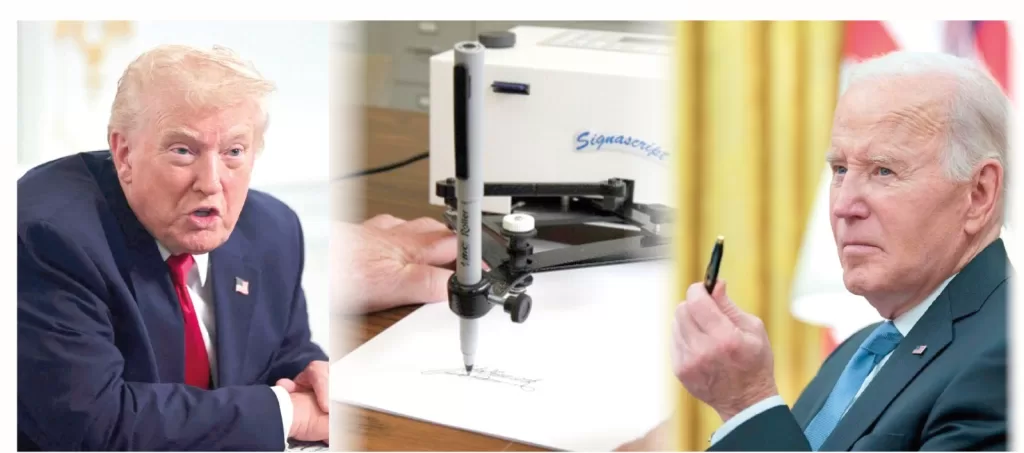
US President Donald Trump’s recent declaration via social media that he intends to nullify virtually all executive orders and documents signed by his predecessor, Joe Biden, using an autopen machine has ignited a political and legal firestorm.
While the declaration was made on the digital stage, this move signals a potential, unprecedented action that raises critical questions about the legal foundations of presidential authority and the mechanisms of US governance.
For observers, this episode is a crucial reminder of how domestic US political battles can test established constitutional norms.
Trump asserted that “approximately 92%” of Biden’s signed actions were invalid because they were authenticated by machine rather than handwritten.
While the statement carries no legal force on its own, it signals a potential shift in how Trump’s administration may treat legal instruments issued during Biden’s presidency.
What is the autopen?
The autopen is a mechanical device capable of replicating a handwritten signature, using real ink. US presidents have relied on the technology for more than a century, particularly for routine correspondence and ceremonial documents.
Historical archives show that autopen use dates back to Thomas Jefferson’s era. More recently, Presidents Lyndon Johnson, Gerald Ford, George W. Bush, Barack Obama, and even Donald Trump himself have used it.
Crucially, the US Department of Justice ruled in 2005 that autopen signatures are legally valid when used at the direction of the president. The Constitution does not explicitly prohibit the use of such technology, nor does it require that signatures on executive actions be handwritten.
Legal effect
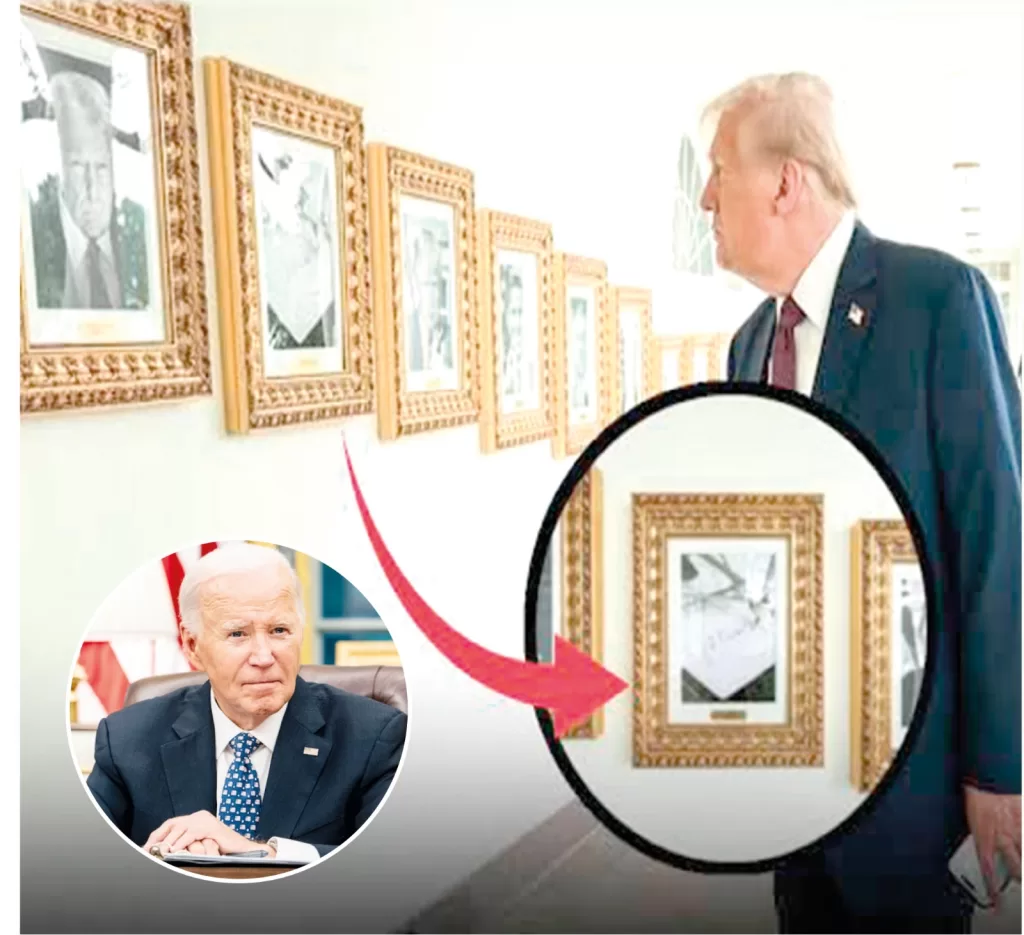
From a legal standpoint, Trump cannot void executive orders or pardons through a statement or online declaration. US constitutional practice requires a formal executive order to revoke or amend previous ones.
Even if Trump attempts to invalidate Biden’s actions based on signature method, legal experts argue his case is weak.
There is no legal precedent supporting the argument that an autopen signature invalidates a presidential act.
Previous administrations, including Trump’s, used the device without question. Courts may require proof that Biden did not authorize the autopen-signed documents, a claim that currently lacks evidence.
More significantly, certain presidential powers, such as pardons, are constitutionally irreversible once issued, even if signed by autopen.
Potential consequences
If Trump moves forward with official action, several outcomes may follow.
Advocacy groups, states, and individuals affected by rescinded actions could immediately file lawsuits, turning the issue into a constitutional dispute likely to reach the Supreme Court.
Federal agencies may face operational paralysis while awaiting legal clarity on whether Biden-era directives remain enforceable.
Trump’s claim feeds into a broader narrative questioning Biden’s cognitive ability and legitimacy, an argument embraced by some Republican leaders but rejected by Biden and his supporters.
If courts accept the argument, the validity of decades of presidential decisions signed under similar conditionscould be called into question.
A political strategy
While the legal foundation for Trump’s claim remains highly disputed, the political message is clear. Trump aims to portray Biden as detached from governance and delegitimise his administration’s legacy.
The announcement has energized his political allies and prompted endorsements from conservative groups and Republican lawmakers.
Biden, for his part, strongly rejects the allegations, asserting that every executive action signed during his presidency was fully authorized and deliberate.
The controversy over autopen-signed executive orders represents less a legal breakthrough than a new front in the intensifying political struggle between Trump and Biden.
Whether this challenge evolves into a constitutional showdown or remains a symbolic gesture will depend on what Trump does next, not what he posts online.
Mr Trump’s autopen claim is primarily a political strategy aimed at delegitimizing President Biden’s tenure and actions, rather than a sound legal argument.
While he retains the authority to reverse most executive orders, his threat to overturn past pardons and his basis for nullification, the autopen lack legal foundation.
The true consequence of this episode lies in the damage it inflicts on the political civility and constitutional stability of the American system.

