



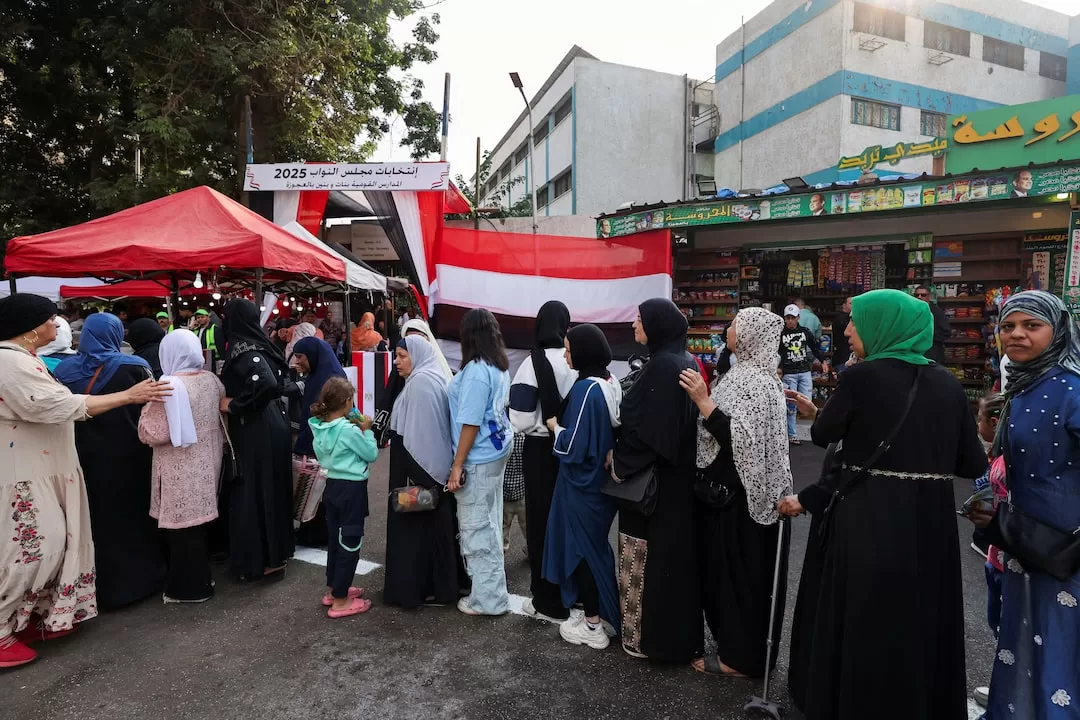
Polling stations began at 8:00 am, Monday, receiving voters wishing to cast their ballots in the second phase of the House of Representatives elections.
The process is being held under the supervision of judicial authorities and will continue for two consecutive days, with monitoring by various civil society organizations and local and international media.
The second phase of the parliamentary elections includes 13 governorates: Cairo, Qalyubia, Dakahlia, Menoufia, Gharbia, Kafr El-Sheikh, Sharqia, Damietta, Port Said, Ismailia, Suez, North Sinai, and South Sinai.
A total of 34,611,991 eligible voters are registered to cast their ballots across 73 constituencies comprising 5,287 sub-polling stations.
There are 1,316 candidates running in the individual system in this phase, competing for 141 individual seats, in addition to one electoral list in the East Delta sector and another in the Cairo, South and Central Delta sector for the list-based seats.
Judges from the State Lawsuits Authority and the Administrative Prosecution Authority, serving as heads of the sub-polling stations, received the polling sites early this morning, inspected them, and ensured that all requirements for conducting the electoral process were available—particularly papers, documents, procedural records, and voter lists.
They also opened the ballot boxes to ensure they were completely empty before sealing them with special coded plastic locks.
Police forces were present to secure the polling stations and their surroundings and to ensure the protection of the sites so that voters could cast their ballots in a safe and reassuring environment.
The National Elections Authority made a number of arrangements to facilitate citizens’ exercise of their constitutional right to vote, especially for the elderly and persons with disabilities.
Most sub-polling stations were designated on the ground floors of electoral centers, and centers were provided with instructional boards containing QR codes enabling voters to scan for additional information on voting rules and procedures, as well as awareness materials on how to cast their votes, in order to streamline the voting process.
The National Elections Authority also provided a ballot paper in sign-language alphabet to enhance accessibility for persons with hearing disabilities, along with a Braille ballot for persons with visual impairments, which includes voting instructions to facilitate the process.
Each ballot paper also contains a note specifying the number of seats voters must select in each district, to help citizens vote correctly and prevent the invalidation of ballots caused by choosing fewer or more candidates than required.
The electoral process is being monitored by numerous international missions, foremost among them the Arab League, the African Union, the Organization of Islamic Cooperation, the Arab Organization for Electoral Management Bodies, and the Parliamentary Assembly of the Mediterranean, in addition to local civil society organizations and local, Arab, and international media.

