



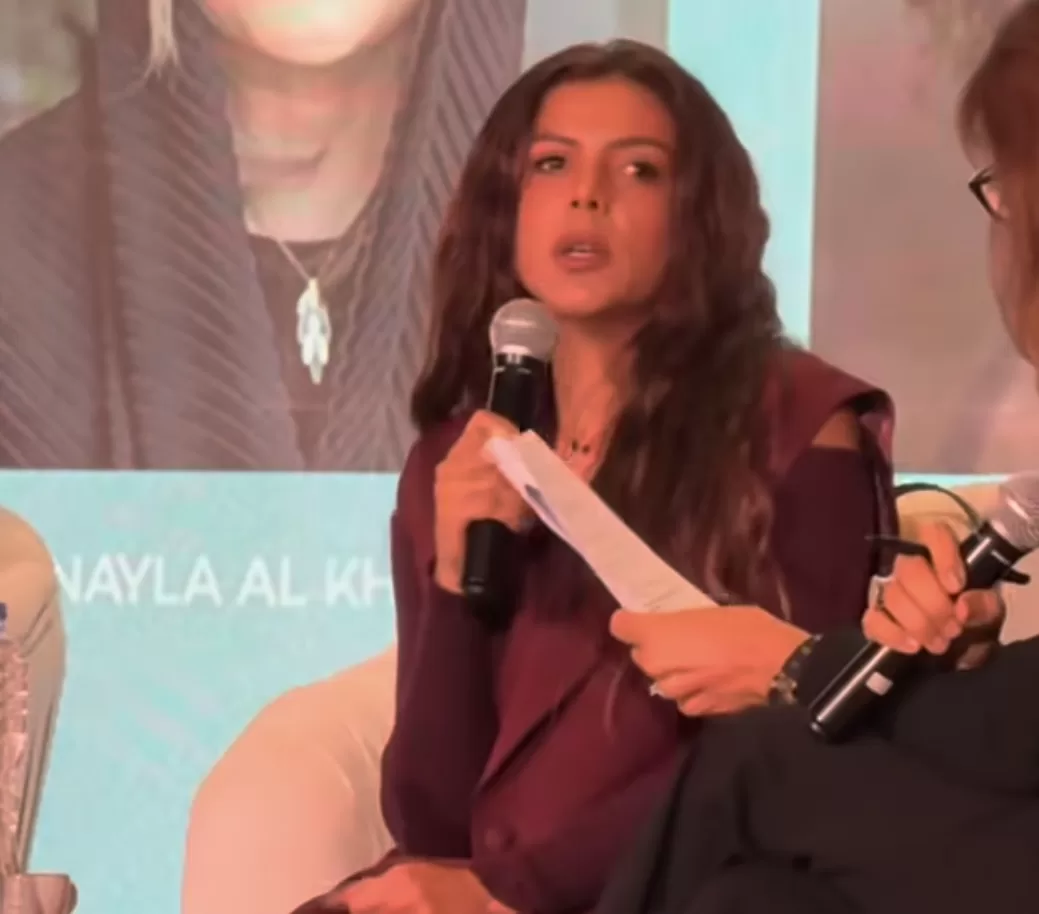
In a packed hall during the Cairo Industry Days of the 46th Cairo International Film Festival, four women who have fought their way to the front lines of cinema sat beneath a single spotlight and spoke a truth the industry still resists: talent is not the problem, but access is.
“Men and women have the same talent,” said Norwegian director Elizabeth Sjaastad, her voice steady and unflinching, “but the opportunity is not the same. This is not about capability. It is about being given the same chance and the same recognition”.
The applause that followed was not polite, but fierce.
Titled “Her Story… Her Power: Bridging the Gender Gap in Cinema”, the session became less a panel discussion and more a collective testimony.
On stage sat Egyptian actress Nahed El Sebai, Emirati trailblazer Nayla Al Khaja, Norwegian director Elizabeth Sjaastad, and Egyptian-Canadian producer Rasha Asfour, four women from different corners of the world whose careers have been shaped by the same stubborn reality: cinema remains a fortress built and guarded largely by men.
Nayla Al Khaja, the first woman from the UAE ever to direct a feature film, delivered the starkest statistic of the afternoon.
“In a country of 12 million people,” she said, “there are only five female directors. And I am the only one who has made a full-length feature.”
Nahed El Sebai, long celebrated for fearless choices that have sometimes ignited controversy, pushed back against the lazy label of “provocative actress”.
El Sebai emphasized that she never chooses a film solely for its potential to provoke controversy. She stated, “I never choose a film because it will be controversial. I have a specific triangle of partners: the director, the writer, and the producer. If I were to do the film, I would be involved [with them all].”
The discussion also touched on the content of women’s films, with some participants noting that women are often expected to avoid certain topics, present themselves with a specific tone, or conform to societal standards. Nayla Al Khaja shared that while there are always “red lines,” especially concerning religion or politics, she found comedy and horror opened pathways for her to express herself.
By the session’s end, the speakers agreed that, despite the existing difficulties, female filmmakers today possess louder and more influential voices.

