



At the Cairo Opera House, where the scent of fresh paint mingles with the lingering magic of projected light, something quietly revolutionary is taking place.
In the elegant halls of El Bab and Salah Taher, the rigid border between cinema and fine art has dissolved.
Frames that once flickered for two hours now breathe permanently on canvas and brushstrokes that belonged only to galleries have learned to move.
This is Parallel Frames 2025, the daring new exhibition that has made its debut on the margins of the 46th Cairo International Film Festival.
Walid Qannoush, head of the Fine Arts Sector at the Ministry of Culture describes it simply: “We wanted film lovers and art lovers to stand in the same space and feel the exact moment when their two languages meet”.
In these rooms, the cinematic image is no longer frozen at the end of a reel. It spills across sculptures, dissolves into photographs, and reappears as shimmering video installation, proving that the seventh art and the fine arts have always been secret siblings.
One of the exhibition’s most captivating stories is its celebration of the film poster, an object too often dismissed as commercial ephemera that, in Egypt and across the Arab world, became a revered art form in its own right.
Walking through the display feels like turning the pages of a luminous history book: lavish hand-painted portraits from the golden age give way to the bold photographic collages of the 1970s, then to the sleek digital designs of the 1990s and beyond.
Each shift in style carries with it a shift in identity, technology, and dreaming.
For Qannoush, bringing visual art into the heart of the Cairo International Film Festival, for the first time, is more than symbolic.
“We are done treating fine art as the festival’s polite guest,” he says with a smile. “It belongs at the table.”
The exhibition weaves two great narratives into a single, perfect experience.
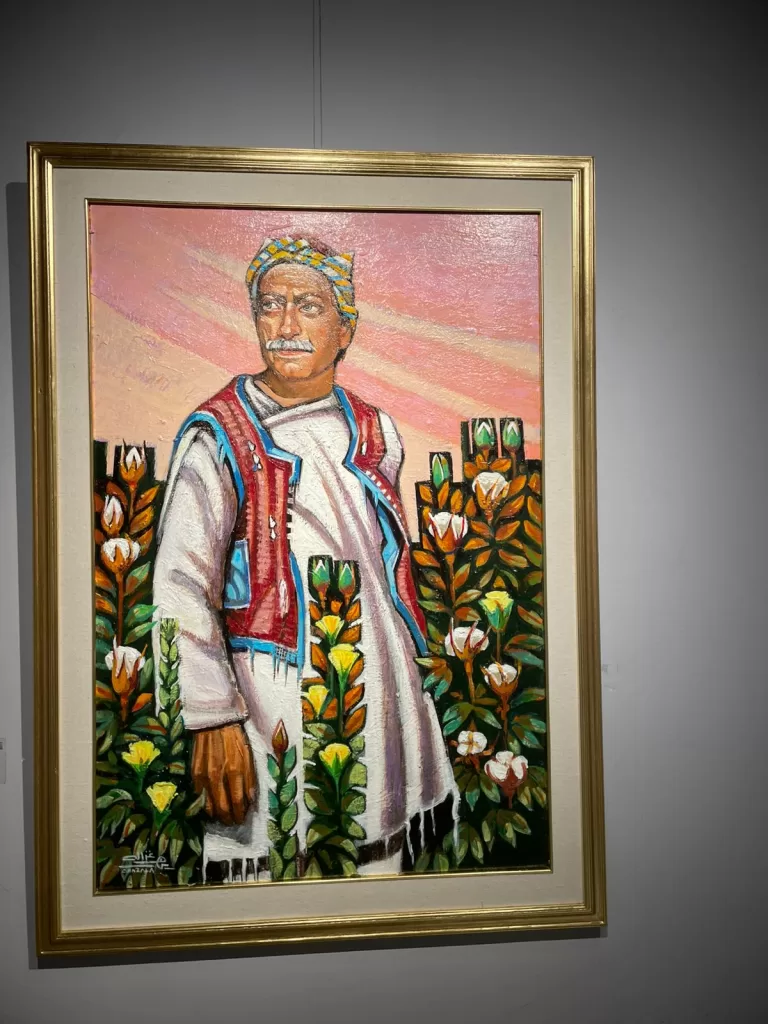
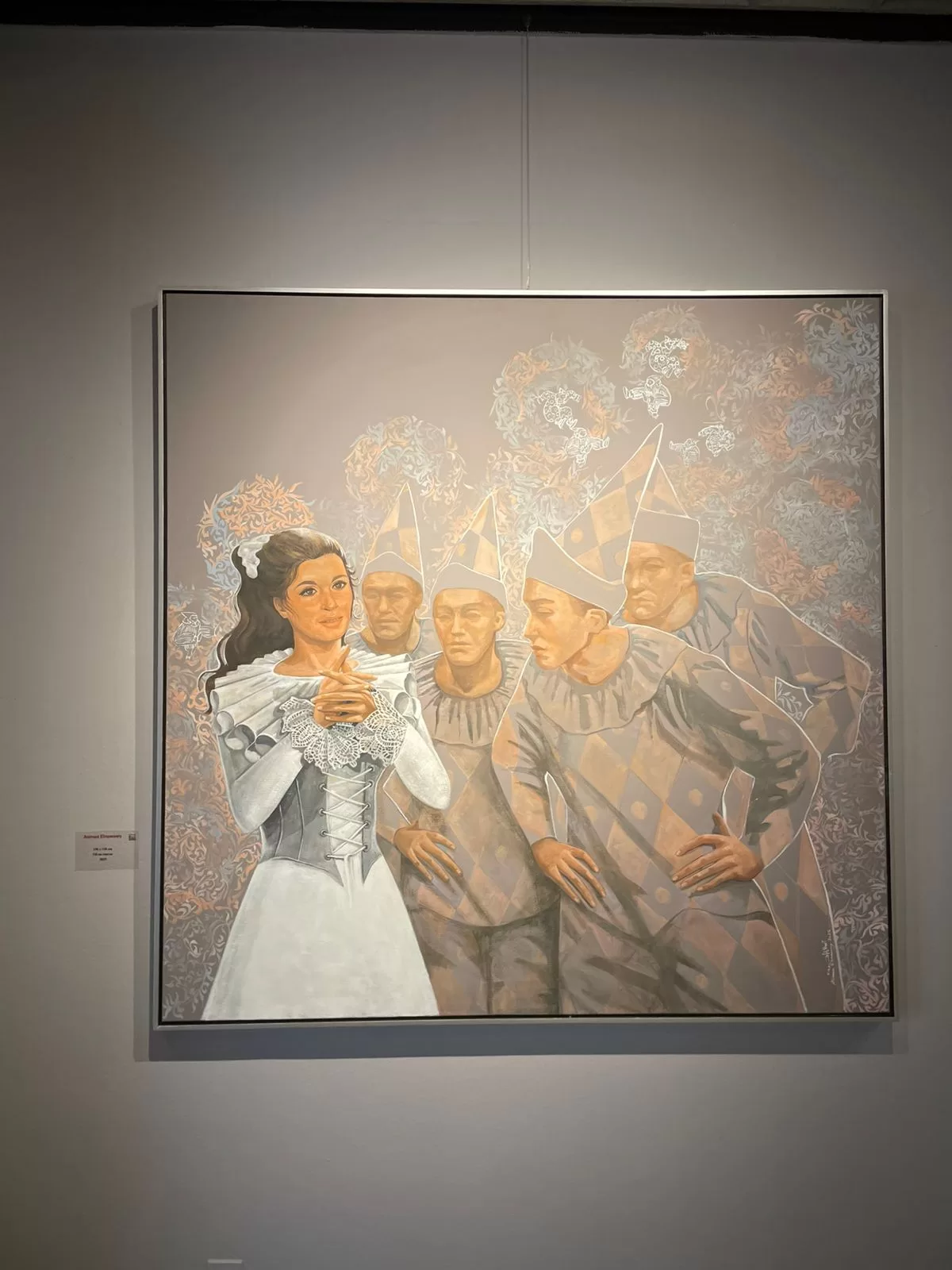
In the Salah Taher Gallery, 30 Egyptian artists and three distinguished Arab guests, from seasoned masters to daring young voices, revisit unforgettable moments from cinema and translate them into paint, bronze, light, and moving image.
A single frozen scream from a black-and-white classic might reappear as a towering abstract sculpture. The golden haze of a sunset in a forgotten melodrama becomes a luminous video loop.
Cinema, here, is revealed as a visual mother tongue that every artist in the room already speaks fluently.
Across the corridor in El Bab Hall, the spotlight falls on the unsung heroes who actually built the dream factories of Egyptian cinema.
Rare storyboards, costume sketches, and set designs by legends, such as Shadi Abdel Salam, Salah Marei, Ansi Abu Seif, and Nagi Shaker, are displayed like sacred relics.
Original posters by Mortada Anis, one of the last living masters of hand-drawn illustration, glow under gentle lighting, their vivid colours and dramatic poses reminding visitors that long before Photoshop, genius lived in the stroke of a brush.
Parallel Frames 2025 is not merely an exhibition, but a love letter written in light and pigment, a passionate argument that cinema and fine art have never truly been apart.
It remains open to the public at the Cairo Opera House daily until 22 November 2025.
Anyone who has ever been moved by a film or a painting owes themselves the short walk across the Opera grounds to step inside this luminous conversation.

