




CAIRO – Egypt’s Agriculture Minister Alaa Farouk said Sunday the Desert Research Centre is the ministry’s key arm in promoting integrated development in desert regions.
The minister emphasized the government’s focus on maximizing the use of natural resources in arid and semi-arid areas.
Farouk made the remarks as he was chairing the 97th Board of Directors meeting of the Center, coinciding with the institution’s 75th anniversary.
The meeting reviewed ongoing research and development projects, plans for agricultural reclamation, climate change adaptation, and water scarcity management in line with Egypt’s Vision 2030 for sustainable development.
The minister stressed linking scientific research outcomes to practical applications in horizontal agricultural expansion and strategic crop cultivation, enhancing food security and environmental sustainability.
Farouk also highlighted the importance of close collaboration between research centers and public and private sectors to support the national economy and improve living standards in border and desert communities.
Head of the Desert Research Center Hossam Shawki outlined achievements in natural resource management, desertification control, and desert biotechnology, emphasizing cooperation with local and international partners to ensure food security in fragile environments. He noted that the center is turning research into tangible development projects that improve livelihoods and sustain resources in desert areas.
The minister of agriculture also toured the Egyptian Desertification Observatory that monitors land degradation and provides early warning for desertification and climate risks and the National Water Desalination Network, aimed at consolidating desalination research and industry in Egypt to support national water security, in line with President Abdel Fattah El Sisi’s directives.
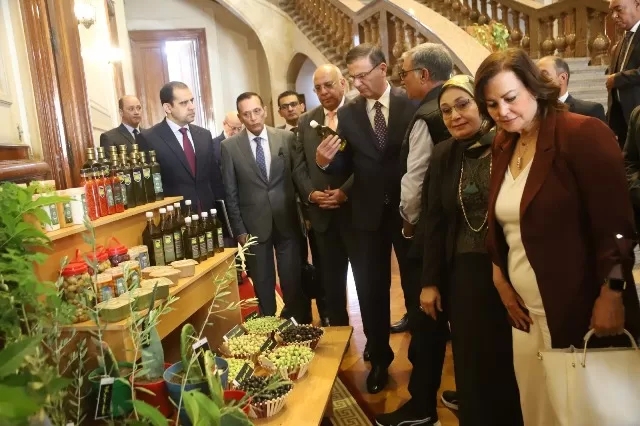
The minister viewed research station products demonstrating advances in desert agriculture techniques and plant varieties adapted to harsh conditions, supporting local communities and adding value to agricultural outputs in remote regions.

