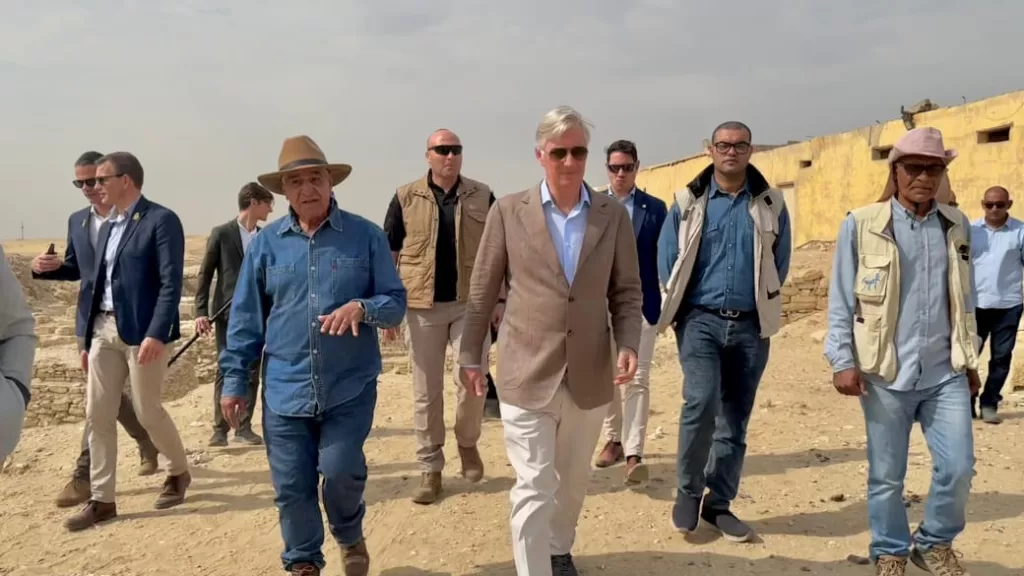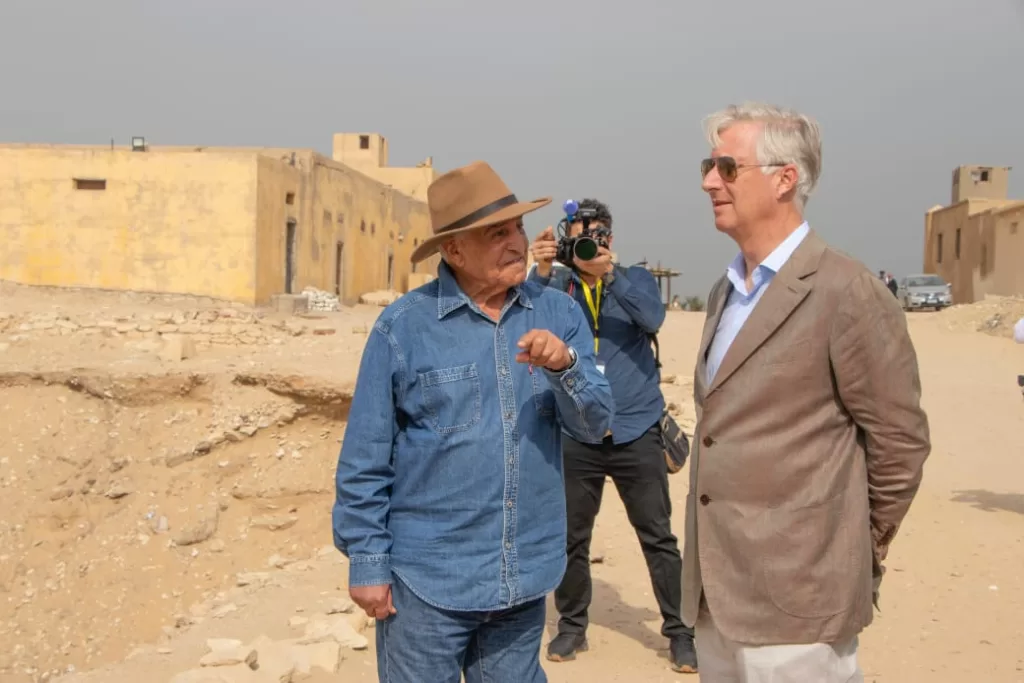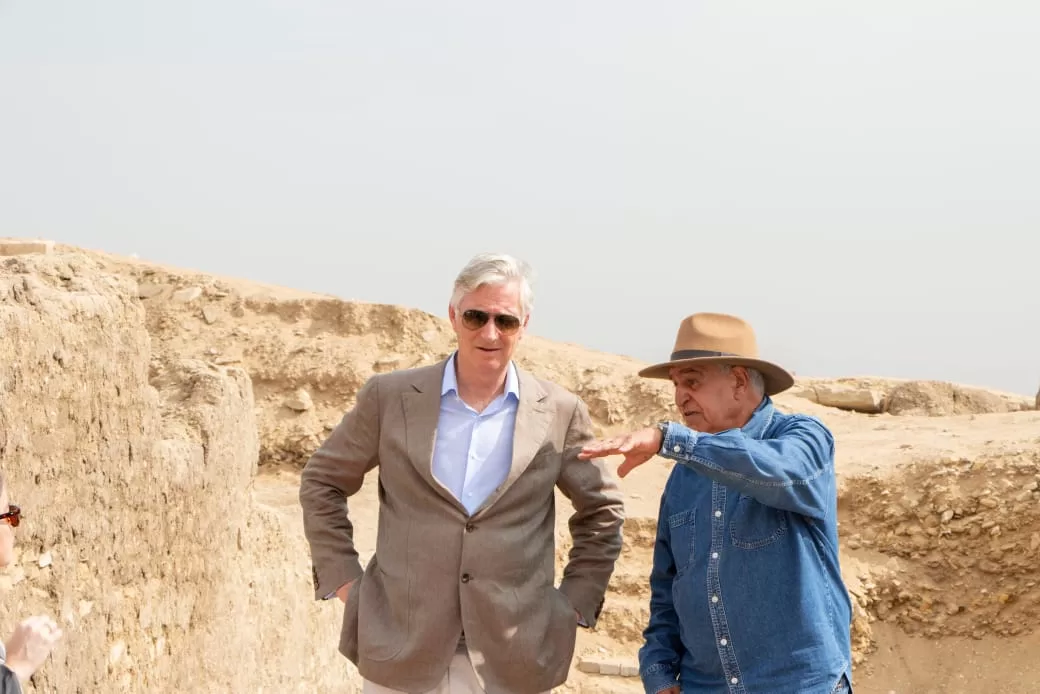
Renowned Egyptian archaeologist Zahi Hawass welcomed His Majesty King Philippe of Belgium to the excavation site of the Zahi Hawass Foundation for Archaeology and Heritage, in collaboration with Egypt’s Supreme Council of Antiquities, at the Teti Cemetery in the Saqqara necropolis.
The royal visit aimed to highlight the significance of recent archaeological discoveries in the area.
Hawass guided King Philippe through the site, providing detailed explanations of the mission’s key findings. The visit was attended by Belgian Ambassador to Egypt Bart De Groof and a high-level delegation.
The Egyptologist revealed to the King that the mission had uncovered the tomb of Prince Userkaf-Ra, son of King Userkaf, the first ruler of the Fifth Dynasty during the Old Kingdom.
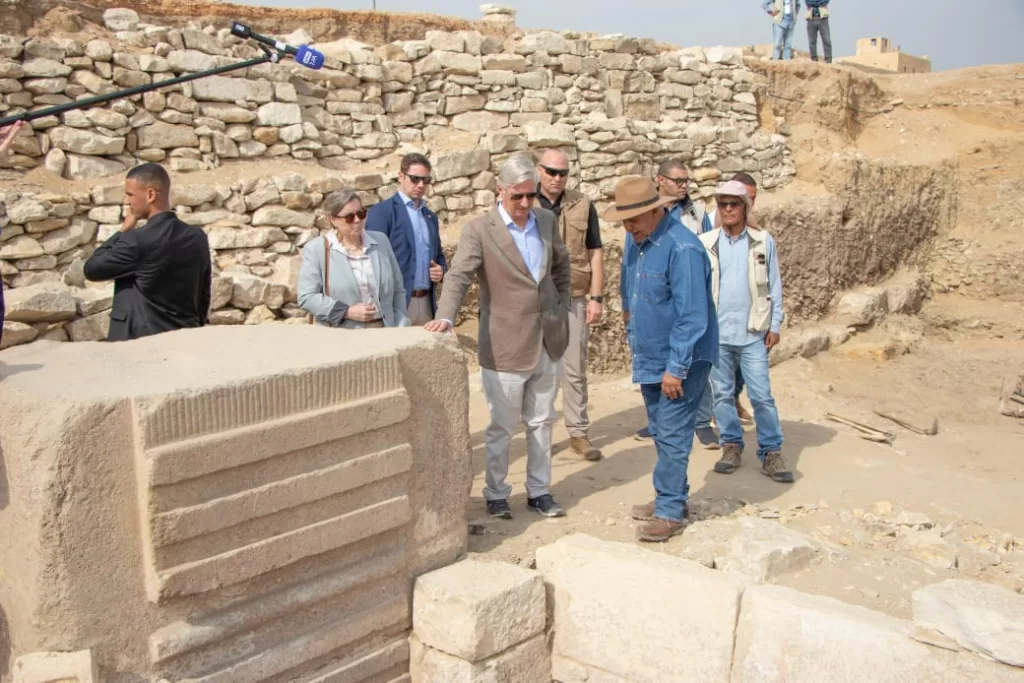
The team also recovered numerous significant artifacts from the Old Kingdom and later periods.
Among the major discoveries presented were the pyramid of Queen Neith, along with its attached funerary temple, part of a newly revealed Old Kingdom cemetery complex.
For the first time, the mission discovered a statue of King Djoser, his wife, and their ten daughters inside the tomb. Preliminary studies indicate the statues were originally housed in a chamber beside Djoser’s Step Pyramid and were relocated to Prince Userkaf-Ra’s tomb during later eras.
Additional finds included a red granite offering table, 92.5 cm in diameter, inscribed with lists of ritual offerings, and a 1.17-metre-tall black granite statue of a standing man bearing hieroglyphic inscriptions with his name and titles, dating to the Old Kingdom.
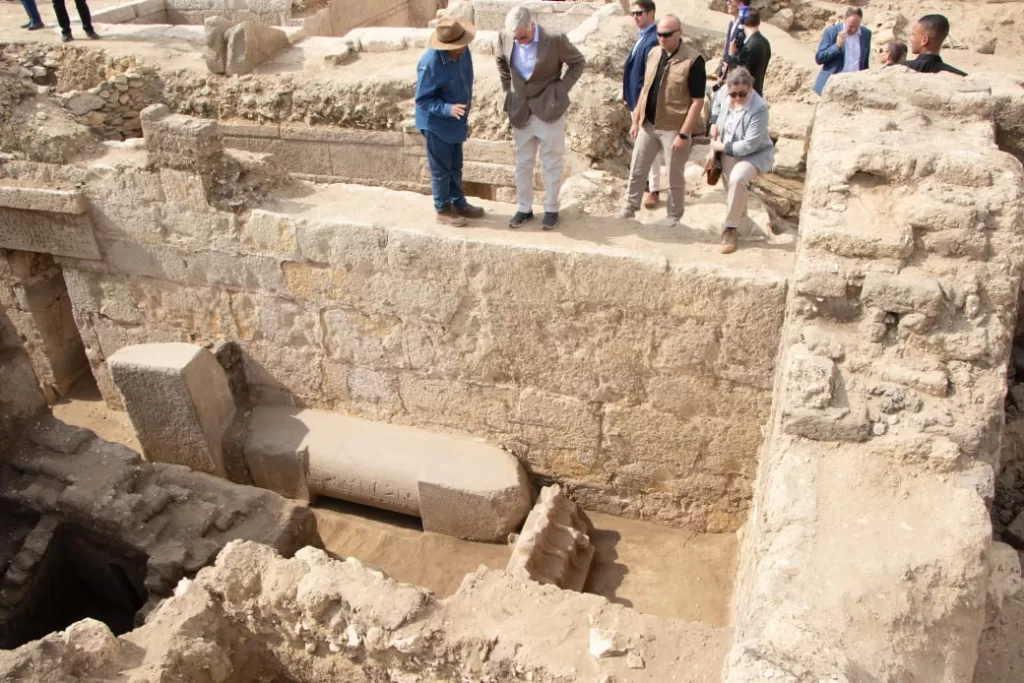
King Philippe expressed profound admiration for the grandeur of ancient Egyptian civilisation and commended the Egyptian mission’s efforts in uncovering its treasures.
Hawass emphasized that such royal and international visits serve as the strongest promotion for Egypt’s antiquities and a testament to the country’s security and stability.