





When visitors arrive at the Grand Egyptian Museum (GEM), they first meet the towering colossus of Ramses II.
This statue, standing sentinel at the entrance, is the museum’s icon, a magnet for cameras and crowds, and a symbol of Egypt’s ancient grandeur.
Yet, few people know that deeper inside the museum, beyond the galleries and the throngs of tourists, another Ramses awaits.
This is not either a replica, or a scaled-down homage, but a true ancient giant, one that now presides, almost incognito, over the museum’s bustling food court.
This ‘hidden’ colossus of Ramses II is every bit as imposing as its famous counterpart.
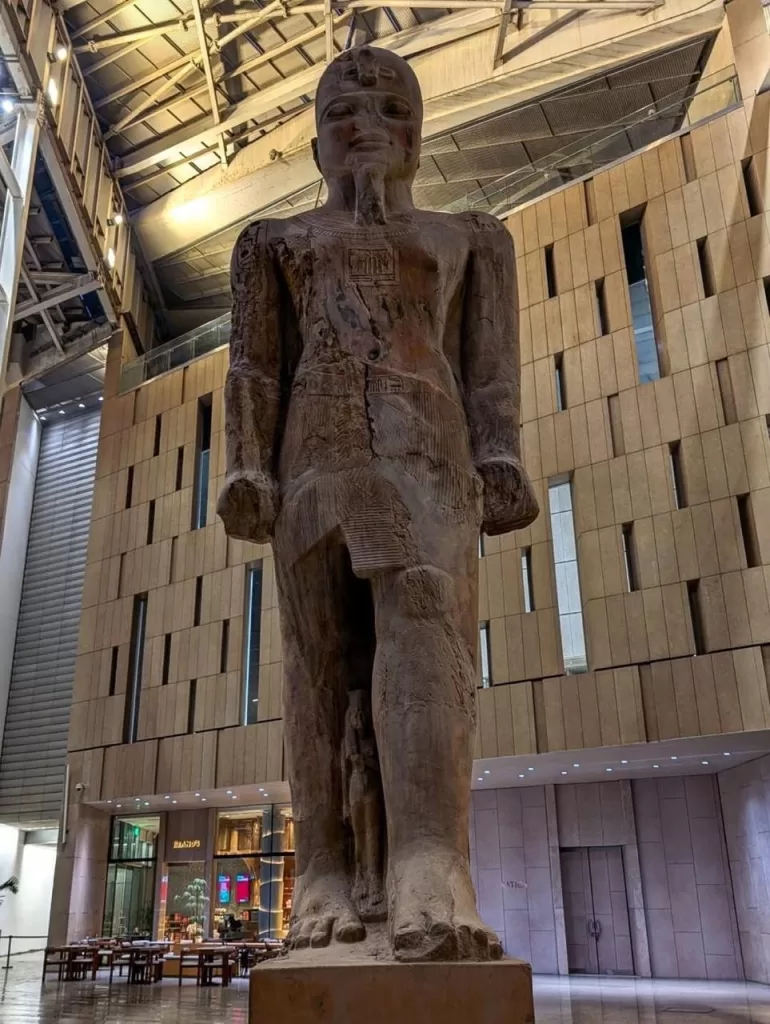
Carved from rosy quartzite and standing over eight meters tall, the statue wears the Hedjet, the tall White Crown of Upper Egypt.
At his feet stand two princesses, Merytamun and Bintanath, each no taller than his knee, their forms a testament to both royal devotion and dynastic ambition.
The pharaoh’s belt buckle is inscribed with the words: “Ramesses Meryamun, Great of Monuments,” a fitting epithet for the king whose obsession with legacy reshaped Egypt’s landscape.
From ruin to rebirth
The journey of this colossus from an ancient temple to a food court centrepiece is a tale of rediscovery and meticulous restoration.
The statue dates back to the middle years of Ramses II’s reign (circa 1279–1213 BCE), during Egypt’s New Kingdom, Dynasty 19.
Originally, it stood in the Great Temple of Amun at Tanis (San el-Hagar), a city that rose to prominence after the abandonment of Pi-Ramesses.
Over time, Tanis itself faded, its monuments toppled or scattered as the Nile shifted and dynasties fell.
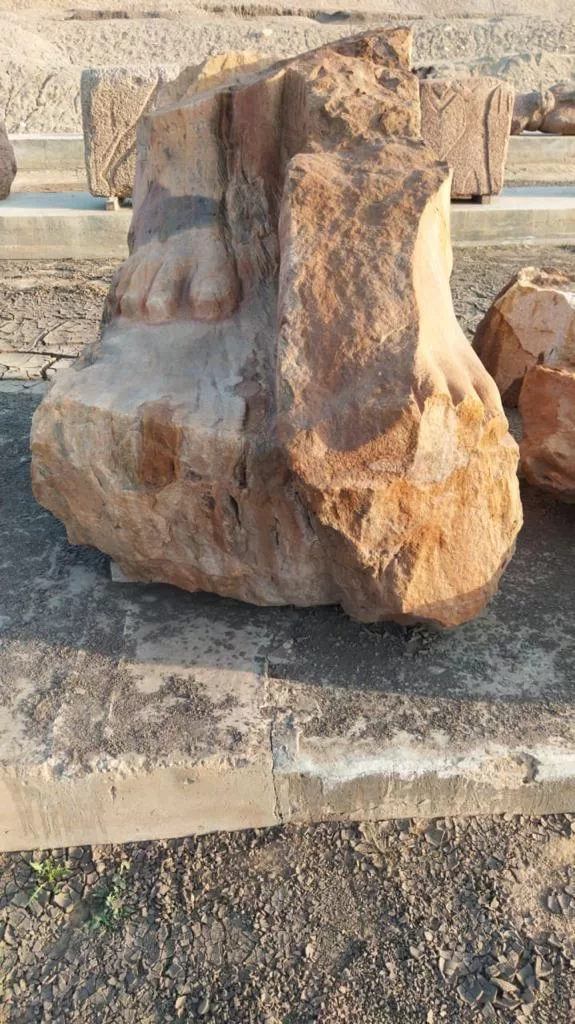
By the late 19th century, the once-mighty statue lay in pieces among the ruins, its head, body, and base fractured into more than 30 segments, and its significance largely forgotten.
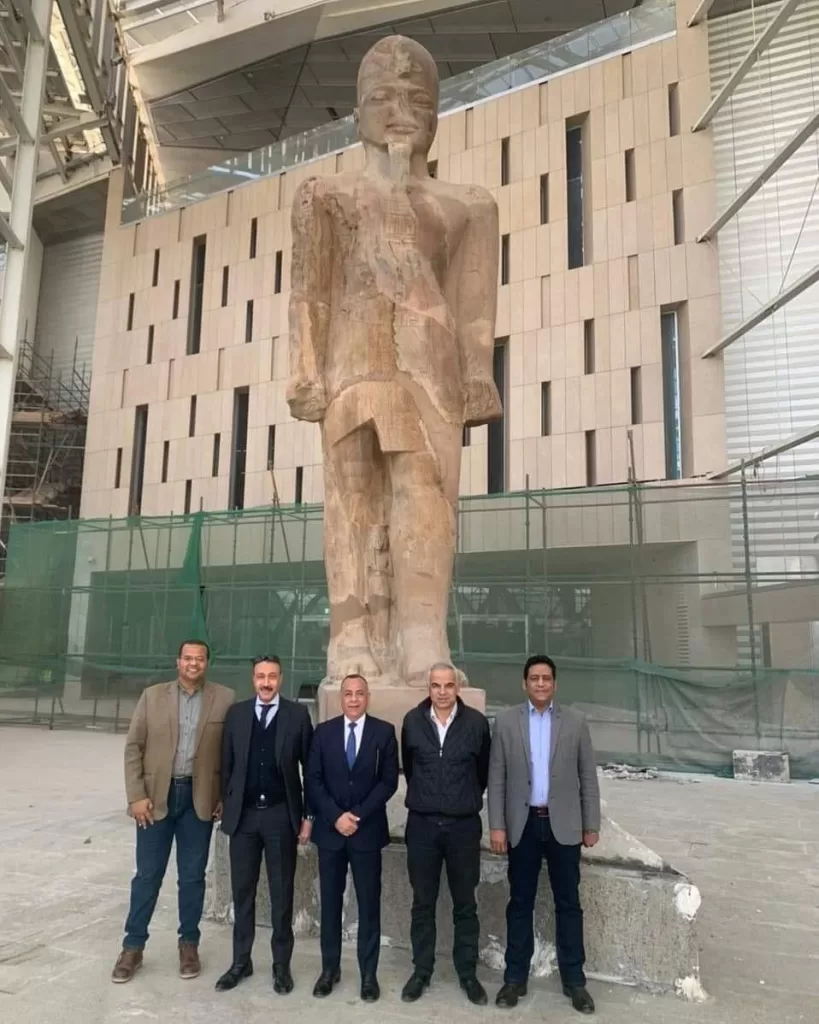
When the GEM sought monumental artifacts to animate its public spaces, Egyptologist Mostafa Waziry, then Secretary General of the Supreme Council of Antiquities, remembered the forgotten giant of Tanis.
“I asked the restoration team, veterans of obelisk resurrection and urban monument projects, to undertake the painstaking task of reassembling Ramses,” Waziry told the Egyptian Mail. “Piece by piece, fracture by fracture, the pharaoh rose again.”
Over several months, a team of Egyptian conservators meticulously restored the statue.
Thirty tonnes of quartzite were stabilised using stainless-steel pins and epoxy resin matched to the original stone.
Laser-scanned templates ensured accuracy to within 0.1 millimetres. Thirty major fractures were repaired, but missing fingers and the tip of the White Crown were left unreconstructed, preserving the statue’s authenticity and bearing witness to its long journey through time.


Royal family affair
The restored statue shows Ramses II in the classic striding pose, left foot forward, White Crown atop his head, mirroring the red-crowned colossus at the museum’s entrance and symbolising the unity of Upper and Lower Egypt.
The cartouche on his belt, “User-Maat-Re Setep-en-Re, Ramesses Meryamun, Great of Monuments,” is a rare epithet that underscores his architectural legacy.
At his legs, Princess Merytamun and Princess Bintanath, both daughters who would become Great Royal Wives, remind visitors that Ramses’ empire was also a family enterprise. He is said to have fathered more than 100 children.
Colossus among coffees, crowds
Placing a 3,200-year-old pharaonic statue in a dining area was a bold, deliberate choice. The GEM’s food court is a light-filled atrium with 12-meter ceilings, designed so that the colossus stands on a circular dais beneath a skylight.
Here, history and daily life collide: diners glance up from their meals to find themselves under the stern gaze of Ramses the Great, his daughters by his side, his ambitions still palpable after three millennia.
The entrance colossus welcomes and the food court colossus surprises. One greets at the threshold, the other reigns where few expect him, a secret monarch among the modern bustle.
Restoration, renewal
The rebirth of the food court colossus is not the only Tanis treasure revived at GEM.
“The museum’s extraordinary Suspended Obelisk, also attributed to Ramses II, was similarly rescued and restored from the ruins of San el-Hagar,” Waziry said.
Now, it stands as the world’s first Suspended Obelisk, another testament to Egypt’s enduring legacy of innovation and monumental ambition.
In the GEM, Ramses II’s wish for eternal remembrance is fulfilled in unexpected ways.
He stands not only at the museum’s threshold, but at the heart of its daily life, restored, reborn, and, once again, unforgettable.

