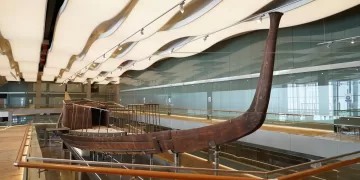










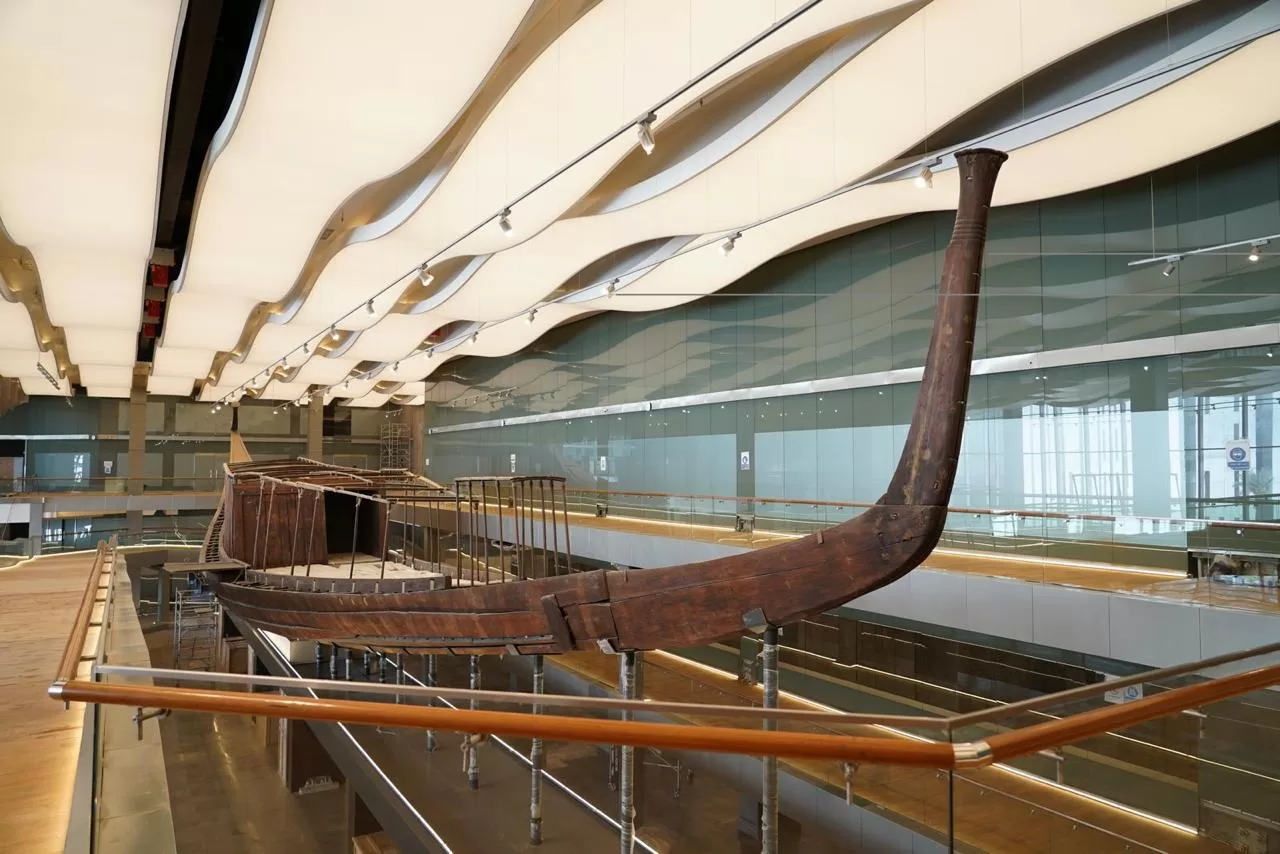
The Grand Egyptian Museum (GEM) unveils the two legendary solar boats of Khufu, a remarkable feat of preservation and international collaboration that sheds new light on one of ancient Egypt’s most inspiring discoveries.
The story of Khufu’s boats begins beside the iconic Great Pyramid, where five enormous pits were carved in antiquity.
Three of these pits, shaped like boats, were eventually found empty, likely due to the ravages of time or ancient theft.
In 1954, however, a sealed pit was uncovered on the pyramid’s southern side, its entrance hidden beneath enormous limestone blocks.
When these blocks were finally removed, archaeologists were astonished to discover two wooden boats, remarkably preserved by the cool, dry sand.
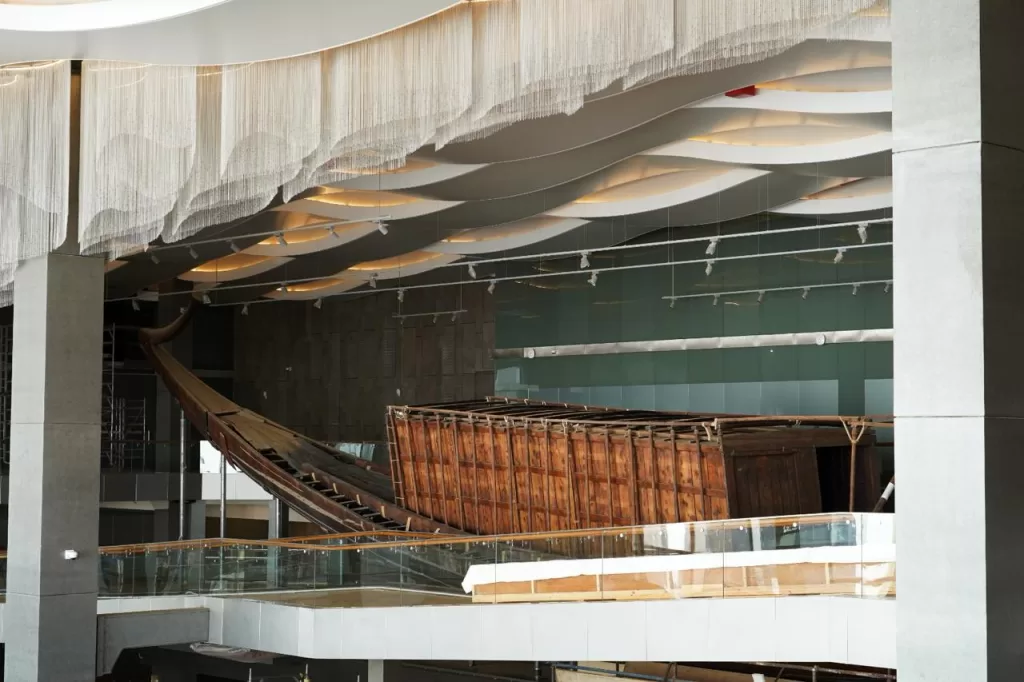
These boats were not mere artifacts, but grand vessels that may have been intended to carry the pharaoh’s soul into the afterlife.
The restoration and assembly of the first boat was a painstaking process, delayed through the 1960s but eventually completed in the 1980s, when it was displayed in a museum adjacent to the pyramids.
However, the exhibit was not without flaws: the contemporary design conflicted with the timeless grandeur of the pyramid, accessibility for visitors with disabilities remained inadequate, and the lack of climate control exposed the invaluable timber to damaging environmental conditions.
The second boat remained untouched for decades longer, tightly protected by the Egyptian Ministry of Antiquities.
It was not until the late 2000s that a collaborative effort with Japanese experts began, using state-of-the-art conservation techniques to carefully study, extract, and restore this treasure.
Recognizing the need to both preserve these incredible relics and present them to the public in a more fitting venue, Maj. Gen. Atef Moftah, engineering supervisor of the GEM Project, and his team proposed a daring solution few had imagined: moving the enormous, fragile boat as a single piece to the GEM.
After years of meticulous study, innovative planning, and the use of specialised vehicles, the boat was safely transported in 2021.
Both boats are being readied for display. Visitors will soon not only marvel at the largest and oldest wooden artifacts ever discovered, but also gain new insights into ancient funerary traditions, celestial journeys, and the enduring craftsmanship of Egypt’s artisans.
Alongside the boats, other objects found in the pits will also be displayed, weaving together stories of life, death, and the afterlife.
The Khufu boats stand as a testament to the ingenuity and reverence of ancient Egypt, and to the dedication of modern teams who, thousands of years later, continue to protect and share these magnificent legacies with the world.
Conservation of the Second Khufu Boat
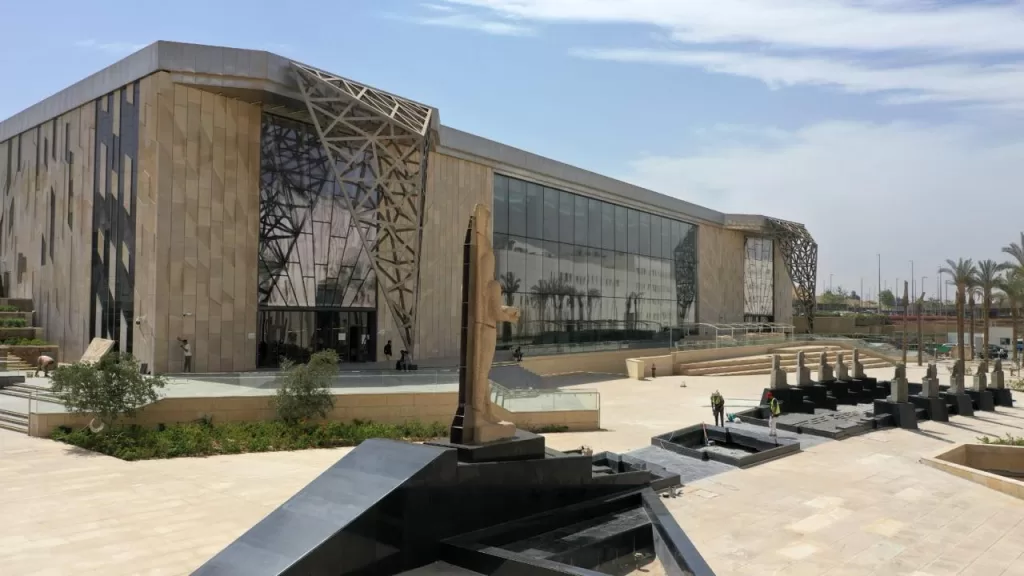
The planned highlights of the GEM include exhibiting both King Khufu boats in the Khufu Boats Museum.
Built around 4,500 years ago, these two boats are considered treasures rivalling those of King Tutankhamun.
These rare examples of advanced woodworking skills from that era also provide a glimpse into contemporary navigation on the Nile, the foundation of Egyptian civilisation.
The King Khufu boats were buried side by side. The first was restored and exhibited to the public in the early 1980s. The second was found in a highly dilapidated state in 1954, and its restoration was considered challenging.
Excavation work aimed at restoring the boat began in 2011, and nearly 1,650 parts in 13 overlapping layers have been fully excavated.
The next steps in the restoration process are to identify the positions of the boat’s parts, draft assembly and restoration plans, and reassemble the boat.
Assembling the parts in their current state would be difficult; therefore, plans have been developed and designed by Maj. Gen. Moftah to build a full-sized reinforcement frame, considered the largest mount used to install an artifact anywhere in the world—within which the parts of the second boat will be assembled.
There are plans to allow visitors to view the progress of the restoration work on the second Khufu boat at the Khufu Boats Museum, in cooperation with the Japanese archaeological mission.

