




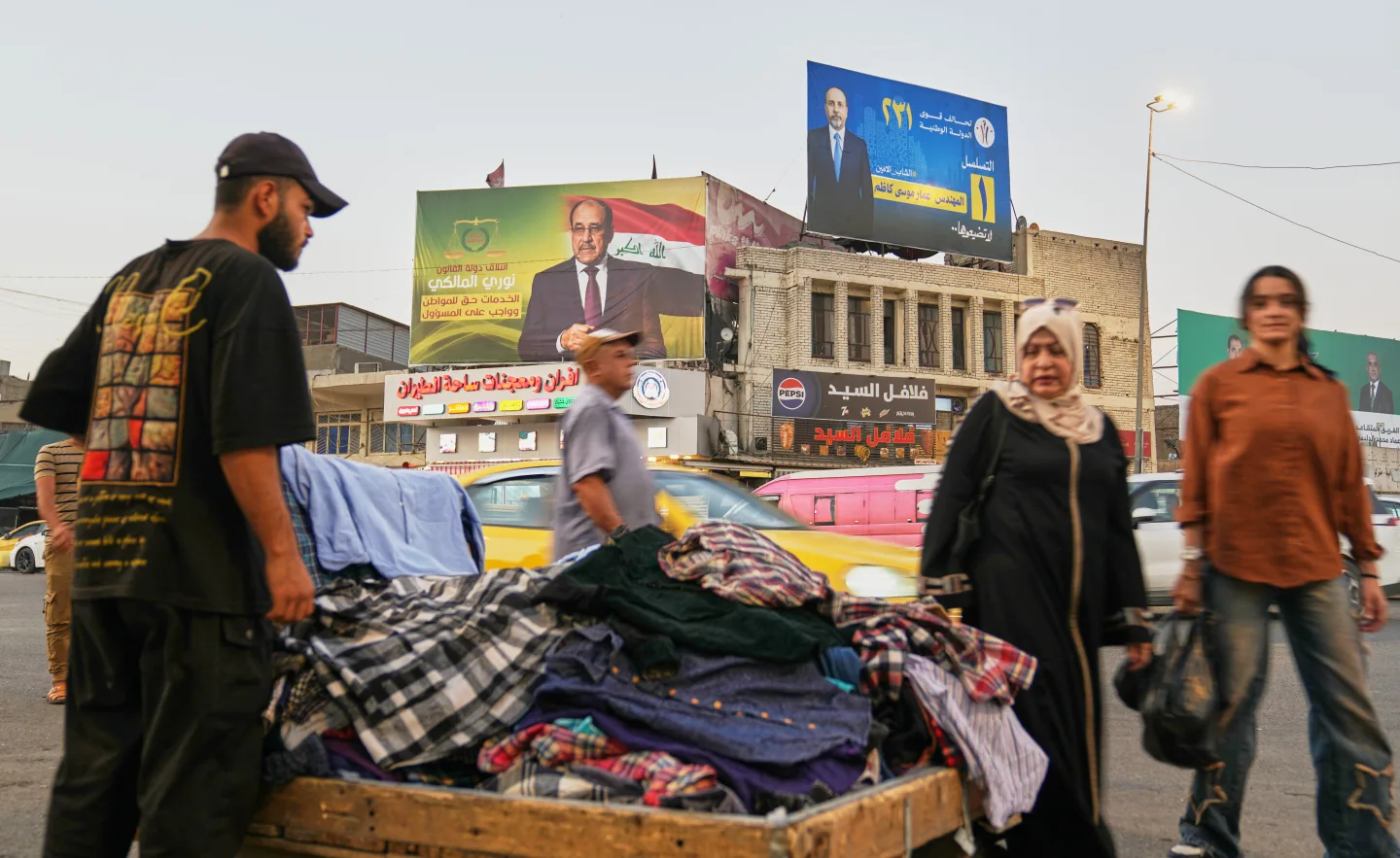
Iraq is weeks away from parliamentary elections that will set the country’s course during one of the Middle East’s most delicate moments in years.
While the ceasefire in Gaza may have tamped down regional tensions, fears remain of another round of conflict between Israel and Iraq’s neighbor, Iran. Iraq managed to stay on the sidelines during the brief Israel-Iran war in June.
Meanwhile, Baghdad faces increasing pressure from Washington over the presence of Iran-linked armed groups in Iraq.
Iraqi Prime Minister Mohammed Shia al-Sudani came to power in 2022 with the backing of a group of pro-Iran parties but has since sought to balance Iraq’s relations with Tehran and Washington.
The Nov. 11 vote will determine whether he gets a second term — rare for Iraqi premiers in the past.
A total of 7,768 candidates — 2,248 women and 5,520 men — are competing for 329 parliament seats.
The strongest political factions running include Shiite blocs led by former Prime Minister Nouri al-Maliki, cleric Ammar al-Hakim, and several linked to armed groups; competing Sunni factions led by former parliament speaker Mohammed al-Halbousi and current speaker Mahmoud al-Mashhadan i; and the two main Kurdish parties, the Kurdistan Democratic Party and the Patriotic Union of Kurdistan.
The contest is just as notable for who is absent.
The popular Sadrist Movement, led by influential Shiite cleric Muqtada al-Sadr, is boycotting. Al-Sadr’s bloc won the largest number of seats in the 2021 elections but later withdrew after failed negotiations over forming a government, and it continues to stay out of elections.
In the suburb known as Sadr City on Baghdad’s outskirts, a banner posted on one street read, “We are all boycotting upon orders from leader al-Sadr. No to America, no to Israel, no to corruption.”
The Victory Coalition, a smaller group led by former Prime Minister Haider al-Abadi, also announced a boycott, alleging corruption in the process.
Meanwhile, some reformist groups emerging from mass anti-government protests that began in October 2019 are participating but have been bogged down by internal divisions and lack of funding and political support.
There have been widespread allegations of corruption and vote-buying. Political analyst Bassem al-Qazwini described these elections as “the most exploited since 2003 in terms of political money and state resources.”
A campaign official, who spoke on condition of anonymity because he was talking about alleged illegal conduct, asserted that almost all candidates, including major blocs, are distributing money and buying voter cards, with the price of a card going as high as 300,000 Iraqi dinars (around $200).
The Independent High Electoral Commission asserted its commitment to conducting a fair and transparent process, saying in a statement to The Associated Press that “strict measures have been taken to monitor campaign spending and curb vote-buying.”
It added that any candidate found guilty of violating laws or buying votes will be “immediately disqualified.”

