


Trump claims “lasting peace” as Hamas signals only conditional acceptance
Israel insists on military control and no path to Palestinian statehood
President Donald Trump has triumphantly declared the near-achievement of “lasting PEACE”, following the delivery of Hamas’s response to his 20-point Gaza initiative.
Yet, a professional assessment of the three primary actors’ positions reveals that the heralded “war-ending plan” is, in reality, three fundamentally incompatible interpretations of an intentionally ambiguous document.
Hamas’s response, delivered through mediators, offered a crucial initial concession: the conditional acceptance of the immediate release of all Israeli hostages, alive and deceased, in exchange for Palestinian prisoners. The group also signalled approval for a technocratic Palestinian administration to manage Gaza’s day-to-day affairs.
Crucially, however, the organization flatly rejected the plan’s central demands regarding its own dissolution and mandated disarmament. Hamas insisted that future political and security issues be negotiated solely within a broader “Palestinian national framework”, effectively refusing to self-immolate as a political or military entity.
Senior Hamas official Mousa Abu Marzouk emphasized the group would never accept foreign-imposed leadership, pointedly dismissing Trump’s proposal to involve former UK Prime Minister Tony Blair.
In effect, Hamas agreed to end hostilities and hand over hostages, but only on terms that preserve its political relevance.

Trump’s victory declaration
Trump, however, chose to read Hamas’s nuanced reply as a breakthrough.
“Based on the statement just issued by Hamas, I believe they are ready for a lasting PEACE,” he wrote on Truth Social.
He doubled down in a video statement, framing the response as a vindication of his diplomacy: “This is a big day… We’re very close to achieving peace in the Middle East.”
The White House’s announcement placed Trump himself at the centre of a future “Board of Peace” that would supervise Gaza’s transition.
For him, Hamas’s conditional response was less an obstacle than a political opportunity, and a chance to cast himself as the peacemaker-in-chief.
Israel’s diverging vision
If Trump saw victory and Hamas saw negotiation, Israel saw something else entirely.
Prime Minister Benjamin Netanyahu endorsed the plan in Washington, saying it aligned with Israel’s war aims: freeing hostages, dismantling Hamas, and ensuring Gaza could never again pose a threat.
Yet almost immediately, Netanyahu added caveats that cut to the heart of the proposal: No Palestinian state.
Netanyahu publicly rejected any pathway to sovereignty. Israeli forces stay. He promised a long-term Israeli military presence in “most of Gaza”. Disarmament is non-negotiable. If Hamas refused to disarm, he vowed Israel would “finish the job by itself”.
Privately, Israeli officials were said to be “surprised” by Trump’s celebratory tone, interpreting Hamas’s conditional response as a rejection rather than an acceptance. With Netanyahu’s far-right coalition threatening to collapse if he concedes too much, Israel’s position is drifting further from Trump’s portrayal.
The strategic ambiguity
At the heart of the problem is the document itself. Trump’s 20-point plan is intentionally vague. It promises a “credible pathway” to Palestinian self-determination but contains no guarantees. It calls for Israeli withdrawal but allows an indefinite “security perimeter” to remain inside Gaza. It envisions international oversight of Gaza’s transition but leaves the composition and powers of this body undefined.
This ambiguity has become both the plan’s strength and its flaw: it allows all parties to claim success, but it also sets the stage for inevitable disputes over interpretation.
Ceasefire or new stalemate?
The core dispute remains unresolved: Israel demands Hamas’s total demilitarization and long-term security control. Hamas insists, meanwhile, on a full Israeli withdrawal and its continued role in Palestinian politics. Trump has tried to paper over these contradictions with celebratory rhetoric, but the gulf is unmistakable.
For now, the plan has created extraordinary diplomatic pressure for a ceasefire. Yet with Israeli jets still striking Gaza, killing dozens more even as the deal is debated, peace remains fragile.
The war may be shifting from the battlefield to the negotiating table, but unless the parties can agree on what “peace” actually means, Trump’s “very special day” risks becoming just another false dawn in the Middle East.
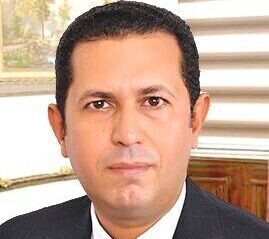
Mohamed Fahmy is the editor-in-chief
of The Egyptian Gazette and Egyptian Mail newspapers

