










Egypt’s Minister of Investment and Foreign Trade, Eng. Hassan El-Khatib, emphasized the importance of linking investment and trade as two fundamental pillars for enhancing economic development.
He highlighted the role of Egypt’s Sovereign Fund in maximizing returns in a way that reflects the true value of the Egyptian economy and ensures resource sustainability for future generations.
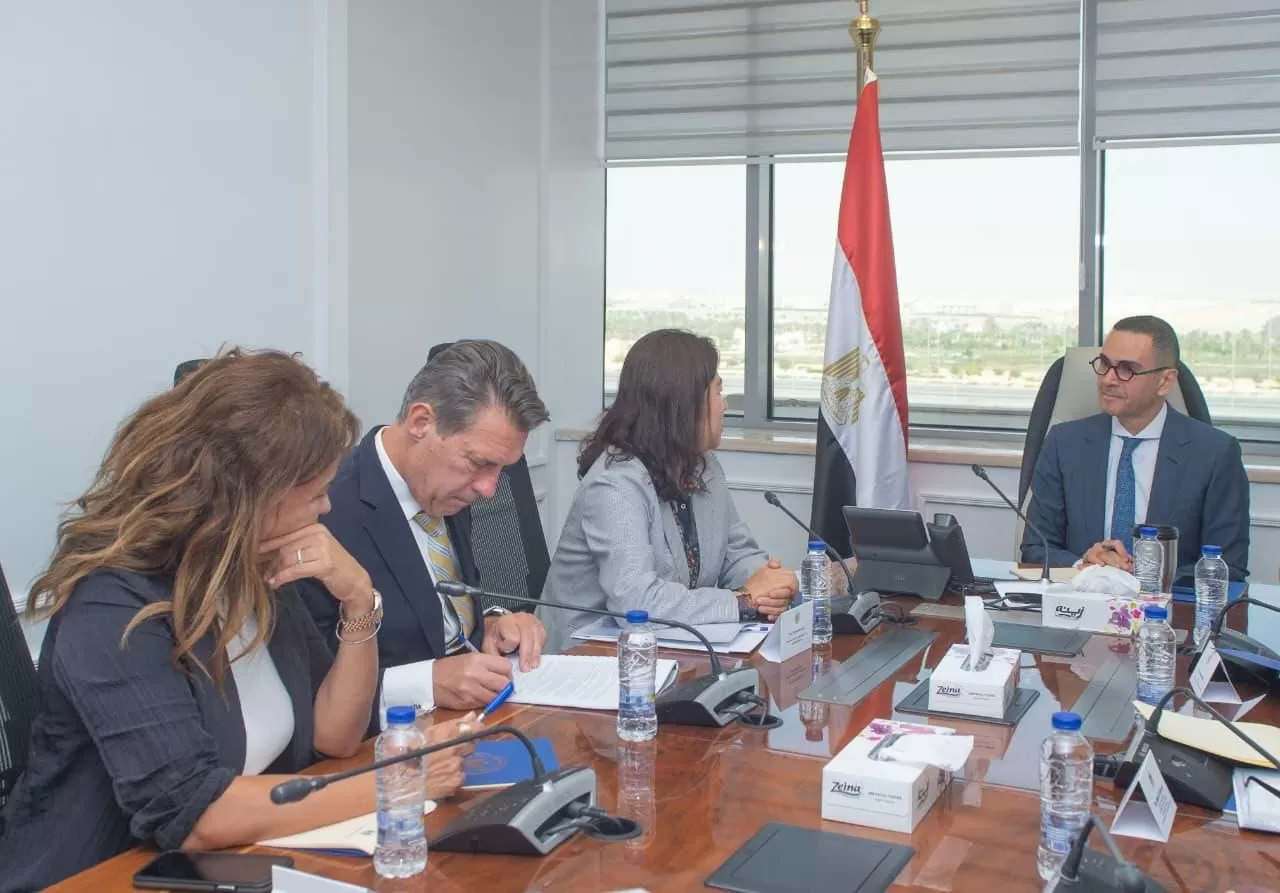
This came during the minister’s meeting with a delegation from the European Bank for Reconstruction and Development (EBRD) to discuss ways to support and enhance the investment and foreign trade climate in Egypt, as well as to review the bank’s role in supporting the country’s economic development path. The discussions focused on the government’s privatization strategy and mechanisms for improving corporate governance, with the goal of increasing private sector participation and solidifying Egypt’s position as an attractive destination for foreign investment.
The minister stated that Egypt’s industrial sector is experiencing promising opportunities, benefiting from a strong competitive edge in terms of trained labor and advanced engineering skills.
He noted that the high efficiency of Egyptian engineers and skilled labor makes Egypt an attractive destination for investments in engineering and intermediate industries, enhancing the competitiveness of Egyptian products in regional and international markets and attracting sustainable, high-quality investments.
He added that Egypt’s foreign direct investment (FDI) strategy is undergoing continuous development through in-depth analysis of various sectors to accurately identify promising opportunities. He pointed out that Egypt has seen a noticeable increase in the volume of foreign investments during the current year, with plans to double these investments to support economic growth rates, through clear and stable policies that boost investor confidence.
El-Khatib also touched on reforms in trade policy, stressing that Egypt has set a strategic goal of ranking among the top 50 countries in global trade competitiveness indicators.
He explained that these efforts have led to a reduction in the time required for products to enter the local market—from 16 days to 5.8 days, with a target of reaching 2 days before the end of the year.
He noted that Egypt is leveraging trade agreements with major economic blocs to enhance access to global markets, while also achieving a balance between protecting local industries and encouraging exports in line with World Trade Organization (WTO) rules.
The minister highlighted efforts to improve the business environment, noting that Egypt is leading the work on the new “Business Ready” report, which replaces the previous “Doing Business” report. He explained that key challenges have been addressed and proposed reforms have been submitted to the private sector, most of which are legislative and can be implemented within nine months.
El-Khatib also pointed out that digital transformation is a core pillar in boosting investment. He announced the launch of an electronic platform for issuing 389 licenses within 20 days, with online payment enabled. He confirmed that current efforts focus on re-engineering procedures to reduce steps, time, and bureaucracy, making it easier for investors and improving the investment climate.
He further stated that work is ongoing to launch the “Economic Entities Platform”, which will serve as a unified digital interface for investor interaction across all stages of a project.
For their part, the EBRD delegation expressed appreciation for the efforts made by the Egyptian government to improve the business environment and attract investments.
They praised the initiatives and reforms implemented, particularly those empowering the private sector to play an effective role in the country’s economic development. The delegation affirmed their commitment to maintaining the strategic partnership between the bank and the Egyptian government.

