




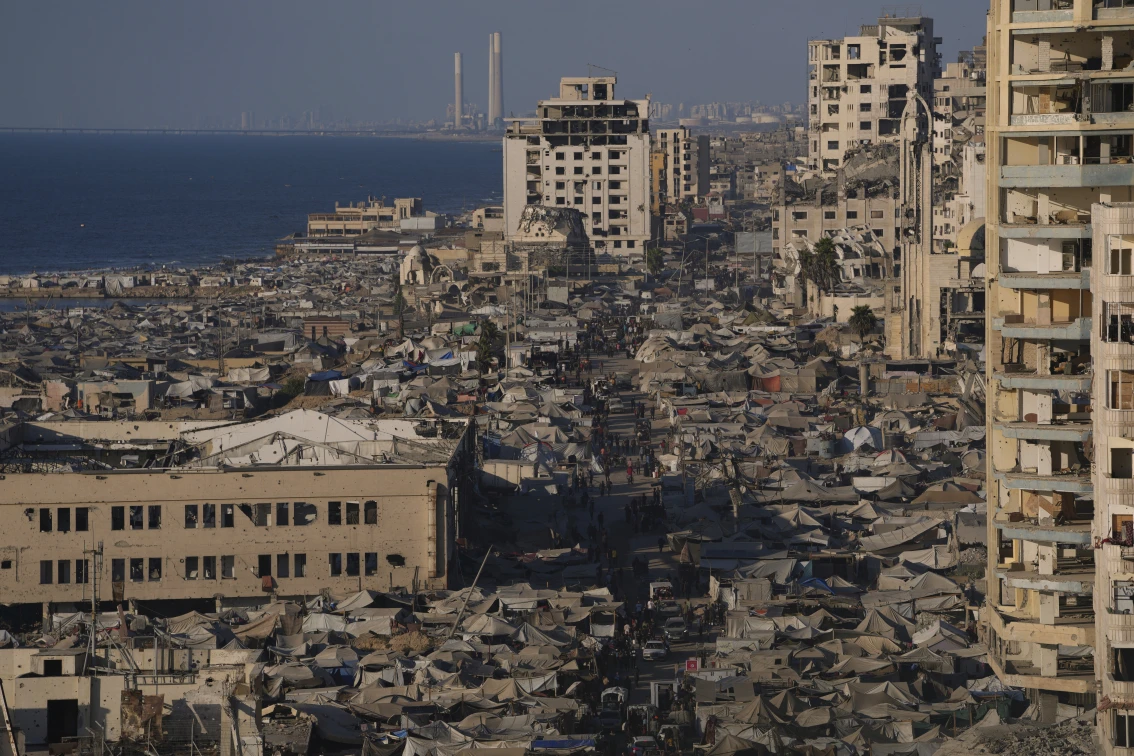
As artillery and bombs pound around Gaza’s largest city and Israel promises a punishing new offensive, Palestinians in the city are paralyzed with fear — unsure where to go, when to leave and if they will ever return.
Israel has declared Gaza City, in the north of the territory, to be a combat zone while the military moves forward with plans to overtake it in a campaign to push Hamas into submission. Parts of the city are already considered “red zones,” where Palestinians have been ordered to evacuate ahead of expected heavy fighting.
That has left residents on edge, including many who returned after fleeing the city in the initial stages of the Israel-Hamas war. With Israeli bulldozers razing the ground in occupied neighborhoods and Israeli leaders supporting the mass relocation of Palestinians from Gaza, departing the city now could mean leaving for good. Moving costs thousands of dollars and finding space in the overcrowded south to pitch a tent feels impossible. But staying behind, they say, could be deadly.
“The Israeli forces, when they mark any area by red color and they request the people to leave, they really will destroy it,” said Mohammed Alkurdi, who is sheltering in Gaza City along with hundreds of thousands of other Palestinians.
“So it’s like you decide whether to live or die. It’s very simple like that.”
Since Israel declared the area a combat zone on Friday, a small fraction — some 14,840 Palestinians of the nearly 1 million the U.N. estimates are in Gaza City — have left their homes in the city as of Monday, most to flee south, according to the Site Management Cluster, a joint humanitarian body that coordinates assistance for people in displacement sites.
A fraction of them, about 2,200, have moved to new places within Gaza City after being displaced by Israeli attacks.
Alkurdi, a project manager and consultant, said he can hear Israeli forces from the apartment where he’s sheltering as they “erase the area completely.”
Zeitoun was once Gaza City’s largest neighborhood, filled with markets, schools and clinics. Over the last month, large swaths of it and the neighboring area of Sabra have been flattened, according to satellite photos reviewed by The Associated Press from early August and early September. The photos show that entire blocks that have been pummeled or bulldozed into empty, sandy lots.

