










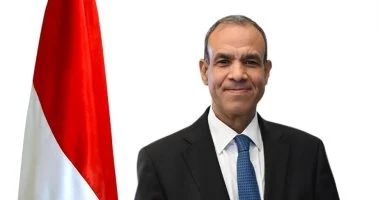
Minister of Foreign Affairs, Emigration and Egyptian Expatriates Badr Abdelatty on Thursday made phone calls with his counterparts from Sudan, South Sudan, Djibouti, Uganda, Kenya, and Somalia to discuss ways of fostering bilateral ties and exchange views on African issues of common concern.
During those conversations, the foreign minister stressed Egypt’s keenness to strengthen ties with African nations, particularly in the economic, trade and investment areas, through various mechanisms, most notably an Egyptian funding mechanism for development projects in the Southern Nile Basin countries, in a way that achieves African peoples’ aspirations for sustainable development.
The top Egyptian diplomat and his peers from the six African countries, underlined the importance of intensifying cooperation among African states, within the framework of South–South collaboration, as a key approach to serving common interests, sharing expertise and enhancing countries’ capacities to tackle development challenges.
They also underscored the significance of continuing joint efforts to promote mechanisms for joint African action and reinforce the role of the African Union (AU) in addressing the continent’s priority issues, especially those linked to peace, security and stability.
In this regard, the ministers stated those efforts will contribute to bringing about development, food security and economic integration, in line with the AU’s Agenda 2063 and the outcomes of the four previous editions of the Aswan Forum for Sustainable Peace and Development.
The phone calls tackled the latest developments in the Horn of Africa and the Red Sea security, where the foreign ministers emphasized the need to step up consultation and coordination to navigate challenges in a manner that preserves stability and attains development on the continent.
Regarding the water security, Abdelatty said this matter is an existential issue for Egypt, underlining the necessity of adhering to the principles of international law governing shared water resources.
On that score, the foreign minister called for cooperation to achieve mutual benefit based on international law, while rejecting unilateral measures that contravene international law in the Eastern Nile Basin.
He also highlighted the importance of consensus as a key principle governing relations between countries sharing transboundary waterways.

