



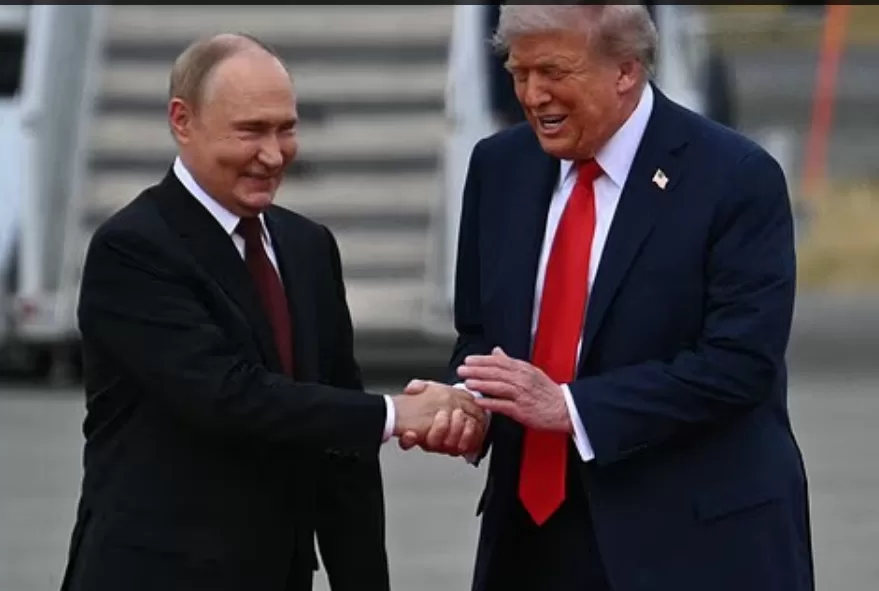
The long-awaited face-to-face between U.S. President Donald Trump and Russian President Vladimir Putin in Alaska promised history, but ended in deadlock. After three hours of talks framed by warm smiles, handshakes, and even an unexpected invitation to Moscow, the two leaders walked away without a deal to end the war in Ukraine.
Trump, speaking after the summit, admitted bluntly: “There’s no deal until there’s a deal.” While insisting “great progress” had been made and that “many, many points” of agreement were reached, he conceded that the most critical issue remained unresolved. “We didn’t get there,” he said, “but we have a very good chance of getting there.”
The U.S. president immediately began calls to his Ukrainian counterpart Volodymyr Zelensky and to NATO and European leaders, briefing them on the outcome and stressing that “ultimately, it’s up to them” to approve any potential agreement.
The press conference that followed was carefully staged. Neither leader mentioned a ceasefire. No questions were taken. Instead, both men read short statements, exchanged thanks, and left the stage—leaving the world guessing about the real content of their discussions.
The drama peaked when Putin, speaking in English, surprised Trump by asking: “Next time in Moscow?” A visibly stunned Trump replied: “That’s an interesting one… I’ll get a little heat on that, but it could possibly happen.”
Putin, who had opened the meeting with a strikingly personal greeting—“Good afternoon, dear neighbour. Very good to see you in good health and to see you alive”—later praised Trump’s “willingness to get to the crux of the matter.” He pointedly urged Kyiv and European capitals not to “torpedo the nascent progress” with provocations or backroom maneuvers.
Trump, for his part, returned to one of his favorite themes: the 2016 election probe into alleged Russian interference, which he again dismissed as a “Russia, Russia, Russia hoax.” He claimed the investigation had been “very criminal” and had hampered his presidency’s ability to focus on major global issues.
Choosing Alaska as the summit’s stage carried heavy symbolism. Once part of the Russian Empire, the territory allowed Putin to deliver a veiled history lesson on the “common heritage” of the two nations—an echo of Moscow’s strategy of grounding present-day power in past ties.
In the end, the Alaska summit projected unity in images but underscored division in substance. For all the smiles and gestures of goodwill, the war in Ukraine remains unresolved, and the next chapter may unfold not in Washington or Kyiv—but, as Putin hinted, in Moscow.

