



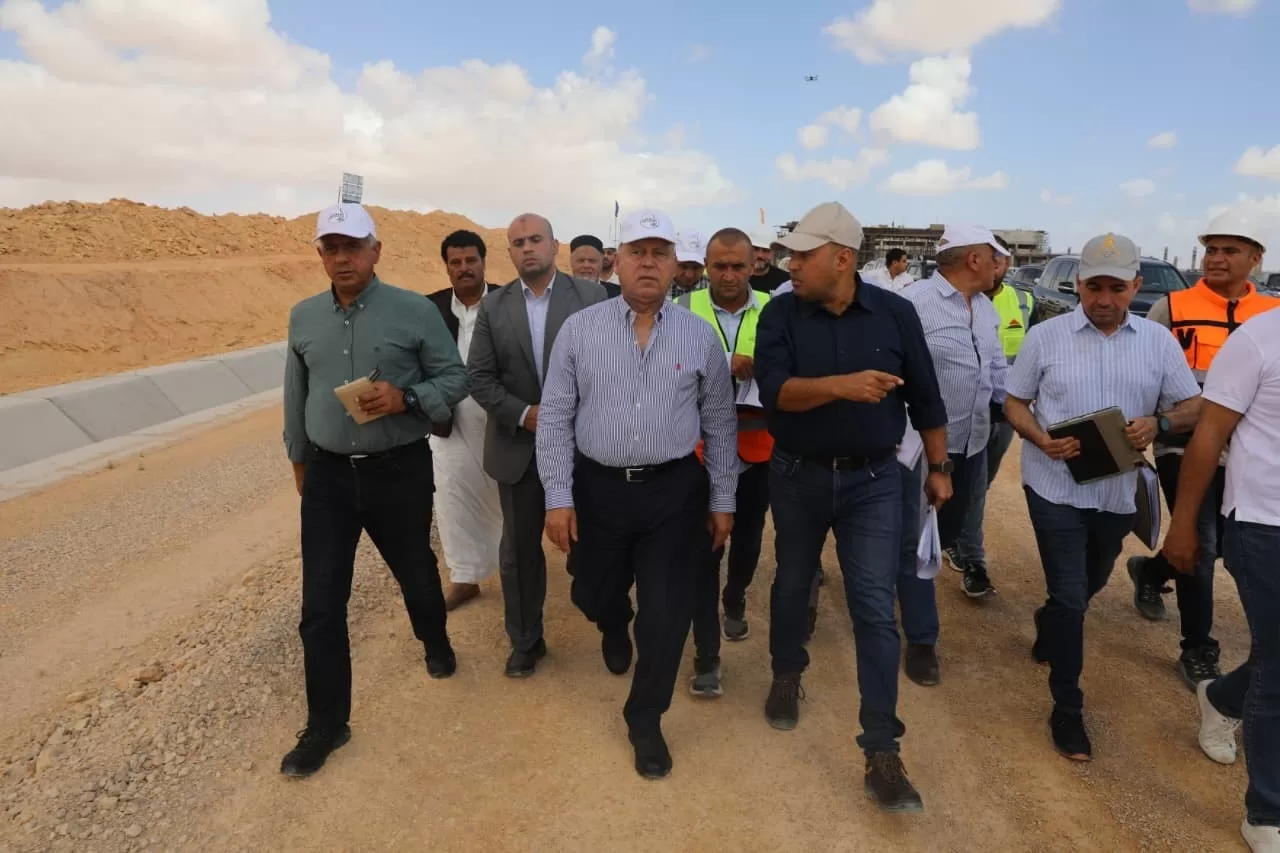
Egypt’s Deputy Prime Minister for Industrial Development and Minister of Industry and Transport, Kamel El-Wazir, inspected the Sokhna-El-Alamein-Matrouh high-speed electric train project on Friday.
This project is part of a larger plan to establish seven integrated logistics corridors across Egypt, as directed by President Abdel Fattah El Sisi. The goal is to connect production hubs with seaports on the Red Sea and the Mediterranean, and to serve new urban communities via railway and road networks, including dry ports and logistics zones.
Specifically, the new electric train line is a key part of the Sokhna-Alexandria logistics corridor. This major corridor includes Sokhna Port, the high-speed rail line, a dry port in 10th of Ramadan City, the Roubiky-10th of Ramadan/Belbeis railway line, and the Grand Alexandria Port.
New high-speed rail line
The minister inspected the construction sites along the route from Marsa Matrouh Station to Alexandria Station, checking on the progress of key stops at Ras El Hekma, Dabaa, Sidi Abdel Rahman, El Alamein, El Hammam, Borg El Arab, King Mariout Stadium, and Alexandria. These stations are expected to significantly boost tourism and economic activity.
Located along the international coastal road, the high-speed train stations are strategically placed to serve residents, workers, and visitors alike. The new rail link is set to be a major incentive for travel, whether for work, tourism, or investment. It will provide a modern and safe transport option, offering a high-level of service to all passengers.
The minister also reviewed plans for passenger flow, from station entrances to ticket halls and platforms, ensuring the availability of lifts to facilitate easy movement. The administrative and commercial use of the station spaces was also reviewed. The minister stressed that all work must meet high-quality standards to reflect the modern and civilised nature of this huge project.
He also checked on the progress of the light maintenance workshop in Marsa Matrouh, a 256,000 square-meter facility for minor train overhauls. Progress on various industrial works, including bridges and tunnels along the route, was also monitored.

