







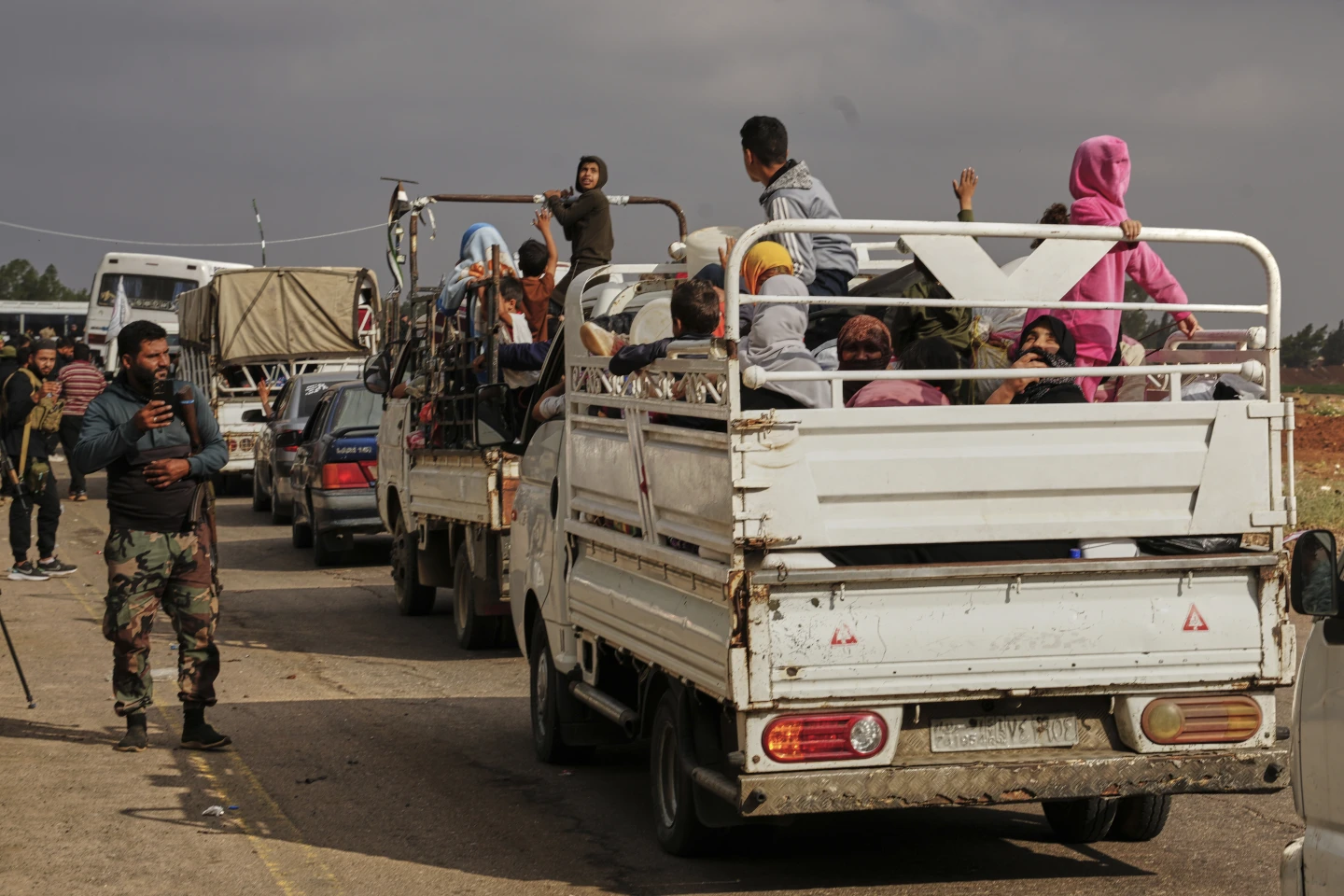
The Syrian government on Monday started evacuating Bedouin families trapped inside the city of Sweida, where Druze militiamen and Bedouin fighters have clashed for over a week.
The clashes between militias of the Druze religious minority and the Sunni Muslim clans killed hundreds and threatened to unravel Syria’s already fragile postwar transition. The clashes also led to a series of targeted sectarian attacks against the Druze community, followed by revenge attacks against the Bedouins. The U.N. International Organization for Migration said some 128,571 people were displaced in the hostilities that started with a series of tit-for-tat kidnappings and attacks a week ago.
Israel also launched dozens of airstrikes in the Druze-majority Sweida province, targeting government forces who had effectively sided with the Bedouins.
Syrian state media said early Sunday that the government had coordinated with some officials in Sweida to bring in buses to evacuate some 1,500 Bedouins in the city. Syrian Interior Minister Ahmad al-Dalati told SANA that the initiative will also allow displaced civilians from Sweida to return, as the fighting has largely stopped and efforts for a complete ceasefire are ongoing.
“We have imposed a security cordon in the vicinity of Sweida to keep it secure and to stop the fighting there,’ al-Dalati told the Syrian state-run news agency. ”This will preserve the path that will lead to reconciliation and stability in the province.”
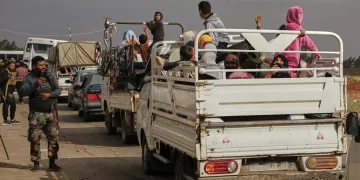
Bedouin families are accompanied out of Sweida
Buses filled with Bedouin families were accompanied by Syrian Arab Red Crescent vehicles and ambulances. Some families left on trucks with their belongings.
Syrian authorities did not give further details about the evacuation and how it ties into the broader agreement, following failed talks for a hostage swap deal Saturday.
However, Britain-based war monitor the Syrian Observatory for Human Rights said that as part of the agreement, the Bedouin fighters would have to release Druze women they were holding captive, and leave the province.
U.S. Special Envoy to Syria Tom Barrack, who has been involved in negotiations between multiple countries, said that the perpetrators of hostilities on both sides need to be held to account, and that an agreement should be reached to allow Syria’s 7-month-old government to exert its authority and function fully after over a decade of conflict.
“What’s happened is horrible. It’s unthinkable,” Barrack said in Beirut after meeting officials Monday. “They (Syrian authorities) need to be held accountable, but they also need to be given responsibility” to restore order.
Bedouin fighters wait on the edge of the city
The Bedouin fighters had withdrawn from Sweida city Sunday, and alongside other tribesman from other parts of the country stood on the outskirts while security forces cordoned off the area. An aid convoy of some 32 Red Crescent vehicles entered the city, though a government delegation with another aid convoy was turned away.
After talks for a hostage swap fell through late Sunday, the Observatory and activist groups in Sweida reported hearing what they said were Israeli airstrikes and helicopters over villages where some skirmishes took place between the Bedouins and Druze militias.
The Israeli military said it was “not aware” of any overnight strikes in Syria.

