
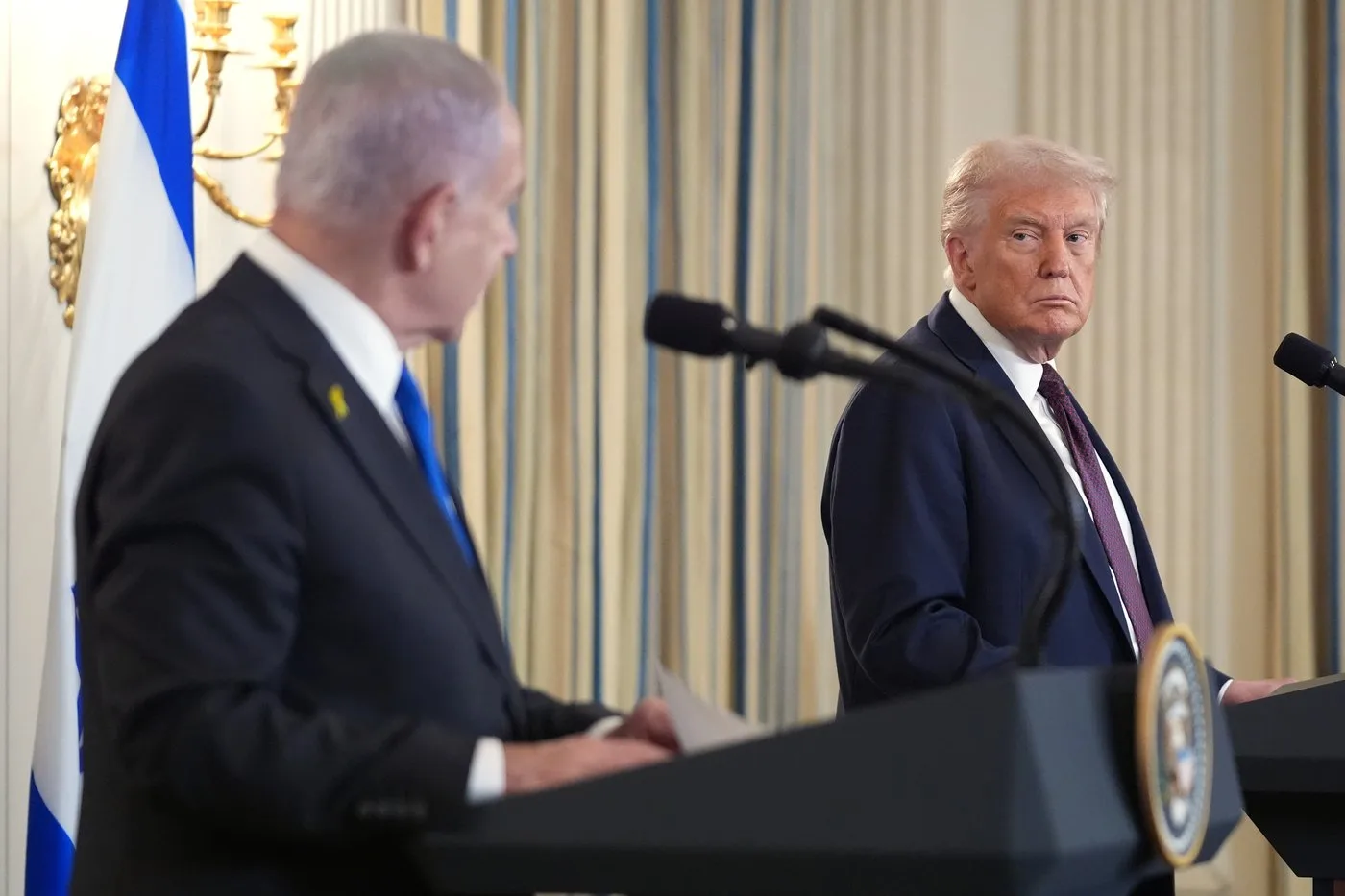





Israeli Prime Minister Benjamin Netanyahu has just wrapped up a high-profile visit to Washington without securing a ceasefire in Gaza, despite two meetings with US President Donald Trump and growing international pressure. Indirect ceasefire talks between Israel and Hamas stalled over key issues, such as Hamas disarmament, Israeli troop withdrawal, and aid delivery. While Netanyahu secured US political backing, especially from Trump, no breakthrough was reached, and violence in Gaza continues. The visit underscored deep divisions and highlighted the ongoing humanitarian crisis in Gaza, with hopes for peace remaining uncertain.Israeli Prime Minister Netanyahu returned to Israel on Friday without securing a ceasefire in Gaza, following several high-profile meetings in Washington with US President Donald Trump and senior American officials.Despite rising anticipation of a breakthrough, key obstacles to the aspired truce with Hamas remain unresolved, leaving the future of the Gaza conflict mired in uncertainty.The talks, involving mediators from the US, Egypt, and Qatar, failed to yield a compromise on core issues, such as the duration of the proposed truce, the scope of an Israeli military withdrawal from Gaza, and the mechanisms for delivering humanitarian aid during any pause in fighting.In a statement he issued before his departure, Netanyahu said he was working towards a two-month truce under which Hamas would release approximately half of the remaining 50 hostages, including the remains of those who have died in captivity. However, he reiterated Israel’s firm conditions for any end-of-war arrangement, insisting that Hamas must fully disarm and Gaza be demilitarised, demands that were immediately rejected by Hamas.“Any discussion on ending the war must be based on fundamental conditions,” Netanyahu declared.“Hamas must lay down its arms, Gaza must be demilitarised, and the group must no longer possess military or governance capabilities” he added.This uncompromising stance was met with swift rejection from Hamas. Basem Naim, a senior Hamas figure, dismissed the notion of disarmament as entirely off the table, signalling an impasse that continues to stall negotiations.Another point of contention surrounds the status of Israeli military forces inside Gaza during a proposed ceasefire. While Hamas demands a full withdrawal, Israel is reportedly intent on retaining control over key areas, particularly in the south. Reports emerged this week to suggest that Israeli Defence Minister Israel Katz had briefed local journalists on a plan to transform parts of southern Gaza into a semi-permanent displacement zone, dubbed a “humanitarian city,” for Palestinians who have fled other areas. Critics decried the concept as akin to a modern-day “concentration camp”, citing reports that residents would be prevented from returning to northern Gaza. Katz’s office declined to comment.As diplomatic efforts faltered, violence on the ground continued. On Friday, an Israeli airstrike hit a former school turned shelter in Jabaliya camp in northern Gaza, killing nine people, according to Gaza’s Civil Defence authority. The Israeli military stated that the strike had targeted a senior Hamas group operating from within the shelter, once again accusing the group of using civilian sites as operational cover. Meanwhile, Gaza’s health ministry warned that fuel shortages were crippling hospital services, including life-saving dialysis treatment.While Netanyahu’s third visit to Washington since Trump’s return to the presidency yielded no agreement, it did provide the Israeli leader with political cover. The meetings, coupled with praise from Trump and his envoys, bolstered Netanyahu’s image as a leader committed to peace, even as his government continues military operations in Gaza.“I hope we can finalise a 60-day ceasefire soon and use that window to negotiate a long-term solution,” Netanyahu said during an interview on Wednesday with the conservative US outlet Newsmax. However, just a day later, he reiterated Israel’s redlines at a memorial for two Israeli embassy staffers, warning that if Hamas did not surrender its arms through diplomacy, Israel would achieve its objectives by force.The path to an agreement narrowed further when US Middle East envoy Steve Witkoff postponed a planned trip to Doha, citing the lack of progress in talks.According to officials familiar with the negotiations, the primary sticking point was the extent of Israeli troop withdrawal post-hostage release. An initial Israeli proposal – dubbed by some as the “Smotrich plan” after the far-right finance minister – was reportedly rejected by the US for maintaining too much control in Gaza. Israel has since redrawn the plan to be more acceptable to Washington, though its contents remain unclear.In addition to military withdrawal, disagreements lingered over the role of the Gaza Humanitarian Foundation, a US and Israeli-backed logistics body.Hamas expressed concern that reliance on the foundation, which has become controversial due to reports of violence at its distribution sites, would further entrench Israeli control over aid flows.Meanwhile, Israel has rejected any commitment to a permanent ceasefire, prompting US mediators to suggest a phased guarantee, maintaining the truce after the initial 60 days as negotiations continue.Despite leaving without a ceasefire, Netanyahu may have achieved his most important short-term goal: reinforcing his relationship with Trump and maintaining a perception of unity. The trip also allowed him to shift the narrative away from domestic challenges, including an ongoing corruption investigation, which faced further delays due to his travels.Strategically, Netanyahu’s alignment with Trump – amid joint Israeli-US strikes on Iranian targets and intensifying regional tensions – allows both leaders to project an image of resolve. Trump, meanwhile, announced sanctions against Francesca Albanese, a UN official who has called for war crimes investigations into Israeli conduct in Gaza.The move was seen as a gesture of solidarity with Netanyahu, reinforcing the perception of diplomatic unity.Yet beneath the optics, frustration in Washington is evident. Trump, previously outspoken in his criticism of Israeli intransigence, recently remarked, “We basically have two countries that have been fighting so long and so hard that they don’t know what they’re doing anymore.” The statement echoed longstanding tensions between Israeli leaders and successive American administrations.As regional powers continue to seek a resolution, Netanyahu’s balancing act – courting American support while resisting key international demands – may offer him political breathing room. But it does little to advance a concrete path towards ending one of the most devastating and protracted conflicts in the Middle East.Whether this approach ultimately delivers peace or prolongs the suffering in Gaza remains to be seen. For now, the ceasefire remains elusive, and the humanitarian toll continues to rise.
Mohamed Fahmy is the editor-in-chief of The Egyptian Gazette and Egyptian Mail newspapers [email protected]

