




WASHINGTON — The Trump administration signaled a willingness to renew talks with Iran and avoid a prolonged war in the aftermath of a surprise attack on three of the country´s nuclear sites as US officials assessed Tehran’s nuclear ambitions and the threat of retaliation against American interests.
The coordinated messaging by his vice president, Pentagon chief, top military adviser and secretary of state suggested a confidence that any fallout would be manageable and that Iran´s lack of military capabilities would ultimately force it back to the bargaining table.
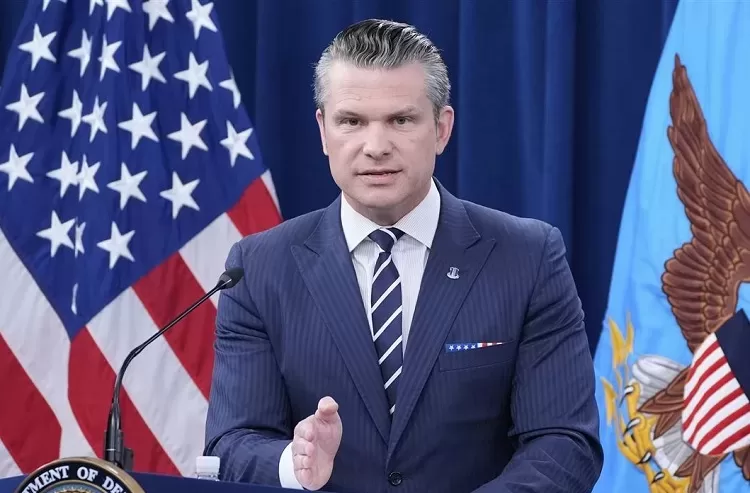
Defense Secretary Pete Hegseth said at a news conference that America “does not seek war” with Iran while Vice President JD Vance said the strikes have given Tehran the possibility of returning to negotiate with Washington.
“This mission was not and has not been about regime change,” Hegseth said according to AP.
President Donald Trump, who had addressed the nation from the White House on Saturday night, returned to social media Sunday to criticize Rep. Thomas Massie, R-Ky., who had objected to the president taking military action without specific congressional approval.
“We had a spectacular military success yesterday, taking the `bomb´ right out of their hands (and they would use it if they could!)” Trump said as part of the post on Truth Social.
At their joint Pentagon briefing, Hegseth and Air Force Gen. Dan Caine, chairman of the Joint Chiefs of Staff, said that “Operation Midnight Hammer” involved decoys and deception, and met with no Iranian resistance.
Caine indicated that the goal of the operation – destroying nuclear sites in Fordo, Natanz and Isfahan – had been achieved.
“Final battle damage will take some time, but initial battle damage assessments indicate that all three sites sustained extremely severe damage and destruction,” Caine said.
Vance said in a television interview that while he would not discuss “sensitive intelligence about what we´ve seen on the ground,” he felt “very confident that we´ve substantially delayed their development of a nuclear weapon.”
Pressed further, he told NBC’s “Meet the Press” that “I think that we have really pushed their programme back by a very long time. I think that it´s going to be many years before the Iranians are able to develop a nuclear weapon.”
The vice president said the US had “negotiated aggressively´ with Iran to try to find a peaceful settlement and that Trump made his decision after assessing the Iranians were not acting “in good faith.”
“I actually think it provides an opportunity to reset this relationship, reset these negotiations and get us in a place where Iran can decide not to be a threat to its neighbors, not to a threat to the United States and if they´re willing to do that, the United States is all ears,” Vance said.
Secretary of State Marco Rubio said on CBS’s “Face the Nation” that “there are no planned military operations right now against Iran, unless, unless they mess around and they attack” US interests.
Trump has previously threatened other countries, but often backed down or failed to follow through, given his promises to his coalition of voters not to entangle the United States in an extended war. It was not immediately clear whether Iran saw the avoidance of a wider conflict as in its best interests.
Much of the world is absorbing the consequences of the strikes and the risk that they could lead to more fighting across the Middle East after the US inserted itself into the war between Israel and Iran. Israeli airstrikes that began on June 13 local time targeted Iran’s nuclear facilities and generals, prompting retaliation from Iran and creating a series of events that contributed to the US attack.
While US officials urged for caution and stressed that only nuclear sites were targeted by Washington, Iran criticized the actions as a violation of its sovereignty and international law.
Iran´s foreign minister, Abbas Araghchi, said Washington was “fully responsible” for whatever actions Tehran may take in response.
“They crossed a very big red line by attacking nuclear facilities,” he said at a news conference in Turkey. “I don´t know how much room is left for diplomacy.”
China and Russia, where Araghchi was heading for talks with President Vladimir Putin, condemned the US military action. The attacks were “a gross violation of international law,” said Russia’s Foreign Ministry, which also advocated “returning the situation to a political and diplomatic course.” A Turkish Foreign Ministry statement warned about the risk of the conflict spreading to “a global level.”
British Prime Minister Keir Starmer said the United Kingdom was moving military equipment into the area to protect its interests, people and allies, but that he was focused on finding a solution. The leaders of Italy, Canada, Germany and France agreed on the need “a rapid resumption of negotiations.” France´s Emmanuel Macron held talks with the Saudi crown prince and sultan of Oman.

