




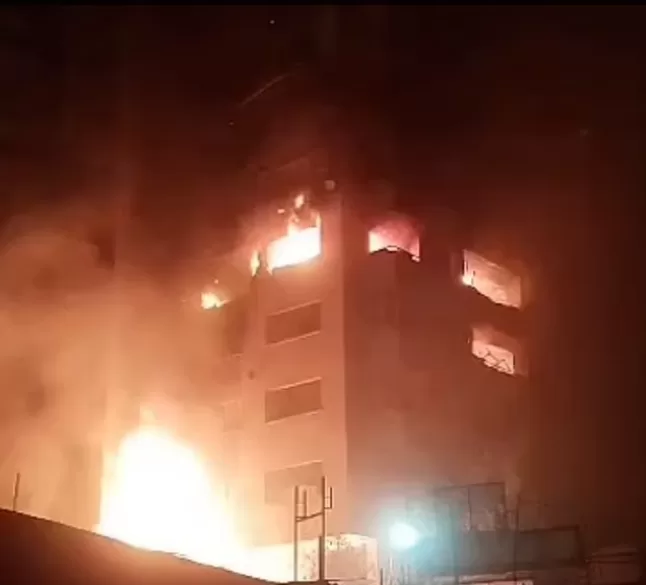
Israel has launched a wide-scale military operation targeting Iran’s nuclear facilities, escalating tensions in a region already on edge over stalled diplomatic efforts to curb Tehran’s nuclear ambitions.
The strikes, which began on the evening of June 12, were described by Israeli Defense Minister Israel Katz as a “preemptive action” aimed at neutralizing perceived imminent threats. “We expect a missile and drone response from Iran,” Katz warned in a brief statement. The Israeli military confirmed the operation involved “dozens” of aircraft targeting locations associated with Iran’s nuclear infrastructure.
Explosions were reported in the Iranian capital, Tehran, according to Iranian state media and international news agencies including Reuters. As of early Friday morning, Iran had not issued an official military or diplomatic response.
The United States acknowledged the Israeli operation but emphasized that it had no direct involvement. “Israel advised us that they believe this action was necessary for its self-defense,” U.S. Secretary of State Marco Rubio said. “American forces were not involved in the strikes.” Rubio also cautioned Iran against targeting U.S. personnel or interests in the region, adding that President Donald Trump’s administration was taking all necessary precautions to protect American forces.
The escalation comes amid the breakdown of nuclear negotiations between the Trump administration and Iran. Despite five rounds of indirect talks led by U.S. Middle East envoy Steve Witkoff, no agreement has been reached. International nuclear watchdogs, including the International Atomic Energy Agency (IAEA), have reported that Iran continues to enrich uranium to levels close to weapons-grade.
On June 12, just hours before the Israeli strikes, the IAEA passed a resolution condemning Iran’s non-compliance with its nuclear nonproliferation commitments — the first such resolution in two decades. In a recent report, the agency stated that Iran had enriched uranium up to 60% purity, nearing the 90% threshold required for a nuclear weapon.
Iran maintains its nuclear program is for peaceful energy purposes, a claim widely doubted by Western powers and Israel.
In anticipation of possible retaliation, the U.S. State Department issued a travel advisory on June 11 ordering non-essential government personnel to leave Iraq, citing “heightened regional tensions.”
Speaking at an event in Washington, D.C. on the same day, President Trump warned that the region “could become a dangerous place.” He reaffirmed Washington’s opposition to a nuclear-armed Iran: “We’re not going to allow that,” he said.
Tensions between Israel and Iran have been building for years, with Israeli officials repeatedly warning they would act unilaterally to prevent Iran from achieving nuclear weapons capability. Prime Minister Benjamin Netanyahu has long opposed international nuclear deals with Tehran, notably the 2015 Joint Comprehensive Plan of Action (JCPOA) brokered under former U.S. President Barack Obama. That agreement placed limits on Iran’s enrichment activities in exchange for sanctions relief, but was unilaterally abandoned by President Trump in 2018.
The latest strikes follow a string of proxy conflicts between the two nations. In October 2024, both Israel and Iran exchanged drone and missile attacks following the assassinations of senior leaders of Hezbollah and Hamas — Iranian-backed militant groups.
With the region bracing for Iranian retaliation, global attention now turns to Tehran’s next move — and whether a broader conflict can be averted.

