


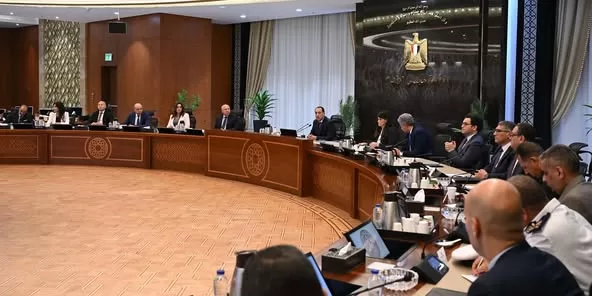
Egypt’s Prime Minister Dr Moustafa Madbouli chaired a meeting of the High Committee tasked with overseeing the preparations for the official opening ceremony of the Grand Egyptian Museum (GEM).
Madbouli stressed the importance of completing all preparations on schedule, underscoring the government’s commitment to ensuring the success of this landmark event. He noted that regular field inspections would be conducted to monitor on-the-ground progress and ensure the highest standards of readiness.
The prime minister reiterated the government’s dedication to overseeing every aspect of the opening-from logistical arrangements and transportation to guest accommodations and security protocols-in order to present Egypt’s rich heritage in the most dignified and impressive manner.
During the meeting, Minister of Transport Kamel el-Wazir presented a comprehensive report on infrastructure projects linked to the museum. He reviewed work progress on the 110-kilometre Greater Cairo Ring Road upgrade, with specific updates on sections near the museum.
El-Wazir also discussed the status of the Bus Rapid Transit (BRT) system, currently under implementation across 48 stations in Cairo, Giza, and Qalyubia. He further reviewed developments on Metro Line 4, which will include the “Grand Egyptian Museum Station” among 17 planned stops stretching 19 km from the western edge of the Ring Road near 6th of October City to El-Fustat.
Cairo Governor Ibrahim Saber reported on infrastructure improvements within the capital as part of the Ring Road development. These include road expansions, bridge renovations, and a visual identity initiative featuring coordinated building colours and cultural motifs along the corridor.
Giza Governor Adel el-Nagar provided an update on urban upgrades around the GEM site. These enhancements aim to elevate the museum’s surroundings through road paving, bridge construction, expanded green spaces, improved lighting, and general beautification works.
Major General Walid Aref, Chief of Staff of the Armed Forces Engineering Authority, detailed the military’s contributions to the museum’s development. He confirmed that all internal construction work has been fully completed.
Aref noted the completion of five dedicated bus parking zones with a combined area of 25,000 square metres and capacity for 187 buses. Additionally, two external lots-spanning 60,000 square metres-have been established to accommodate up to 1,460 cars, 54 buses, and 100 golf carts.
He also highlighted the finalisation of essential infrastructure networks, including external lighting for the museum’s main façade, low- and medium-voltage power systems, rainwater drainage, water supply lines, fire safety systems, and electrical service rooms.

