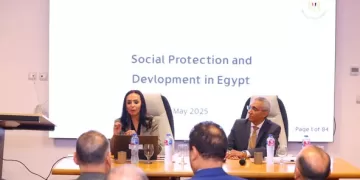




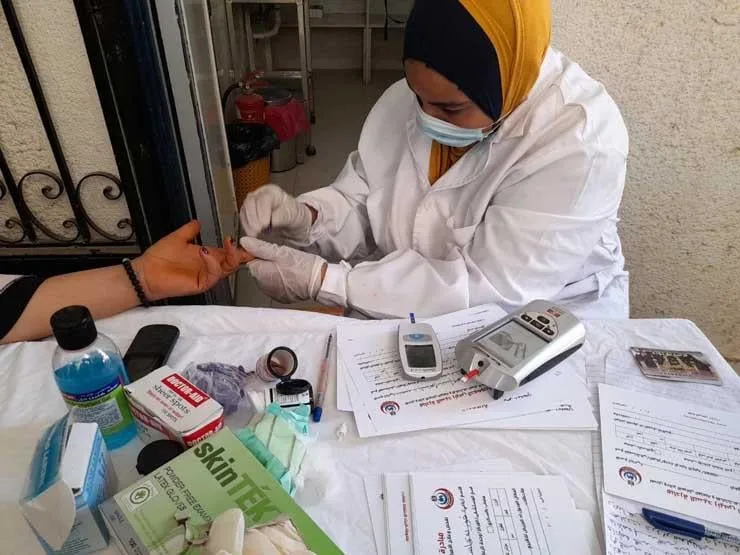




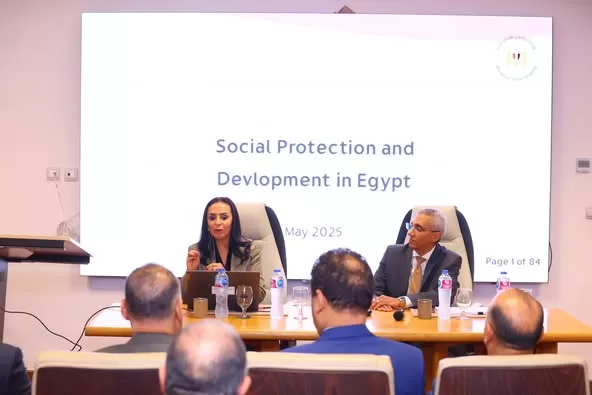
Egypt’s Minister of Social Solidarity Maya Morsi has reviewed the ministry’s areas of work pertaining to social protection and welfare, and economic empowerment. She also touched on the role played by non-governmental organisations (NGOs) and the ministry’s institutions, such as the Egyptian Red Crescent and the Fund for Combating and Treating Addiction and Substance Abuse. The minister has stressed that representing the state abroad is a national responsibility.
Morsi has recently met with members of the diplomatic and consular corps at the Foreign Ministry in the New Administrative Capital. Assistant Minister of Social Solidarity for International Co-operation, Relations and International Agreements Dina El-Serafy attended the meeting.
She stressed that representing the state overseas is a national responsibility.
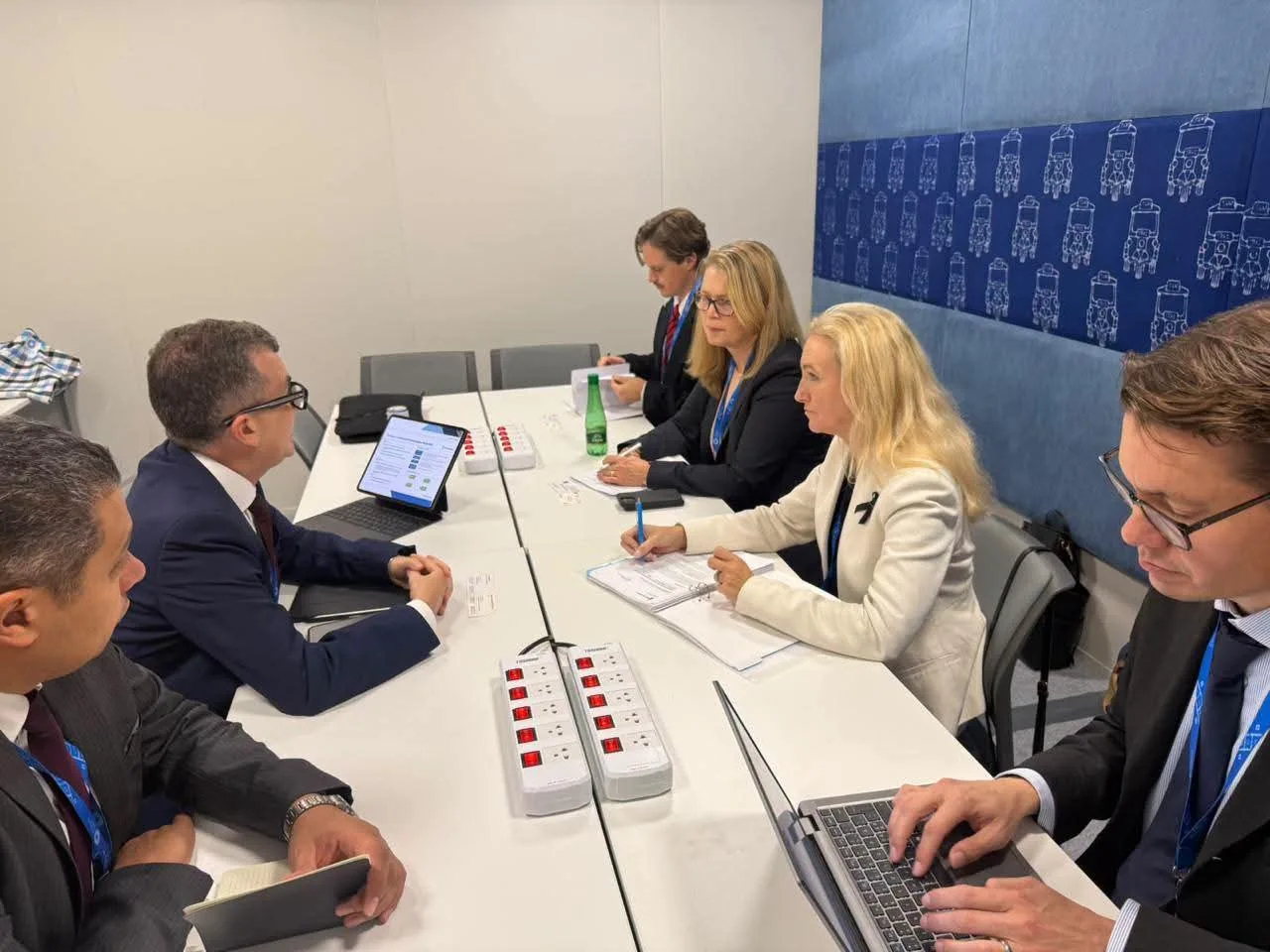
An Egyptian ambassador overseas can open several doors to areas of co-operation with the target country, and therefore meeting members of the diplomatic corps is necessary, Morsi said, voicing keenness on keeping in constant contact with ambassadors in various world countries.
What has been achieved in the social protection programme which adopted the state adopted some 10 years ago is ‘equivalent to tens of times what the country has spent on such programmes since the 1950s,”, she said.
The state is working within a general framework for social protection, as well as working to translate the national commitments to social protection stipulated in Egypt Vision 2030, the government action plan 2024-2027, and relevant national legislation and strategies, she further explained.
Minister Morsi confirmed that her ministry marked in May the 10th anniversary of the conditional cash support programme ‘Takaful and Karama’ (Solidarity and Dignity), saying these years were capped with a law that transforms the programme into a legislative right, namely the Social Security law.
Over a decade, up to 7.7 million families benefited from Takaful and Karama, 30 per cent of the nation’s families, Morsi said. Some 3 million families have received due support and exited the programmes. Now the figure stands at 4. 7 million families.
7 million families, pointing out that the number of children of Takaful families reached 5.5 million sons and daughters in various stages of education, and the rate of compliance with educational conditionality reached 81% of the total students from beneficiary families by attending at least 80% of school days, and the ministry bears the tuition fees of more than 58 thousand students from Takaful and Karama families in public universities due to the importance of education as one of the means of graduation for first-care families.
- Latest
- Trending

