



The Egyptian archaeological mission has unveiled three ancient tombs dating back to the era of the New Kingdom (1570 – 1069 BC) in the renowned Draa Abul Naga necropolis on Luxor’s west bank.
The discovery was made during the latest excavation season, marking another major chapter in Egypt’s storied legacy of archaeological achievement.
Minister of Tourism and Antiquities, Sherif Fathy, lauded the discovery as a “scientific and archaeological triumph,” noting its substantial impact on Egypt’s global cultural tourism map.
“The newly unearthed tombs will enhance Egypt’s appeal to visitors, particularly those with a passion for cultural and historical exploration, thanks to their profound civilisational and humanitarian value,” he said.
He also emphasised that the breakthrough, accomplished by an Egyptian team, highlights the expertise and dedication of national archaeological professionals, who continue to deliver world-class discoveries.
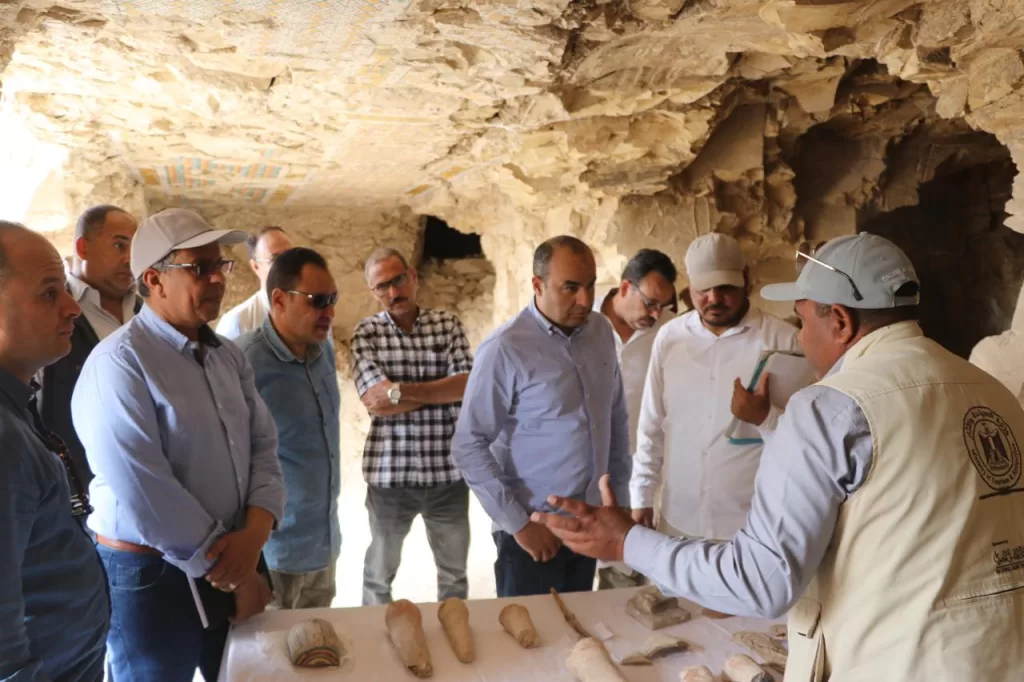
For his part, Secretary-General of the Supreme Council of Antiquities, Mohamed Ismail Khaled, said that the three tombs were confirmed as belonging to the New Kingdom, through identifying the names and surnames of their owners through inscriptions found within the tombs.
“Efforts are underway to clean and study the remaining inscriptions, aiming to enrich scientific understanding and ensure thorough dissemination of these findings,” he added.
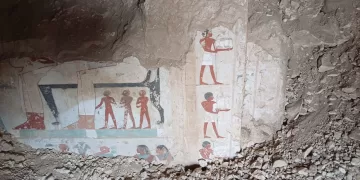
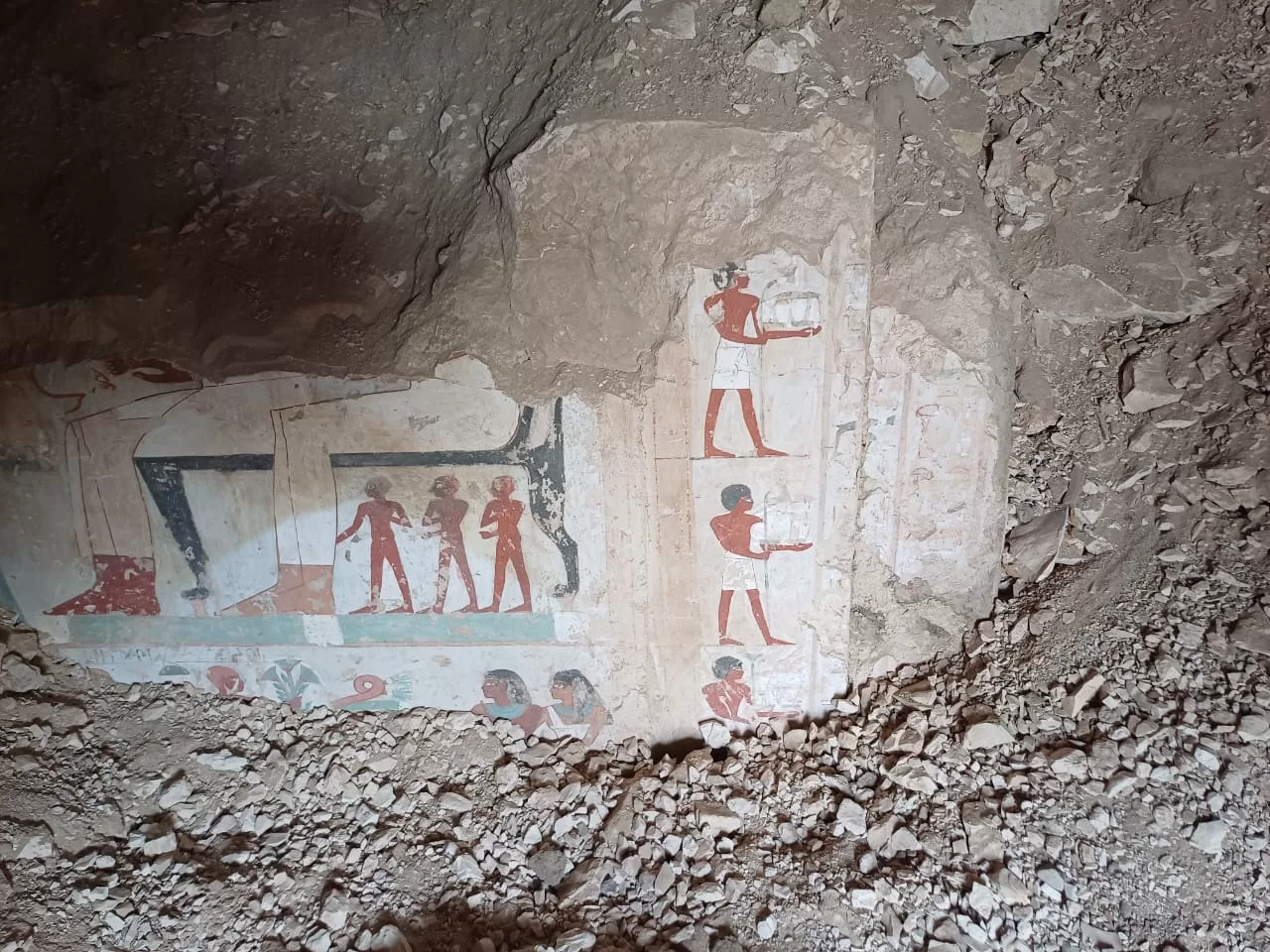
Among the discoveries is a tomb thought to belong to a temple worker from the Ramses era associated with Amun’s estate. Despite much of its decoration being destroyed, remnants depict scenes of offerings, funerary furniture, and traditional feasting, a statement by the Ministry said. Architecturally, the tomb features a small courtyard, an entrance leading to a square chamber, and evidence of later reuse.
The other two tombs date back to the 18th Dynasty. One belongs to a supervisor overseeing granaries, featuring a long corridor-like courtyard, additional chambers, and a burial shaft.
The second is attributed to a supervisor of the Amun Temple in the Oases, who also served as the mayor and a scribe of the northern oases. This tomb showcases a small courtyard with a well, followed by a series of halls leading to an unfinished burial chamber.
The Ministry of Tourism and Antiquities voiced hopes that these significant discoveries will not only deepen historical knowledge but also draw more visitors to Luxor, reinforcing Egypt’s role as a center of global heritage and culture.


