



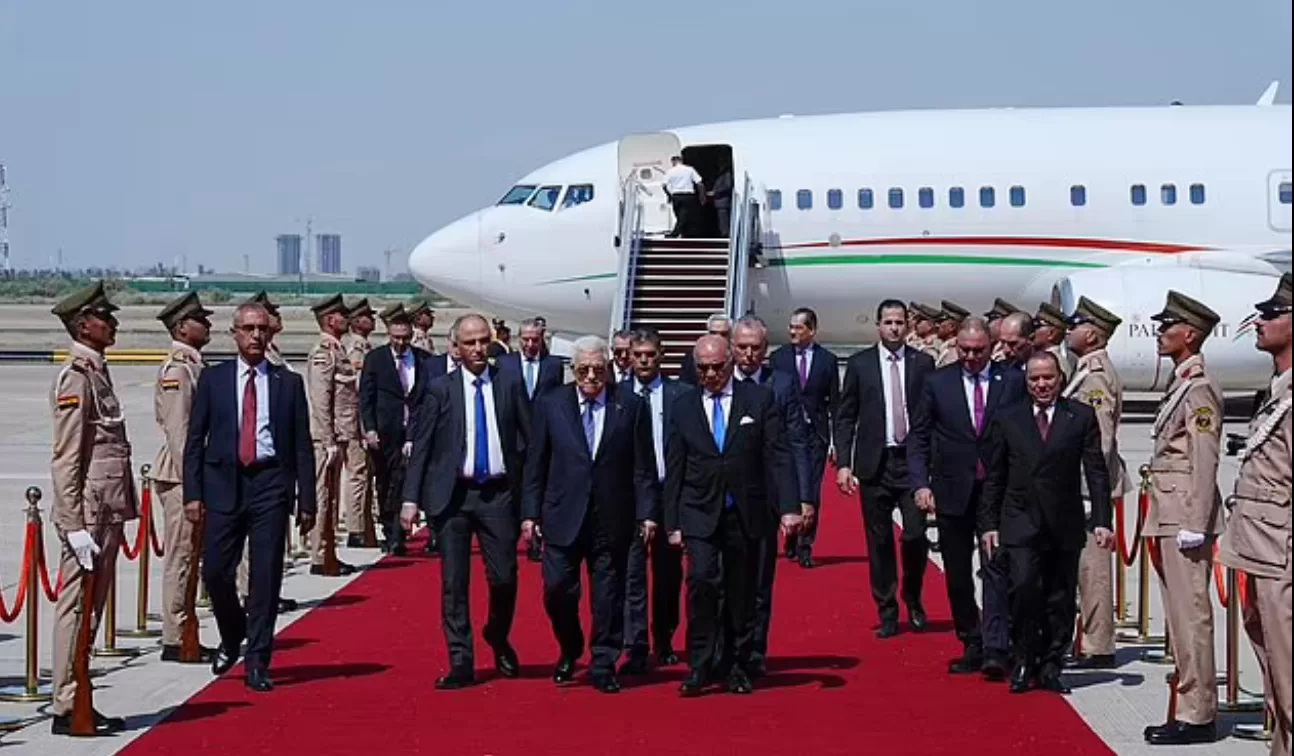
BAGHDAD (AP) – The annual Arab League summit commenced in Baghdad on Saturday, with the escalating conflict in Gaza taking center stage amidst a complex web of regional dynamics.
Following an emergency assembly in Cairo this past March, where Arab leaders backed a reconstruction blueprint for Gaza without displacement of its approximately two million inhabitants, the Baghdad gathering occurs against a backdrop of heightened tensions. A ceasefire between Israel and Hamas, brokered in January, collapsed two months prior, giving way to intensified Israeli military operations and Prime Minister Benjamin Netanyahu’s vow to further escalate force to dismantle the militant group.
The summit’s commencement was somewhat overshadowed by U.S. President Donald Trump’s regional tour earlier in the week. While a hoped-for breakthrough on a new Gaza ceasefire did not materialize, Trump’s meeting with newly appointed Syrian President Ahmad al-Sharaa – a figure with a past as a Sunni militant who once fought against U.S. forces in Iraq – garnered significant attention. Trump’s pledge to lift U.S. sanctions on Syria added another layer of complexity to the regional landscape.
Despite the U.S. overture, al-Sharaa was absent from the Baghdad summit. Syria’s delegation was instead led by Foreign Minister Asaad al-Shibani. Al-Sharaa’s history as Abu Mohammed al-Golani, an al-Qaida insurgent who battled U.S. forces post the 2003 Iraq invasion and remains wanted on terrorism charges in Iraq, has made his potential presence a point of contention for Iraqi Shiite militias and political factions. These groups had previously fought alongside the forces of former Syrian President Bashar Assad during Syria’s protracted conflict, rendering al-Sharaa a particularly sensitive figure.
Caught in a delicate balancing act between its strong, yet sometimes conflicting, ties with both the United States and Iran, Iraq is endeavoring to establish itself as a regional mediator. An anonymous Iraqi political official revealed that Iran’s Quds Force commander Esmail Ghaani visited Baghdad prior to the summit, conveying messages of support for ongoing Iranian-American nuclear deal negotiations and advocating for the removal of stringent sanctions on Iran.
The Baghdad summit underscores the enduring impact of the Gaza crisis on Arab unity and highlights the intricate interplay of regional rivalries and international interventions shaping the Middle East.

