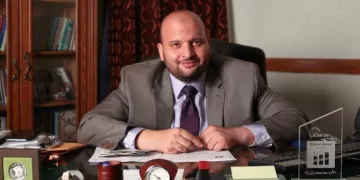








Ibrahim Negm
In a region where confusion over religious authority has often paved the way for extremism, Egypt has just taken a bold and long-overdue step to restore order and clarity. The recent passage of the Fatwa Regulation Law by Egypt’s Parliament is not just a technical legal reform – it is a cornerstone in our broader national project to renew religious discourse, protect social cohesion, and safeguard the minds of future generations.
For decades, Egypt, like many Muslim-majority countries, has witnessed an erosion of trust in official religious institutions, in part due to the proliferation of unregulated religious opinions. Fatwas –non-binding religious legal opinions – are meant to guide believers with insight and care. Instead, they’ve increasingly been weaponised by self-appointed preachers, social media influencers, and political opportunists, often with no legitimate scholarly training. The result? A cacophony of contradictory opinions, theological confusion, and in many cases, incitement to violence.
The Fatwa Regulation Law seeks to end this chaos by clearly defining who has the right to issue public fatwas. It restricts this authority to Egypt’s highest religious bodies: Al-Azhar’s Council of Senior Scholars, the Islamic Research Academy, the Ministry of Religious Endowments, and Dar al-Ifta’ – the institution I proudly lead. This is not about stifling debate; it is about setting standards. In the same way a society would not tolerate medical diagnoses from unlicensed individuals, we should not accept spiritual guidance from the unqualified.
But this law is not only about controlling who speaks in the name of Islam. It is about protecting the sanctity of religious knowledge and shielding the public from ideological manipulation. By criminalising the publication of fatwas from unauthorised sources, the legislation ensures that religious guidance presented in the media is rooted in Egypt’s long tradition of moderate, mainstream Islamic thought. Far from suppressing freedom of expression, the law restores confidence in religious discourse and reinforces public trust in state institutions.
This reform is especially vital in today’s media-saturated world, where viral misinformation can travel faster than truth. Dar al-Ifta’ alone handled more than 1.4 million fatwa requests in 2024 – on everything from family issues to artificial intelligence. Egyptians are not turning away from religion; they are seeking authentic answers. And they deserve to receive those answers from scholars grounded in both classical learning and contemporary realities.
Beyond Egypt’s borders, this law sends a strong message to the global community: Islam’s moral compass remains intact, and it will not be hijacked by extremists or diluted by populists. It is a model that other nations wrestling with radicalism and disinformation may wish to study.
Ultimately, the law’s success will depend on how well it is implemented and embraced – not only by religious institutions, but by journalists, educators, and the public at large. It will require robust enforcement, ongoing training, and an active partnership between scholars and the media.
Egypt is not just legislating fatwa; it is legislating clarity, unity, and resilience. And in a world where confusion has often been a gateway to extremism, that is a law worth celebrating.
Ibrahim Negm is a senior advisor to the Grand Mufti of Egypt.

