









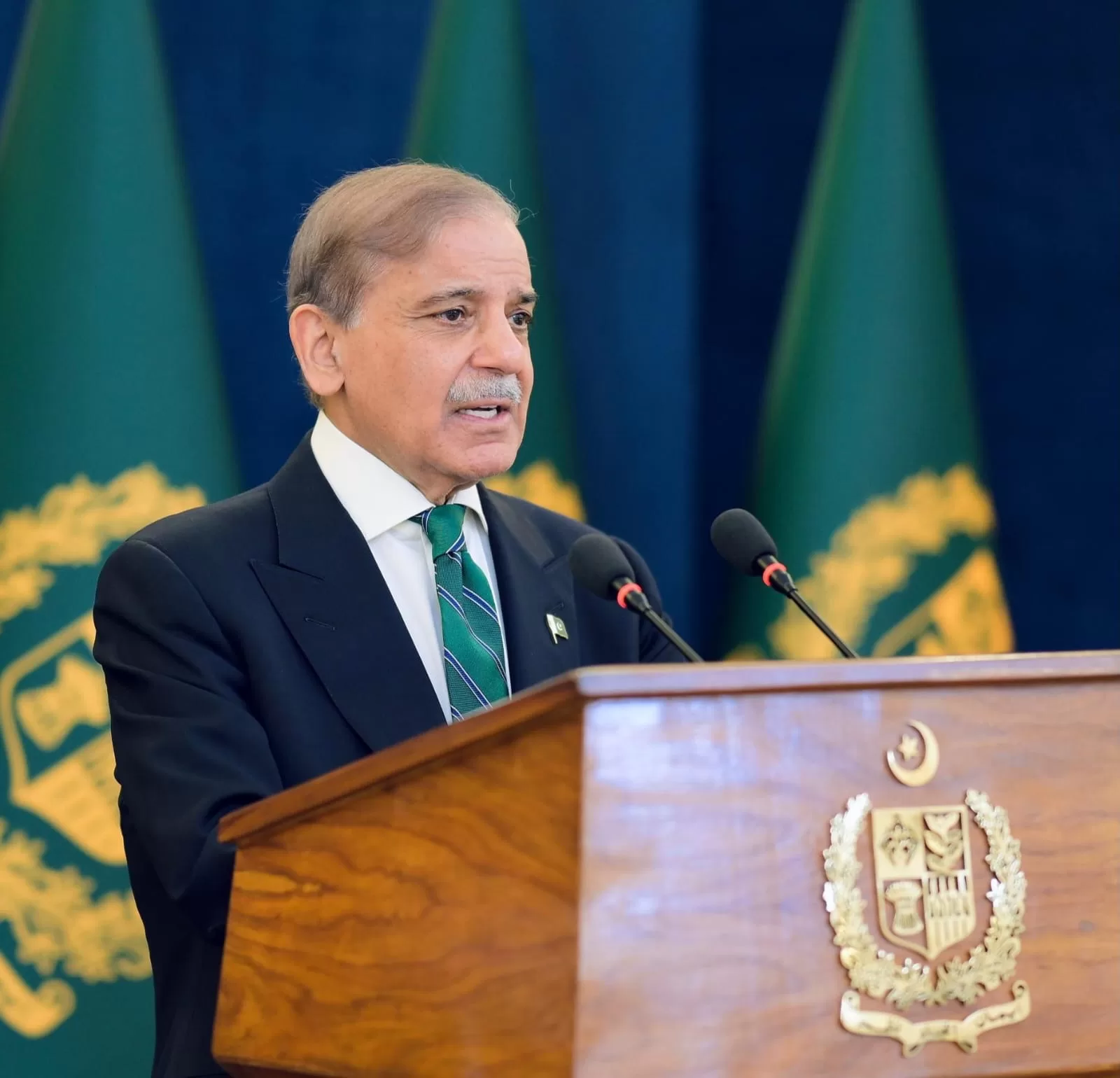
Islamabad, Pakistan – In a televised address to the nation on Saturday, Prime Minister Muhammad Shehbaz Sharif affirmed Pakistan’s commitment to regional peace by acknowledging the ceasefire following recent escalations. The Prime Minister expressed his hope that this cessation of hostilities would pave the way for resolving long-standing issues through peaceful negotiations. These issues include water distribution, the Jammu and Kashmir dispute, and other unresolved matters that have strained regional stability.
Prime Minister Sharif lauded the resilience and self-respect of the Pakistani populace, stating that the nation had demonstrated its unwavering resolve to protect its sovereignty. He asserted that any challenge to Pakistan’s integrity would be met with unified strength.
Referring to recent actions, the Prime Minister described the adversary’s aggression as “cowardly and shameful.” He commended the professionalism and effectiveness of Pakistan’s armed forces in their response, suggesting their actions would be remembered as a significant chapter in modern warfare.
The Prime Minister stated that India had attempted to draw Pakistan into conflict following the Pahalgam incident, despite Pakistan’s offer of cooperation for an impartial international investigation. He highlighted Pakistan’s restraint in the face of what he described as false allegations, accusations, drone incursions, missile attacks on civilian targets, and attempts to destabilize military installations and water resources.
Prime Minister Sharif conveyed that Pakistan ultimately responded in a manner that the adversary understood, shifting the dynamic from potential negotiations to a demonstration of resolve on the battlefield. He praised the armed forces, emphasizing their unwavering spirit and swift action in neutralizing enemy capabilities, including air bases and stockpiles.
The Prime Minister framed the conflict as a stand against outdated ideologies rooted in “anti-humanity, hatred, aggression, and religious bigotry,” declaring it a victory for truth and principles. He acknowledged the unified support of the nation’s 240 million people for their armed forces during the conflict.
Gratitude was extended to Chairman Joint Chiefs of Staff Committee General Sahir Shamshad Mirza, Chief of Army Staff General Syed Asim Munir, Air Chief Marshal Zaheer Ahmed Babar Sidhu, Naval Chief Admiral Naveed Ashraf, and all ranks of the armed forces for their leadership and service. Special appreciation was directed towards General Syed Asim Munir for his “sagacious and bold leadership.”
Prime Minister Sharif also acknowledged the crucial role of international partners in facilitating the ceasefire. He specifically thanked US President Trump for his sincere efforts, as well as the Kingdom of Saudi Arabia, UAE, Turkiye, Qatar, the UK, and the UN Secretary General for their contributions. He especially recognized Crown Prince Mohammad bin Salman, Mohamed bin Zayed, Emir of Qatar Sheikh Tamim bin Hamad, and President Tayyip Erdogan for their steadfast support. The Prime Minister also expressed deep gratitude to the Chinese leadership, including President Xi Jinping, and the Chinese people for their “unprecedented and historic support.”
The Prime Minister paid tribute to Irtaza Abbas Shaheed, who lost his life during the recent aggression, and offered condolences to bereaved families. He also thanked all political parties and leaders for their unity and solidarity, acknowledging the wise leadership of Muhammad Nawaz Sharif and the valuable consultations of President Asif Ali Zardari.
Appreciation was extended to the media and social media users for their responsible reporting and efforts to counter misinformation. The Prime Minister expressed hope that this commitment to professional integrity would serve as a guiding principle in the future.
Concluding his address, Prime Minister Sharif voiced his strong belief that, having overcome this crisis, the government and institutions would now focus their energies on the progress and prosperity of Pakistan, working tirelessly to elevate the nation’s standing on the global stage.

