



President reiterates keenness to enhance bilateral ties with Greece
Athens values Cairo’s role in achieving regional security, stability
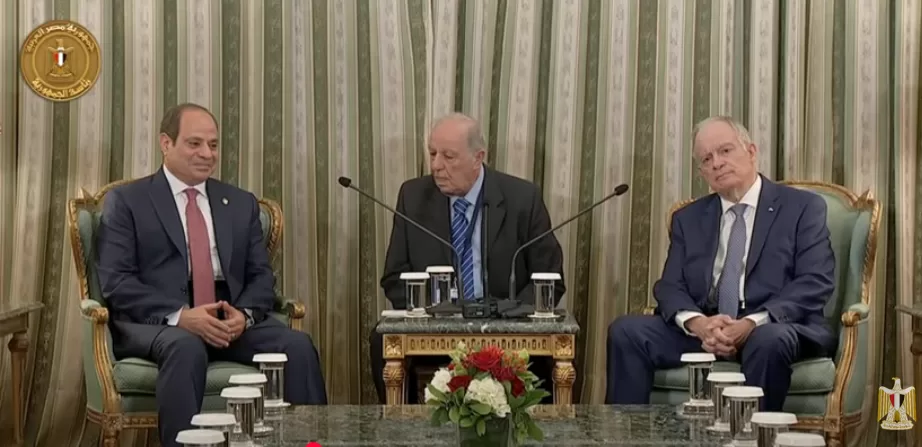
President Abdel Fattah El Sisi met on Wednesday with Greek President Konstantinos Tasoulas at the Presidential Palace in Athens, where an official reception ceremony was held at the start of President El-Sisi’s official visit to Greece.
The Spokesman Presidency Mohamed El-Shenawy said that the meeting underscored the growing momentum in Egyptian-Greek relations, exemplified by the inaugural session of the High-Level Cooperation Council between the two nations during the visit.
The visit also witnessed the signing of a joint declaration on strategic partnership, alongside several agreements aimed at deepening collaboration across various sectors, reflecting a shared commitment to elevate bilateral ties to deeper and more profound levels.
President Sisi emphasised Egypt’s strong interest in its distinguished partnership with Greece, which serves as a vital pillar for both bilateral and regional cooperation.
He reiterated Egypt’s keenness to enhance bilateral cooperation in economic, commercial, tourism, and cultural fields, as well as in energy, transport, and electricity interconnection.
President Sisi pointed to the implementation of the Egypt-Greece electricity interconnection project, which marks a qualitative leap in bilateral relations and opens new avenues for the export of clean Egyptian electricity to Europe for the first time.
For his part, the Greek president expressed his country’s deep appreciation for Egypt, noting Greece’s interest to strengthen relations with Egypt to be commensurate with the existing partnership between the two countries, in light of Egypt’s pivotal role in establishing the foundations of regional security and stability and addressing regional crises. This reflects Egypt’s strategic importance as a key partner of the European Union.
The discussions also covered regional issues, including the latest developments in Gaza, Syria, Libya, Yemen, and maritime security in the Red Sea.
Both sides emphasised the importance of continued coordination to prevent regional escalation and to enhance joint efforts in combating illegal migration, while working toward de-escalation and the restoration of stability in the region.

