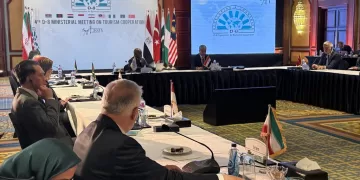





The Fourth Ministerial Meeting of Tourism Ministers of the D-8 Organisation for Economic Cooperation convened on Tuesday in Cairo, providing a dynamic platform for fostering dialogue on advancing sustainable tourism, promoting investment, and encouraging innovation throughout developing member countries.
The gathering brought together ministers and leading tourism experts from across the D-8, underscoring a collective commitment to shared prosperity, enhanced collaboration, and the exploration of the rich cultural and economic potential inherent in the group’s diverse membership.
Minister of Tourism and Antiquities, Sherif Fathy, underscored tourism’s vital contribution to economic growth, job creation, foreign currency earnings, and sustainable development for local communities. He spoke of the ‘Cairo Declaration,’ adopted at the 2024 D-8 Summit, which reaffirms member states’ shared commitment to sustainable tourism, cultural exchange, and heritage preservation.
Fathy highlighted technology, particularly artificial intelligence, as the sector’s new “game-changer”, enabling safer travel experiences, easier access to information, and innovative marketing approaches.
Egypt, he added, has already integrated AI-driven tools into its tourism campaigns, yielding “promising results”.
Yet, he cautioned that collaborative frameworks are needed to ensure responsible AI adoption, echoing points raised in the Cairo Declaration.
Egypt’s forward-looking tourism strategy, “Egypt… Unmatched Diversity”, aims to make the industry greener, with more than 41 per cent of national hotels now certified to sustainable standards. Minister Fathy placed special emphasis on the private sector’s crucial role, reiterating the state’s commitment to robust infrastructure, transparent government support, and a fair, competitive environment for business and travellers alike.
In a call to action, Fathy encouraged regular professional exchanges and joint workshops among D-8 countries’ tourism operators, emphasising learning and solidarity as central pillars for growth.
The Minister unveiled plans for a pan-D-8 online training platform for tourism professionals, an initiative designed to foster shared expertise and capacity building throughout the alliance.
To meet rising demand, Egypt is expanding hotel capacity and offering investment incentives, while soon launching an “Investment Opportunities Bank”, a digital map of Egypt’s top tourism prospects.
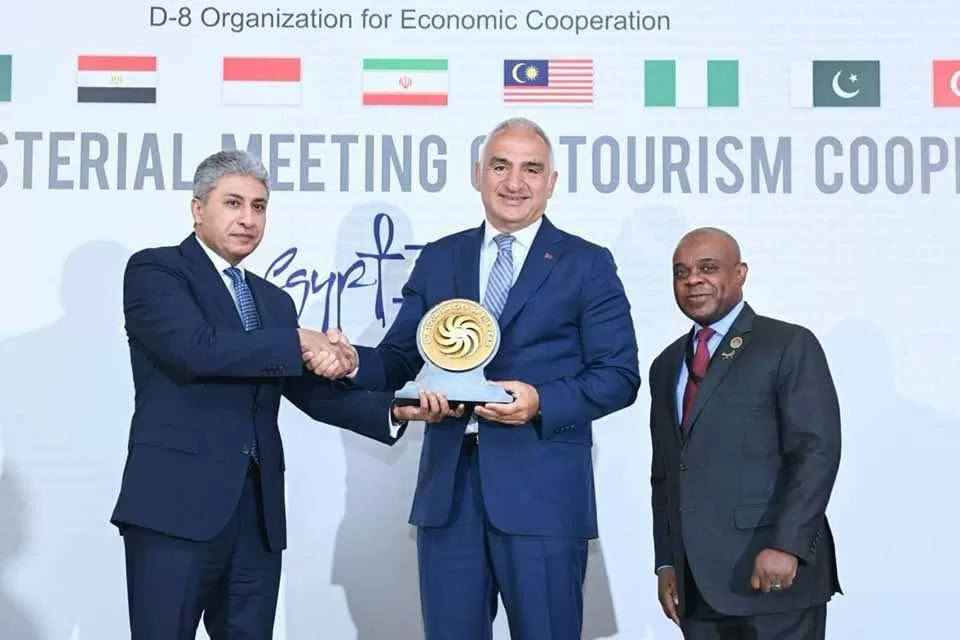
Minister Fathy extended his sincere congratulations to his Turkish counterpart, Mehmet Nuri Ersoy, on Antalya’s selection as the inaugural “D-8 Tourism City” for 2025. He described this achievement as “well-deserved recognition” among member states, noting that the distinction exemplifies the unity and forward-looking spirit that characterize the D-8 organisation.
The D-8 Organisation brings together nine nations, predominantly from the Muslim world: Azerbaijan, Bangladesh, Egypt, Indonesia, Iran, Malaysia, Nigeria, Pakistan, and Turkey, working to deepen their economic and cultural cooperation.
D-8 Secretary-General Isiaka Abdulqadir Imam lauded the robust recovery of the tourism sector, citing leaps in visitors to D-8 nations, tourist arrivals soared to over 424 million in the past year, with sector revenues rising from $23 million in 2020 to $321 million. Still, he pointed to a key challenge: travel within the D-8 states makes up less than 10 per cent of arrivals, highlighting the need for deeper inter-member tourism.
To boost inter-D-8 tourism, Secretary-General Imam encouraged harnessing technology to develop shared travel platforms and immersive VR previews, making each destination more accessible and enticing. He also championed programmes to engage youth as tourism ambassadors, and promoted film and media collaborations to showcase the unique flavours, cultures, and natural beauty of member countries.
Last December, Egypt’s leadership was further reaffirmed during the 11th D-8 Summit in the New Administrative Capital, where President El-Sisi inaugurated the proceedings with a message focusing on unity and shared progress.

