



The Egyptian archaeological mission of the Supreme Council of Antiquities has announced a major discovery at the Tell Abu-Seifi site, located in North Sinai.
During their most recent excavation season, the team revealed extensive remains of military fortifications, housing units for soldiers, and evidence suggesting the possible existence of another ancient citadel within the area.
Minister of Tourism and Antiquities Sherif Fathi emphasized the significance of this discovery, noting that it sheds new light on the eastern military defenses of Egypt during the Ptolemaic and Roman periods.
“Tell Abu-Seifi stands out as a key military and industrial hub throughout history,” Fathi said. “This remarkable find provides us with a clearer understanding of Egypt’s eastern defensive map and reaffirms Sinai’s historic status as Egypt’s gateway and first line of defense.”
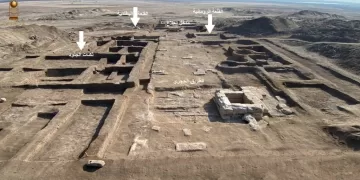
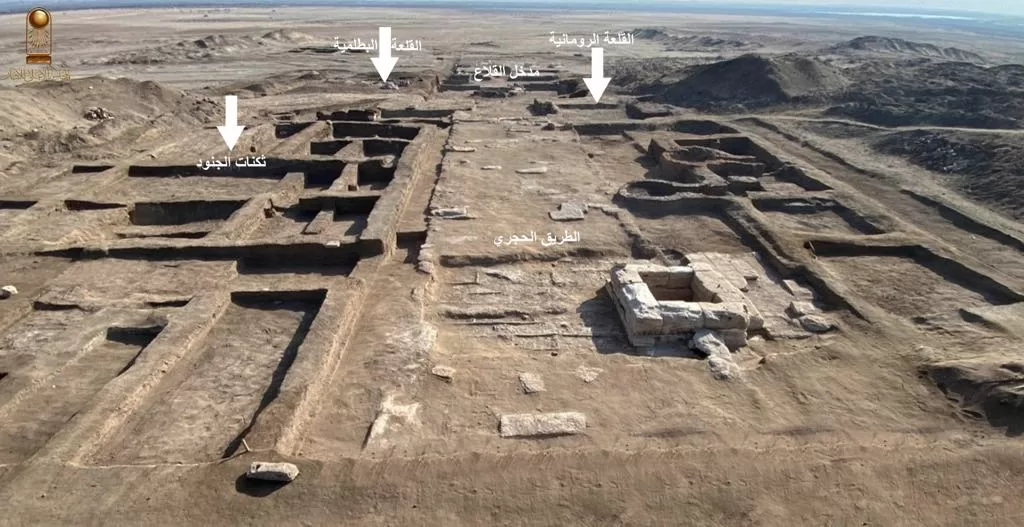
The excavation team uncovered distinctive architectural features at the eastern gates of both Ptolemaic and Roman fortresses, offering valuable insights into the defensive entrances of the time, a statement by the Ministry said.
Among the most notable features is a massive defensive ditch, more than two meters deep, positioned at the entrance to the Ptolemaic citadel. Archaeologists believe this trench was part of a sophisticated system that could be activated in times of threat.
Additionally, the team unearthed a well-preserved stone-paved road, measuring 11 meters wide and stretching over 100 meters. This ancient thoroughfare extends from the eastern gate of the Roman citadel into the heart of the site and was constructed atop an earlier Ptolemaic-era road of limestone slabs.
One of the most fascinating finds is more than 500 mud circles lining both sides of the stone road, thought to be remnants of tree plantings that once adorned the citadel’s entrance during the Ptolemaic era. The discovery of soldier residences from the Roman period provides a more vivid depiction of daily military life, particularly during the reigns of Emperors Diocletian and Maximian.
Archaeologists also uncovered four large furnaces used for producing quicklime, suggesting that Tell Abu-Seifi became an industrial center during the later Roman era, a period that saw the destruction of the site’s earlier stone structures.
Significantly, a further trench was discovered, which may point to the presence of an even older, third citadel predating the Ptolemaic and Roman fortresses. The four corners of this potential citadel have been identified and are presently being studied to determine their age. The remains of rectangular buildings and overlapping habitation layers add to the evidence that the site served as a living space during extended periods of Egypt’s ancient history.
Tell Abu-Seifi continues to demonstrate its importance as a strategic site, having played a pivotal role in safeguarding Egypt’s eastern borders across the ages.

