





By Mohamed Attia
Egypt and the United Arab Emirates have signed a letter of intent to enhance co-operation in the aviation sector, with a focus on artificial intelligence, strategic planning, and knowledge exchange.
The agreement was signed in Cairo by Amr El-Sharkawy, head of Egypt’s Civil Aviation Authority, and Saif Mohammed Al Suwaidi, Director General of the UAE’s General Civil Aviation Authority, in the presence of Egypt’s Civil Aviation Minister Sameh El-Hefny and senior officials from both countries.
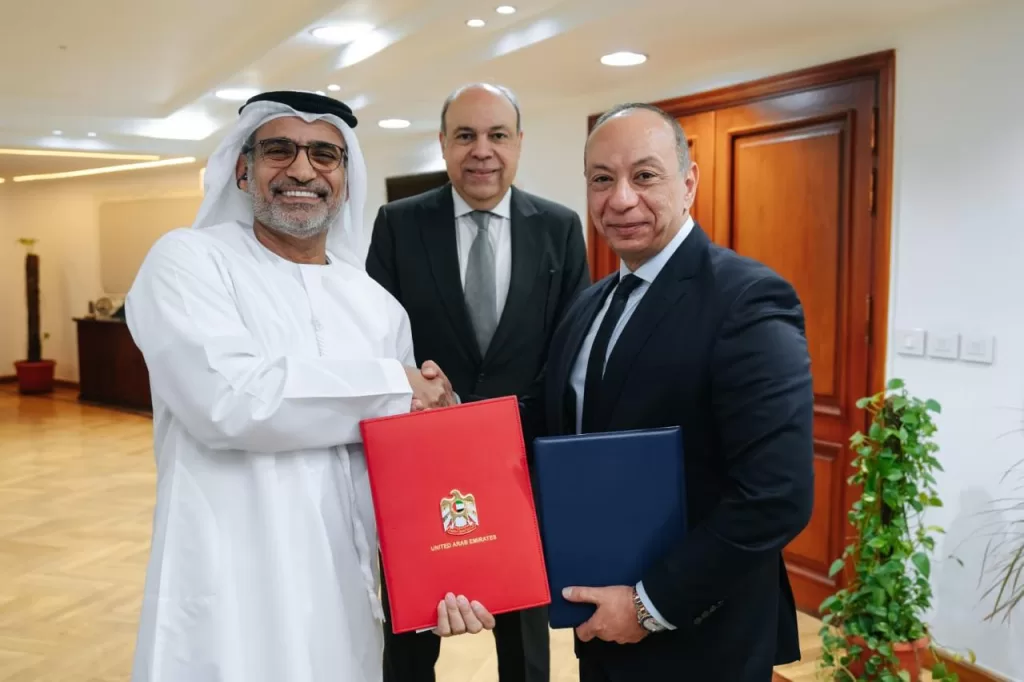
The deal reflects a shared commitment to strengthening bilateral co-operation and boosting the capabilities of the civil aviation sector by aligning with global best practices. A joint steering committee will be formed to oversee the implementation of the agreement and ensure continued coordination between the two sides.
Speaking after the signing ceremony, Minister El-Hefny described the agreement as a milestone in Egypt-UAE relations and a step toward deeper developmental partnerships that support digital transformation and technological advancement in civil aviation.

He added that Egypt is keen to learn from successful regional experiences – especially the UAE, which he described as a leading model in aviation development. “This agreement paves the way for broad co-operation and knowledge transfer between our two countries,” El-Hefny said.
The minister underscored Egypt’s focus on artificial intelligence and digital transformation, including efforts to modernise digital infrastructure and adopt global best practices in aviation operations and management.

For his part, Al Suwaidi welcomed the agreement and praised the longstanding ties between the two nations. He stressed the UAE’s commitment to deepening its strategic partnership with Egypt and highlighted the importance of exchanging expertise to drive innovation and progress in the aviation sector – particularly in areas such as AI and digitalisation.
Al Suwaidi also commended Egypt’s civil aviation sector for its recent advancements, noting that the country’s strong infrastructure and skilled workforce make it well-positioned to meet global challenges in the industry.


