



President returns home following two-stop Gulf tour
Two leaders affirm support for Arab’s Gaza reconstruction Plan; discuss developments in Syria, Sudan, Yemen
Kuwait values Egypt’s role in achieving regional stability
Egyptian President Abdel Fattah El Sisi returned home on Tuesday following a Gulf tour that took him to Qatar and Kuwait.
During his visit to Kuwait, President Sisi highlighted the longstanding and close ties between Egypt and Kuwait, reaffirming Egypt’s commitment to enhancing co-operation, especially in boosting trade and investment ties to serve the mutual interests of both peoples.
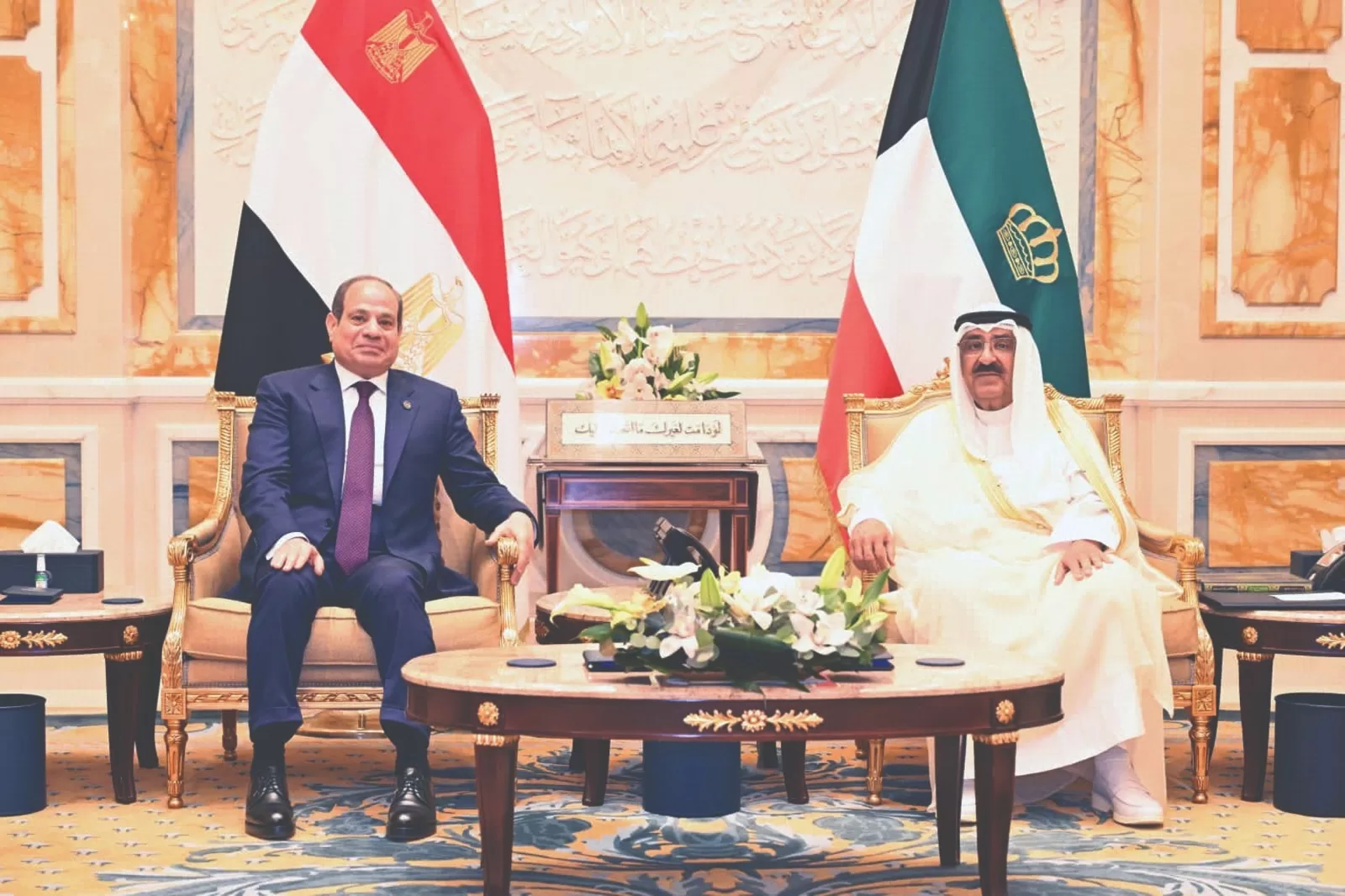
The president made these remarks during his meeting yesterday with Emir of Kuwait Sheikh Mishal Al-Ahmad Al-Jaber Al-Sabah at Bayan Palace in the presence of high-level delegations from both nations. The meeting marked the conclusion of President Sisi’s official state visit to Kuwait.
Presidency Spokesman Ambassador Mohamed el-Shennawy said the meeting began with an expanded session attended by the official delegations, followed by one-on-one talks between the two leaders.
At the outset of the meeting, Sheikh Mishal warmly welcomed President Sisi, emphasising that the visit reflects the deep and distinguished relations between the two countries. He highlighted the opportunity this visit presents to further strengthen co-operation across various fields, particularly in the economic and investment domains.
The Kuwaiti emir also expressed his appreciation for Egypt’s historic and pivotal role in advancing development in the Gulf and supporting regional stability.
The spokesman stated that the talks included an exchange of views on regional developments, with particular focus on the deteriorating humanitarian situation in Gaza.
The two leaders called for an immediate ceasefire, the continued exchange of hostages and detainees, and the urgent and unfettered delivery of sufficient humanitarian aid.
They expressed full support for the Arab plan for Gaza’s recovery and reconstruction to be implemented as soon as the ceasefire takes effect.
Both leaders expressed categorical rejection of the displacement of Palestinians from their land and stressed the necessity of reaching a just and comprehensive resolution to the Palestinian issue through the establishment of the independent Palestinian state along the June 4, 1967 borders, with East Jerusalem as its capital.
The meeting also touched on the situations in Syria and Sudan, where the leaders affirmed their support for the unity and stability of both countries.
They further reiterated their backing of Yemen’s legitimate government and underscored the importance of safeguarding maritime security in the Red Sea and the broader region.

