



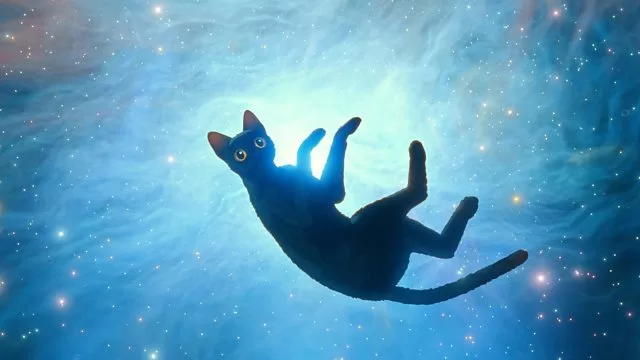
In Gints Zilbalodis’s visually stunning Latvian animated film, Flow, the end of the world arrives not with a bang, but with a slow, creeping flood.
When humanity inexplicably vanishes, a dark gray cat finds itself adrift in a world rapidly succumbing to rising waters.
The film opens in a tidy home, the cat’s seemingly secure existence abruptly shattered as the surrounding waters surge, submerging everything in their path.
Forced to flee, the cat eventually finds refuge on a small boat, sharing the limited space with an unlikely menagerie: a dog, a bird, a capybara, and a lemur.
Their origins remain a mystery, but their shared predicament draws the viewer into their struggle for survival against increasingly challenging circumstances.
Flow has gained significant acclaim, notably becoming the first Latvian film to achieve the distinction of winning both an Academy Award for Best Animated Feature Film and a Golden Globe.
This recognition underscores the film’s unique and impactful storytelling.
Unlike many animated features centred on animals, Flowconsciously avoids humanising its characters. Each creature behaves authentically, driven by instinct and natural abilities rather than human-like motivations or dialogue. This commitment to realism is a key element of the film’s emotional resonance.
Zilbalodis masterfully crafts a powerful emotional experience without relying on spoken words. The narrative unfolds through subtle gestures: lingering gazes, non-verbal communication between the animals, the comfort of huddled bodies in moments of fear, and the simple routines of their respective species. This is achieved through breath-taking visuals and a poignant musical score.
Each frame possesses a painterly quality, and the absence of dialogue amplifies the immersive experience, inviting the audience to absorb every detail. This deliberate choice also transcends cultural barriers, allowing for universal understanding and connection with the animals’ plight.
The film’s opening sequence is particularly striking, depicting a haunting, gradual inundation of the landscape.
Buildings dissolve into the encroaching water, transforming into desolate ruins. These evocative images immediately immerse the viewer in a world profoundly altered, hinting at the potential consequences of environmental change.
Remarkably, Flow was largely created by Zilbalodishimself, using free, open-source software and produced on a modest budget compared to typical animated features. The film’s exquisite rendering of water, the interplay of light across surfaces, and the fluid movements of the animals through the flooded world are testaments to a strong artistic vision and technical ingenuity.
Through the lens of these animals, Zilbalodis offers a subtle yet profound reflection on resilience and adaptation. We witness their initial struggle in the face of sudden disaster, followed by their tentative efforts to rebuild and adjust to their new reality.
The film subtly conveys a message of life’s enduring nature, suggesting that even in the aftermath of upheaval, existence finds a way to continue.
Flow refrains from explicit moralising or offering easy answers. Instead, it leaves the audience in a contemplative and emotionally charged state, prompting reflection on themes of loss, survival, and the interconnectedness of life.
However, while Flow is a compelling and artistic achievement in animation, its pacing and contemplative nature may not resonate with younger children.
The film’s deliberate slowness and lack of traditional narrative exposition could make it challenging for them to follow and maintain engagement.

