




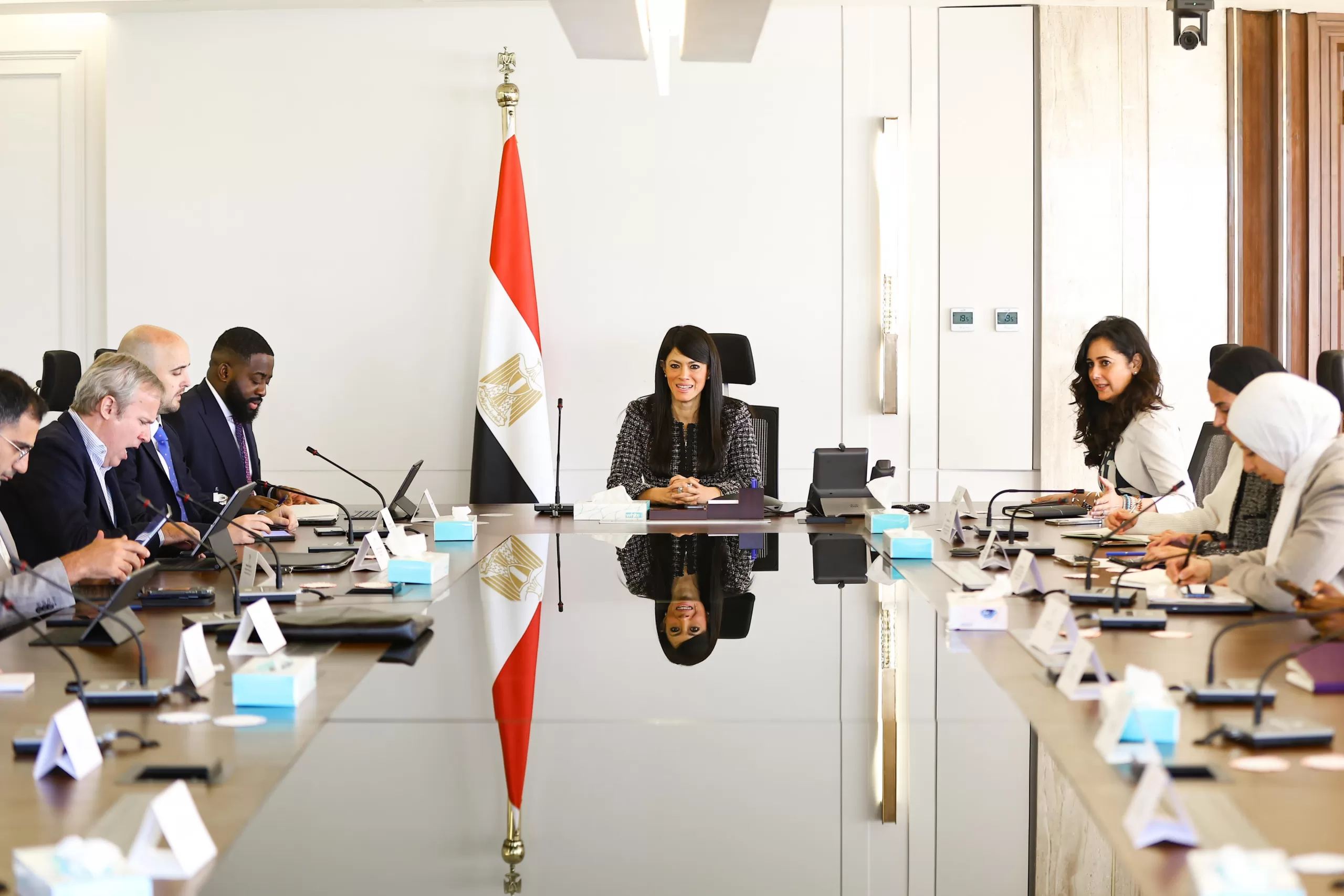
Egypt’s Minister of Planning, Economic Development and International Co-operation Dr Rania al-Mashat received on Wednesday a delegation from JPMorgan Chase and a group of investors to discuss prospects for future co-operation and to learn about the latest developments in the local economy.
During the meeting, Minister Mashat presented an overview of Egypt’s economic developments since the beginning of the previous year, as well as the government’s efforts to implement an economic and structural reform programme through co-operation with the International Monetary Fund (IMF) and global partners.
Mashat pointed out that the government successfully restored macroeconomic stability through efforts made since March, following the challenges faced by Egypt’s economy in recent months.
The minister also outlined clear steps to consolidate this stability through the implementation of the national structural reform programme, governance of public investments, taking measures to control public finances, and creating a more favorable investment environment for the private sector to stimulate local and foreign investments.
Mashat also highlighted the ministry’s efforts to monitor the implementation of the national economic and structural reform programme in coordination with all concerned ministries and authorities, and in collaboration with international development partners, to attract financing to support budget reforms and implement structural adjustments.
She noted Egypt’s strategic partnership with the European Union, which includes the macroeconomic support mechanism to address the budget deficit with a value of 5 billion euros.
Egypt received one billion euros of this amount by the end of last year, and the ministry has started preparations to negotiate with the EU for the next tranche to ensure macroeconomic stability, increase private sector investments, enhance competitiveness, improve the business environment, and support the transition to a green economy.
The minister noted that, as a result of the state’s efforts to improve the investment climate for the private sector and reduce government investments, subsidised financing for the private sector from international partners increased to exceed government financing in 2024, reaching $4.2 billion. Financing for the private sector from 2020 to 2024 stood at roughly $14.5 billion. This financing was directed to various sectors, including startups, technology and innovation, manufacturing, health, green transition, transport, and logistics services.
Mashat reviewed developments in growth domestic product (GDP) during the first quarter of the current fiscal year, which showed a recovery due to the economic and structural reforms the government started to carry out last March, reaching 3.5%.
She also referred to the Country Platform for the Nexus of Water, Food and Energy (NWFE) Programme, under which renewable energy agreements with a capacity of 4,200 MW were signed by the end of 2024, and funding for the private sector companies executing these projects was made available in the amount of $3.9 billion. She highlighted that one of the most important features of the NWFE is its ability to promote renewable energy projects to attract the private sector and provide innovative financing options for both local and foreign companies.

