








It took an American diplomat with an unusual request to spur action to relocate an ancient Egyptian temple or two.
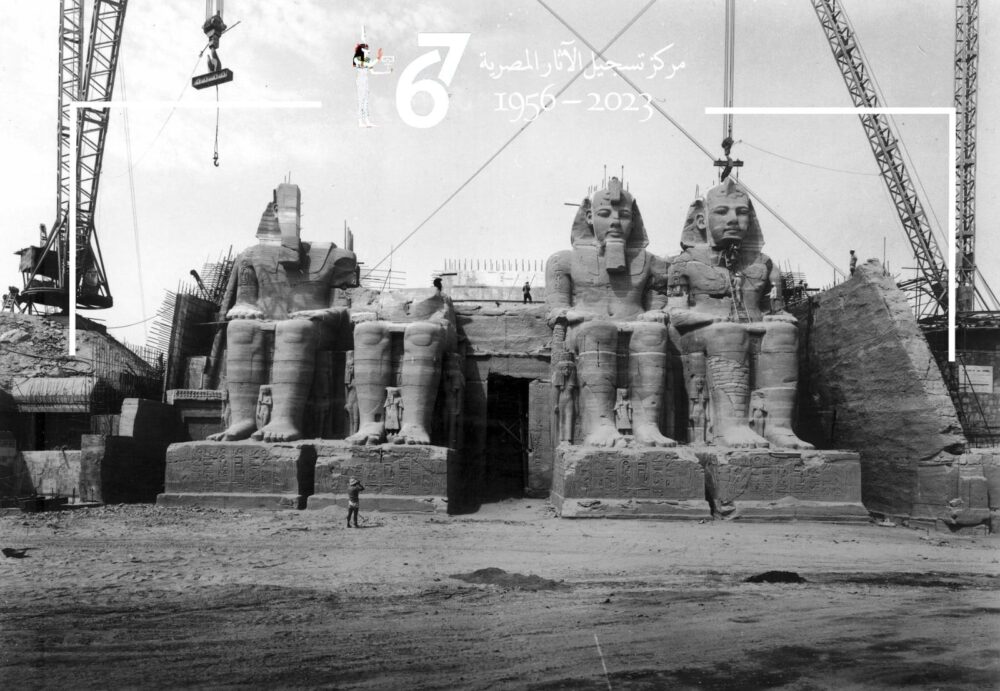
Long before the Aswan High Dam was completed in 1970, engineers were well aware that at least 21 ancient places of worship would remain forever under water in the reservoir, now known as Lake Nasser, behind the dam.
In 1958 – two years before the building equipment was delivered at the Aswan site — Tharwat Okasha founded the Ministry of Culture and National Guidance as “a symbol of the Revolution’s powerful emphasis on a vigorous cultural policy”.
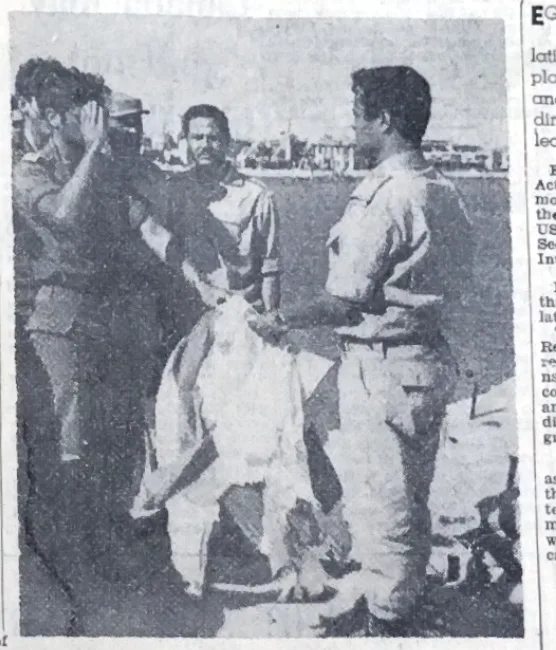
Okasha tells in his book Rameses Recrowned: The International Campaign To Preserve The Monuments Of Nubia, 1959-68 of a visit in November in 1958 by US Ambassador to Cairo Raymond A. Hare and Director of the Metropolitan Museum of Art in New York James Rorimer.
“Without preamble, this gentleman announced that he had come to negotiate the purchase of ‘one or two temples’ threatened with submersion under the waters of the projected High Dam at Aswan,” Okasha writes, remarking that he was “affronted by this casual offer”.
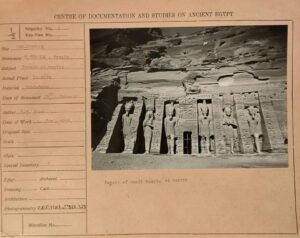
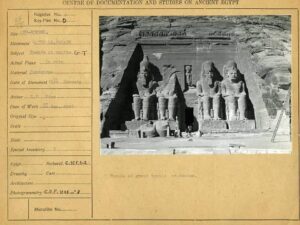
It so happens that following an agreement between the government and UNESCO on 13 May 1955, Centre of Documentation and Studies on Ancient Egypt (CEDAE) was founded in Cairo on April 25, 1956 initially under the Ministry of Education.
The CEDAE came into being to document the Nubian temples, to which the only visitors would be moonfish and crocodiles. CEDAE head Hisham Elleithy takes up the story.
After the US envoy had the effrontery to offer to buy “one or two temples”, Okasha made a two-week tour of the areas north and south of the Egyptian-Sudanese border while the CEDAE team was busy sketching and recording detail.
In his interview with the Egyptian Mail, Elleithy quoted Okasha as saying, “How can I let these temples drown during my tenure yet our ancestors saved them all these years? I will not let this happen.”
“Okasha then discussed this issue with UNESCO, who agreed on an international campaign to save the temples,” Elleithy said. Ten countries took part in the twenty-year campaign that began in 1960.
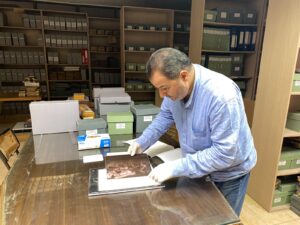
The CEDAE went on to document antiquities in Luxor and elsewhere in Egypt such that 90 per cent of ancient monuments have been documented to date, Elleithy said.
Since 2018, the CEDAE has been working on artefacts kept in 34 stores nationwide.
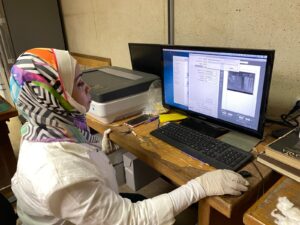
Computers and cameras, which are brought into the stores, are directly connected with the CEDAE.
The centre has also been collaborating with the French National Centre for Scientific Research in Paris since 1991 and by 2015, specialists from Brazil, Spain, Germany and South Korea have joined the list of collaborators.
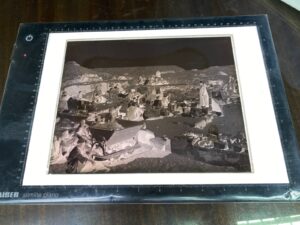
“For example, the German Archaeological Institute in Cairo is helping to digitise the glass negatives which date back to the 19th century,” Elleithy said.
The 30,000 glass negatives plus photographs from the same period originally belonged to German explorer Burchardt (1857-1909). Its number reaches 30,000 in addition to photos of the same period.
The Netherlands-Flemish Institute in Cairo is working on digitising the 19th century administrative archives of the Antiquities Authority, which was managed by foreigners at the time.
The CEDAE and a team from South Korea are presently engaged in dismantling and re-assembling the first pylon of the Ramesseum Temple in West Luxor under the terms of a co-operation protocol signed between the Supreme Council of Antiquities and the Korea Cultural Heritage Foundation signed last year.
“Documenting and recording Esna Temple is being undertaken in partnership with the German mission from the University of Tübingen,” he said.
An Egyptian-French mission is documenting the Ramesseum Temple while similar operations on the tomb of Pabasa, west of Luxor, are underway with an Egyptian-Spanish-Italian team.
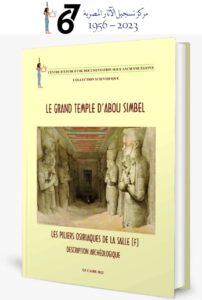
In 2022, the CEDAE published a book in French: The Hall of the Osirian Columns in the Great Temple of Abu Simbel.
Other works in preparation are The Temple of Wadi al-Sebua, about the temple built by Ramesses II, The Tomb of Userhat TT56, the Royal Scribe, Child of the Royal Nursery, during back to the 18th Dynasty King Amenhotep II, the tomb of Djehuty TT45, dedicated to the Overseer of Treasury and of Works, during the reign of 18th Dynasty Queen Hatshepsut and Catalogue of the Qurna Tombs.


Discussion about this post